Evolution Has Been Using the Same Genetic 'Cheat Sheet' for 120 Million Years, Because Why Fix What Isn't Broken?
Scientists discover butterflies and moths have been cribbing from the same genetic cheat sheet for 120 million years, proving evolution is less random and more like a lazy student reusing last semester's notes.
Scientists have uncovered evidence that evolution has relied on the same genetic "cheat sheet" for more than 120 million years, suggesting that life on Earth might be a bit more predictable than your high school biology teacher led you to believe.
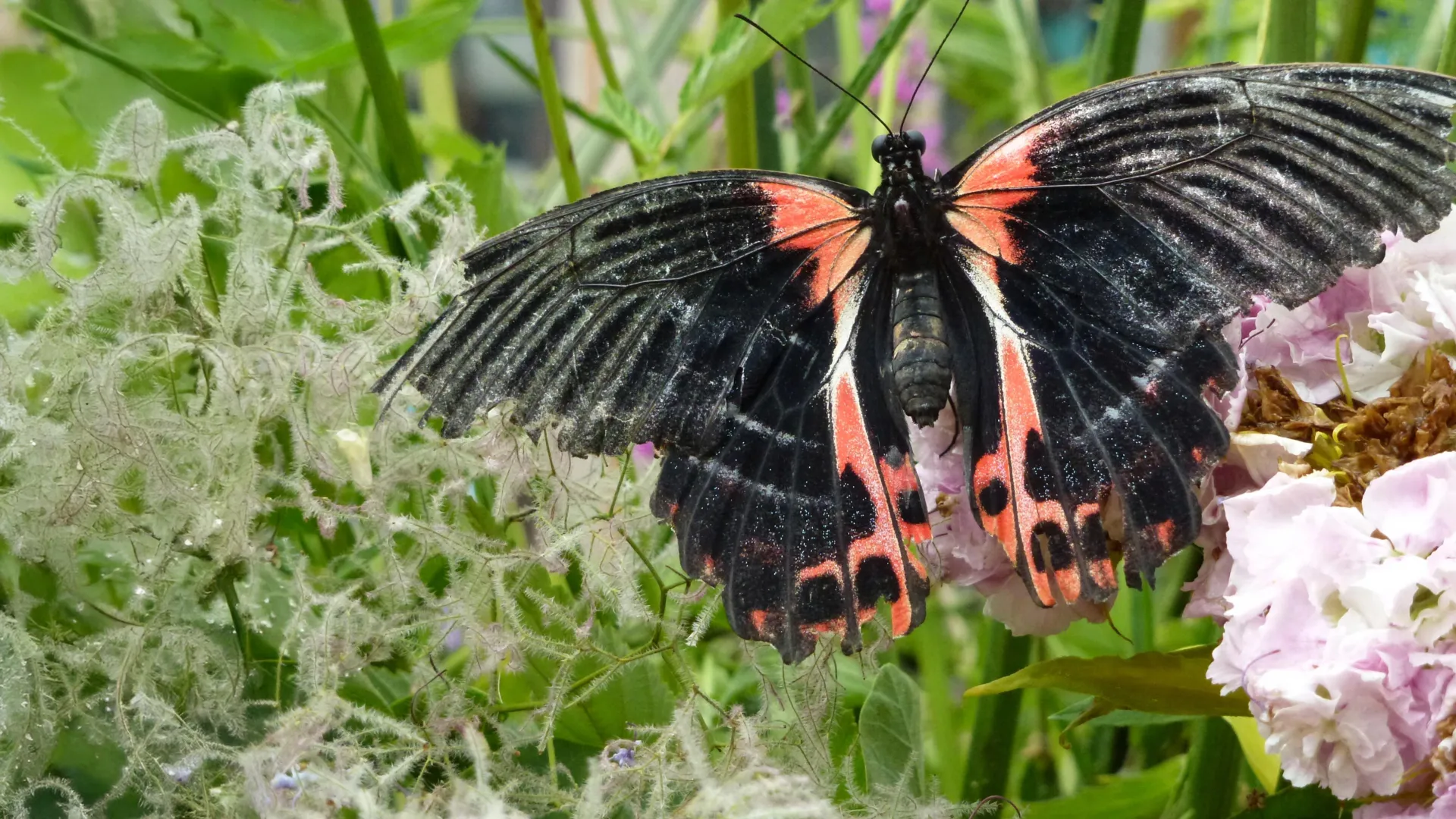
An international team led by the University of York and the Wellcome Sanger Institute turned their attention to butterflies and moths from South American rainforests. These species, despite being only distantly related, share strikingly similar wing color patterns that scream "don't eat me" to predators - a phenomenon known as mimicry. The researchers identified which genes control these shared color patterns across seven distantly related species. To their surprise, both butterflies and moths repeatedly relied on the same two genes, ivory and optix, to produce nearly identical warning colors.
Instead of tinkering with the genes themselves, evolution fiddled with regulatory elements - genetic "switches" that control when and where those genes get turned on. In butterflies, these switches were modified in similar ways across species. The moth, however, threw in a twist: it used an inversion mechanism (a large chunk of DNA flipped backwards) that closely mirrors a strategy seen in one of the butterfly species.
Professor Kanchon Dasmahapatra from the University of York said: "Convergent evolution, where many unrelated species independently evolve the same trait, is common across the tree of life. But we rarely have the opportunity to investigate the genetic basis of this phenomenon." He added that butterflies and moths have been using the same genetic tricks since the age of the dinosaurs - which is either reassuring or disappointing, depending on your view of creativity.
The findings, published in the journal PLoS Biology, suggest evolution isn't always random. Instead, it can follow recurring genetic pathways. Professor Joana Meier from the Wellcome Sanger Institute noted: "These distantly related butterflies and the moth are all toxic and distasteful to birds trying to eat them. They look very much alike because if birds have already learned that a specific color pattern means 'do not eat, we are toxic,' it is beneficial for other species to display the same warning colors."
Understanding that evolution often follows established genetic routes could help scientists anticipate how species might respond to changing environments or climate shifts. If nature tends to reuse the same biological solutions, predicting future adaptations may become more achievable - which is great news for anyone who likes knowing what's coming, evolution-wise.
The Good Times
News in your inbox.
One sardonic roundup, delivered on your schedule. Free. Unsubscribe whenever your tolerance for wit runs out.
Already subscribed but we never reach your inbox? Check your spam folder and hit 'Not spam' (or 'Remove from spam') to bust us out of junk-mail purgatory. You'll be helping everyone else too.
Don't open any of our emails for a month and you'll be automatically removed from the mailing list.
Rewrite Article
Select parts to regenerate with a fresh AI pass. Translations will be updated automatically.
Generate AI Image
Creates a sardonic version of the article image using OpenAI.