War Wrecks the Planet, But Maybe a Peace Treaty Can Plant a Tree or Two
A new report argues that cleaning up war-torn environments should be part of peace treaties, because nothing says 'lasting peace' like clean water and non-scorched earth.
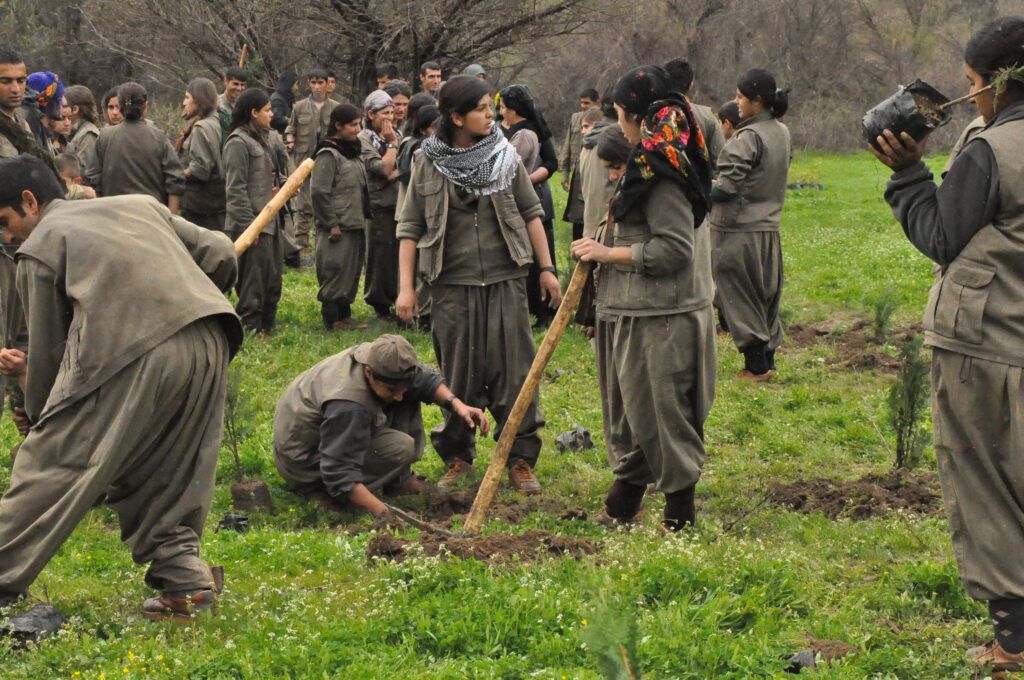
On a sweltering July day, 30 Kurdistan Workers' Party fighters tossed their rifles into a blazing fire, signaling the end of a decades-long conflict with Turkey. Now, the big question isn't just about peace - it's about whether anyone's going to clean up the mess. The fighting left scorched forests, contaminated water, and a biodiversity crisis that makes the local flora and fauna feel like they're living in a disaster movie.
Researchers at the United Nations University's Institute for Water, Environment and Health see this as a historic opportunity: put environmental restoration in the peace plan. "You've got to think about this element if you want to establish a lasting peace," said Kaveh Madani, the institute's director. Because apparently, clean water and breathable air are now considered negotiation perks.
The PKK and Turkey are currently hashing out a peace treaty, but talks stalled this year over disarmament disagreements. Michael Gunter, a political science professor at Tennessee Technological University, noted that earlier peace efforts collapsed in 2015, and the two sides are "not even in the same universe." Turkey sees the PKK as a terrorist group that should surrender; the PKK thinks Turkey's constitution needs a rewrite. So, you know, just a minor philosophical disagreement.
Pinar Dinc, a research fellow at the UNU institute and lead author of a report on addressing the conflict's ecological damage, advocates for "green transitional justice." Conventional treaties focus on security, she said, but if we think more holistically, "we might actually manage to create something new." Like a planet that isn't on fire.
The report recommends recognizing a healthy environment as a fundamental human right and protecting environmental defenders, who are often targets of violence. Since the war began in 1984, over 3,000 Kurdish villages were razed, up to 378,000 people displaced, and nearly 40,000 killed. If local communities oversee restoration, that could bring jobs and preserve cultural practices. Madani sees the environment as a potential "uniting factor."
Funding could come from the Global Environment Facility, the Green Climate Fund, public-private partnerships, or "peace bonds." But Nazan Üstündağ, an independent researcher and native of Turkey, thinks implementing these recommendations will be an uphill battle. In February, a Turkish parliamentary commission advanced a "terror-free Türkiye" initiative, but green transitional justice wasn't on the agenda.
Still, Dinc and Madani hold out hope. "We live in a dynamic world where things are continuously changing; we learn from the past," said Madani. Maybe this time, peace will come with a side of reforestation.
The Good Times
News in your inbox.
One sardonic roundup, delivered on your schedule. Free. Unsubscribe whenever your tolerance for wit runs out.
Already subscribed but we never reach your inbox? Check your spam folder and hit 'Not spam' (or 'Remove from spam') to bust us out of junk-mail purgatory. You'll be helping everyone else too.
Don't open any of our emails for a month and you'll be automatically removed from the mailing list.
Rewrite Article
Select parts to regenerate with a fresh AI pass. Translations will be updated automatically.
Generate AI Image
Creates a sardonic version of the article image using OpenAI.