New Study Says New Orleans Should Consider Moving, Locals Say 'Bless Your Heart'
A new study suggests New Orleans might want to pack its bags; locals respond with the kind of polite defiance only 11 generations of practice can produce.
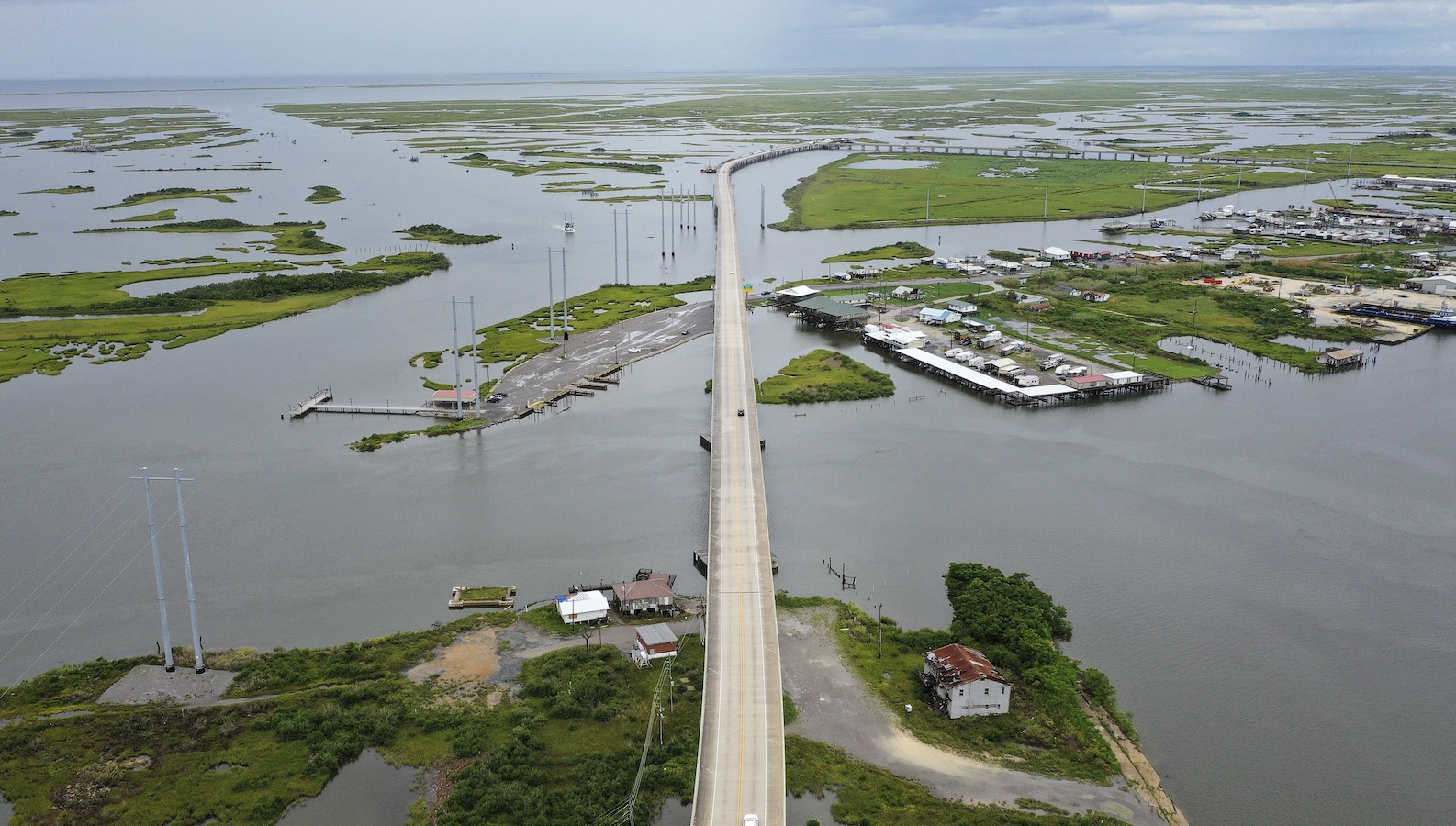
A new paper in Nature Sustainability has generated exactly the kind of reaction you'd expect when you tell New Orleanians to move somewhere else. The study claims that coastal Louisiana has likely "already crossed the point of no return" due to human-caused sea-level rise, projecting 3 to 7 meters of rise and shoreline retreat of up to 100 kilometers inland - putting over 1 million residents "in harm's way."
But the part that really got people's craws? The authors suggested that New Orleans, the largest city in Louisiana, should consider "managed retreat" - relocating further inland to higher ground. Christopher Ard, an 11th-generation New Orleanian, responded in The Lens with the local equivalent of a stern finger-wag: "[P]lease stop saying 'relocate New Orleans.' That's not going to happen." He suggested researchers use words like "abandon" or "give up on" instead, because "relocate just sounds silly."
The paper's co-author Torbjörn Törnqvist tried to soften the blow, noting that "New Orleans is still going to be around by the end of the century" - it just might resemble Venice, Italy, a city completely surrounded by open water. Which is charming for gondola rides, less so for hurricane evacuation routes.
Missing from the paper's scope is what happens to the people whose livelihoods depend on the coast - like Louisiana's fishers. The state is the second-largest seafood producer in the U.S., after Alaska, with New Orleans serving as a central hub for shrimp, crabs, oysters, catfish, crawfish, and alligators. "For the fishermen in the state of Louisiana, the loss of, or not being able to use New Orleans as a hub ... would be devastating," said Jeffrey Plumlee, an assistant professor at LSU.
The fishing industry is already struggling. Severe storms have wrecked critical infrastructure like ice houses and fuel docks. Young people are bailing, a phenomenon called "the graying of the fleet." This mirrors broader population trends: southern Louisiana's population has fallen four times in the last five years, according to census data. Beth Fussell, a Brown University demographer who peer-reviewed the paper, noted that out-migration "most likely has nothing to do with their perception of environmental risk" - though insurance companies pulling out of Louisiana might offer a hint.
Lawrence Huang at the Migration Policy Institute argues this is exactly why planning should start now: "It takes such a long time to help people find new skills and new occupations." The notion isn't entirely hypothetical. The Isle de Jean Charles, a state-recognized Native American tribe, received nearly $50 million in 2016 to relocate after losing 98 percent of its landmass to coastal erosion. The result? "It's not worth it," one tribal member told the New York Times.
Huang acknowledged that "planned relocation and managed retreat are not popular terms" because people don't want to move. But, he added, "It's a good conversation to be having." Especially when the water's lapping at your doorstep.
The Good Times
News in your inbox.
One sardonic roundup, delivered on your schedule. Free. Unsubscribe whenever your tolerance for wit runs out.
Already subscribed but we never reach your inbox? Check your spam folder and hit 'Not spam' (or 'Remove from spam') to bust us out of junk-mail purgatory. You'll be helping everyone else too.
Don't open any of our emails for a month and you'll be automatically removed from the mailing list.
Rewrite Article
Select parts to regenerate with a fresh AI pass. Translations will be updated automatically.
Generate AI Image
Creates a sardonic version of the article image using OpenAI.