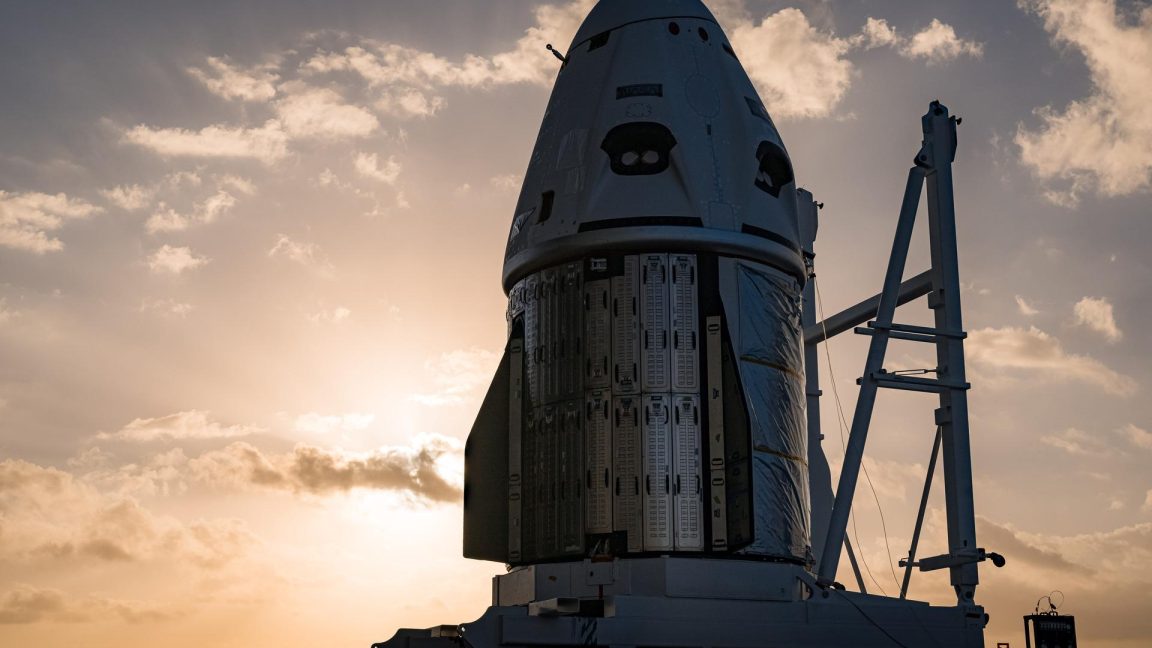
NASA's Private Space Station Dreams Hinge on SpaceX's Crew Dragon - Which SpaceX Might Retire Soon
NASA's plan for private space stations in the 2030s relies on SpaceX's Crew Dragon, but SpaceX might retire it soon, leaving everyone scrambling for alternatives like a troubled Boeing, a secretive Blue Origin, or a plucky European startup.
Six years ago, NASA finally exhaled when SpaceX's Crew Dragon successfully ferried astronauts Doug Hurley and Bob Behnken to the International Space Station, ending a nearly decade-long gap in US human spaceflight capability. The agency had hoped its multibillion-dollar Commercial Crew program would foster two providers - SpaceX and Boeing - but Boeing's Starliner has been a hot mess, with a 2024 test flight declared a Type A mishap and no crewed flight likely before 2028. Now, with the ISS slated for retirement in the early 2030s, NASA is banking on private space stations from Axiom Space, Vast Space, Voyager, Blue Origin, and possibly SpaceX itself. Crew Dragon seems like the obvious taxi, but there's a catch: SpaceX President Gwynne Shotwell has hinted the company will only fly Falcon 9 and Crew Dragon for a finite number of years, possibly less than a decade, as it transitions to Starship. Humans on Starship? Not before the mid-2030s, and docking those behemoths to smaller stations would be tricky. NASA wants Dragon to stick around, but SpaceX's launch activity is migrating to Starship, leaving Falcon 9 production open just for Crew Dragon - which would jack up prices. Multiple sources say crew launch costs have already risen recently. One industry source told Ars, "It's a disaster waiting to happen."
Alternatives are slim. Boeing's Starliner might eventually work, but the company has been shopping its space assets (including Starliner) for a year and a half with no sale - reportedly because Boeing's asking price is too high. Even if SpaceX raises prices, Boeing can't compete on reliability (Dragon has flown nearly 20 times successfully) or cost, since Starliner's service module is jettisoned and expensive to replace. Blue Origin has quietly worked on a crewed vehicle for New Glenn, signing a Space Act Agreement with NASA in 2021 for Orion data, but no one knows when it'll be ready or how much it'll cost. Then there's The Exploration Company, a European startup that just opened an office near Johnson Space Center in Texas. Founder Hélène Huby wants to build a crewed spacecraft called Nyx, funded by ESA and NASA, with an estimated $4 billion and eight years needed. She's already signed cargo deals with Axiom Space and Voyager, and if they like Nyx, crewed missions could follow. Because nothing says "reliable space taxi" like a startup with a dream and a blank check.
The Good Times
News in your inbox.
One sardonic roundup, delivered on your schedule. Free. Unsubscribe whenever your tolerance for wit runs out.
Already subscribed but we never reach your inbox? Check your spam folder and hit 'Not spam' (or 'Remove from spam') to bust us out of junk-mail purgatory. You'll be helping everyone else too.
Don't open any of our emails for a month and you'll be automatically removed from the mailing list.
Rewrite Article
Select parts to regenerate with a fresh AI pass. Translations will be updated automatically.
Generate AI Image
Creates a sardonic version of the article image using OpenAI.