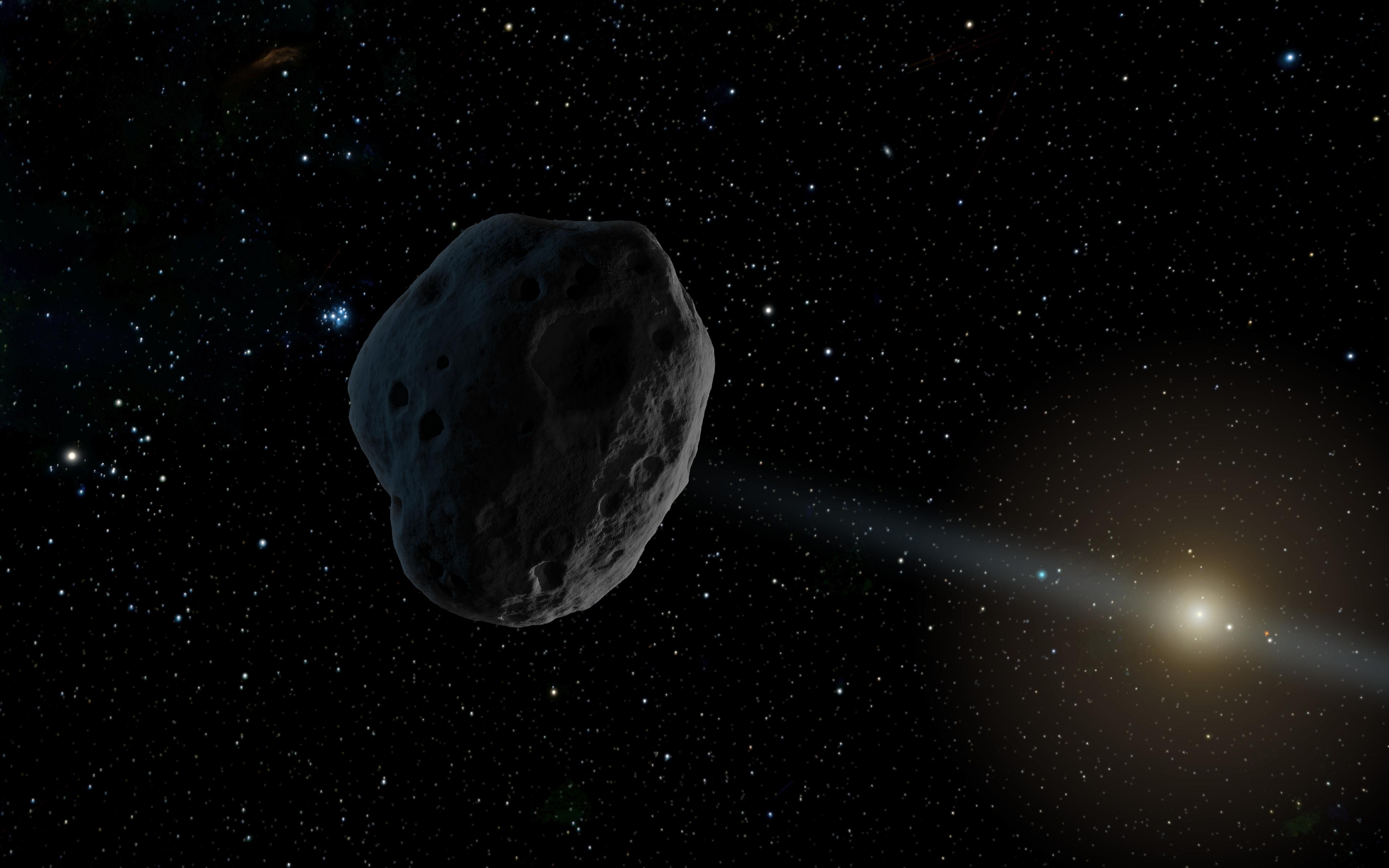
Scientists at NASA’s Jet Propulsion Laboratory have solved a cosmic mystery, revealing that an object previously thought to be an asteroid is actually a comet with a flair for the dramatic. The object, provisionally known as 1998 SH2, had been masquerading as an asteroid for years, but its irregular motion gave it away - like a celebrity caught in a lie by their GPS history.
The study, published in Nature Astronomy, began when 1998 SH2 passed safely within 2 million miles of Earth on August 28, 2025, during its 4½-year orbit around the Sun. Researchers at JPL used NASA’s Deep Space Network radar system to track it, but the object didn’t show up where expected - a celestial version of missing your exit because you took a detour through a gas cloud.
“After we measured the nongravitational perturbations affecting the motion and recognized they weren’t compatible with the object being an asteroid, we suspected it could be an active comet,” said Davide Farnocchia, a navigation engineer at JPL and lead author. Those perturbations were caused by the Sun heating ice mixed with rocky material, turning it into gas and creating a small thrust - like a tiny, cosmic sneeze.
To confirm, astronomers used the Canada-France-Hawaii Telescope, the European Southern Observatory’s Danish Telescope in Chile, and the Very Large Telescope. “The images showed a weak but clear tail, confirming that 1998 SH2 is, in fact, a comet,” said Olivier Hainaut of ESO. The object will now receive the comet designation P/1998 SH2, because apparently one name wasn't enough.
The research also sheds light on “dark comets” - objects that show trajectory irregularities but no visible tail or coma. About a dozen have been identified since 2016, and the authors suggest many larger dark comets may just be regular comets waiting for the right telescope to catch them in the act. “This work shows the importance of continuously tracking near-Earth objects,” Farnocchia said, noting that detecting these perturbations can help planetary defense efforts. NASA’s upcoming NEO Surveyor, the first space telescope built for planetary defense, will hunt for such hard-to-find objects.
In other words, some comets are just better at hiding their true selves - until a bunch of scientists with very big telescopes show up to ruin their cover.
The Good Times
News in your inbox.
One sardonic roundup, delivered on your schedule. Free. Unsubscribe whenever your tolerance for wit runs out.
Already subscribed but we never reach your inbox? Check your spam folder and hit 'Not spam' (or 'Remove from spam') to bust us out of junk-mail purgatory. You'll be helping everyone else too.
Don't open any of our emails for a month and you'll be automatically removed from the mailing list.
Rewrite Article
Select parts to regenerate with a fresh AI pass. Translations will be updated automatically.
Generate AI Image
Creates a sardonic version of the article image using OpenAI.