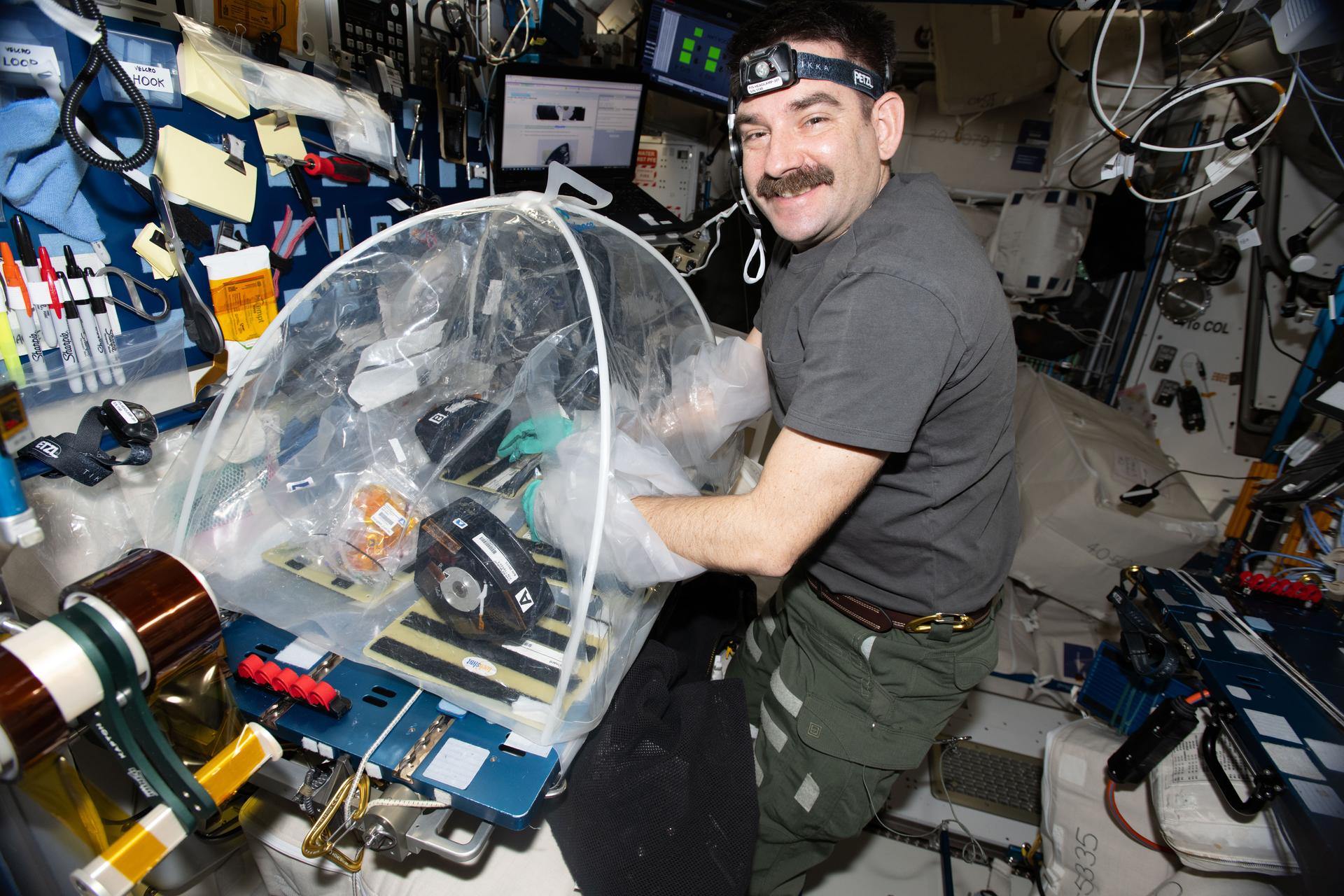
Expedition 74 astronauts aboard the International Space Station are doing a solid for humanity by studying how pneumonia-causing bacteria can mess with your heart long after you've stopped coughing. Researchers are using the space environment to watch stem cell-derived heart tissues get infected, hoping to find new ways to manage cardiovascular health and infectious diseases - all while floating around like it's no big deal.
In space, bacteria are basically bullies: they get more severe and more drug-resistant. Scientists are exploiting these enhanced traits to exaggerate the bacteria's effect on heart cells, revealing cellular responses that are too subtle to spot on Earth. Dr. Palaniappan Sethu, professor of Medicine and Biomedical Engineering at the University of Alabama at Birmingham, explains, “By exacerbating the infection, we anticipate clear separation of the infection and control groups, making it easier to identify subtle factors that promote bacterial virulence.” Translation: space makes bacteria meaner, which makes them easier to study.
The culprit here is Streptococcus pneumoniae, the leading cause of community-acquired pneumonia (CAP), which kills millions annually. More than a quarter of adults hospitalized for CAP develop heart disease, and survivors of severe cases face increased risk even after the pneumonia is fully gone. So yes, the lung infection that tried to kill you might also leave your heart with a grudge.
This research is also crucial as humans plan longer trips into space. For over 25 years, the space station has been a floating lab for studying how bodies and microbes behave off-planet. Deep space missions need these strategies. Dr. Carlos J. Orihuela, professor of Microbiology at the same university, says, “Addressing these questions is essential for ensuring human health during long duration space travel and for enabling sustainable habitation beyond Earth. Our experiments are expected to generate new insights into how space specific factors influence disease progression.” In other words, if we're going to colonize Mars, we better figure out how not to die of a bad cough first.
The Good Times
News in your inbox.
One sardonic roundup, delivered on your schedule. Free. Unsubscribe whenever your tolerance for wit runs out.
Already subscribed but we never reach your inbox? Check your spam folder and hit 'Not spam' (or 'Remove from spam') to bust us out of junk-mail purgatory. You'll be helping everyone else too.
Don't open any of our emails for a month and you'll be automatically removed from the mailing list.
Rewrite Article
Select parts to regenerate with a fresh AI pass. Translations will be updated automatically.
Generate AI Image
Creates a sardonic version of the article image using OpenAI.