
Taylor Mitchem’s baby arrived in March 2020, just in time for the world to slam shut. No extended family, no visiting friends, and a husband too nervous about the newborn’s fragility to be of much use. Her postpartum days blurred into an endless loop of infant care - “seeing the sun come up and then seeing the sun go down and knowing you’re in it, nowhere to go, no escape.”
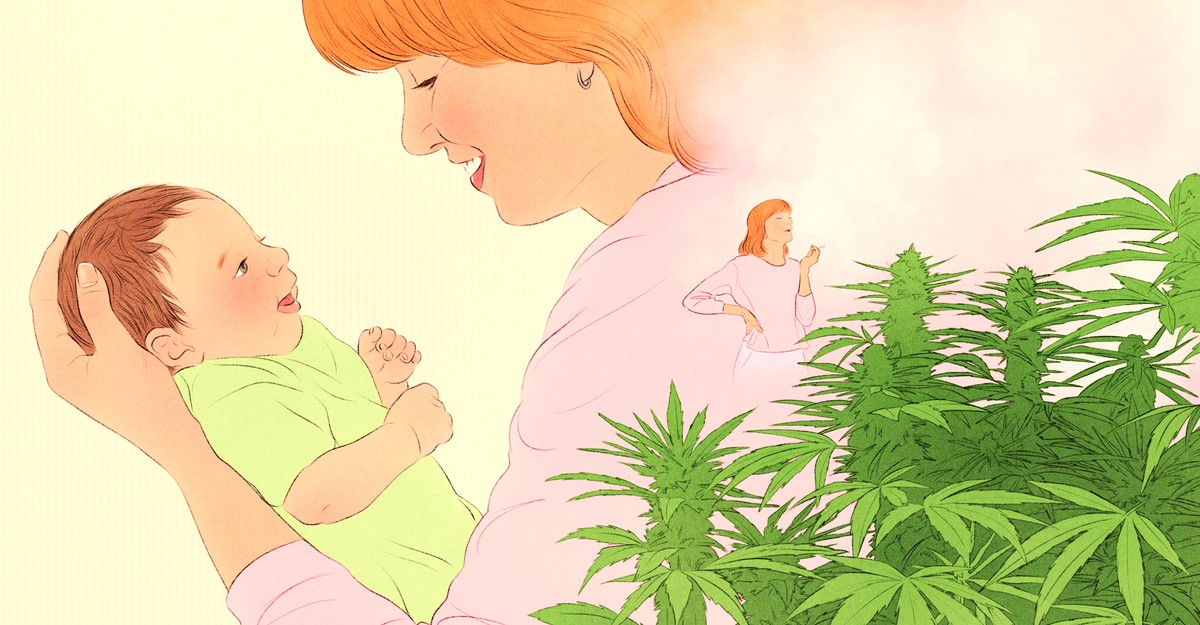
Fast forward two and a half years: Mitchem, now a 36-year-old Colorado-based mother of a toddler, resumed her pre-pregnancy habit of daily cannabis use - or “gardening,” as she calls it - to take the edge off parenting. She’s not alone. On TikTok, more than 76,000 videos carry the “#gardenmom” label, featuring morning rituals like “coffee and coughy” (smoking before the kids wake up), nap-time hits, and pre-dinner-bath-bedtime tokes. These moms style themselves as “garden moms,” using Millennial-chic glass gravity bongs and sharing discount codes. Cannabis, they insist, isn’t escape but preparation - the “medicine” they need before their work as mothers begins.
Of course, the potential risks are as obvious as a bong on a coffee table. The American Academy of Pediatrics recommends adults avoid using cannabis in front of children and keep all products locked away. Child-development experts worry about impaired reaction times in emergencies. And though most states allow medical or recreational cannabis, it remains federally illegal, and child-protection agencies can intervene if drug use impairs parenting. (Naturally, the mothers posting “coffee and coughy” videos are overwhelmingly white; the people most likely to be punished for cannabis use are not.)
The garden moms counter that they’re not putting weed first - they’re prioritizing their families by using cannabis to stay patient, respond neutrally, and be present without becoming overwhelmed. They won’t smoke while pregnant or breastfeeding, and they wait hours before driving their kids to school. For many, daily cannabis is a balm for the impossible math of modern motherhood: high demands, meager support.
This isn’t entirely new. In the 1950s and ’60s, housewives had Miltown; later, Valium became “mother’s little helper.” More recently, “wine mom” culture normalized embroidered onesies reading “I’m the reason mommy drinks.” Today’s mothers, per a 2016 sociology study, spend nearly twice as much time on active child care as in the 1960s, and many practice “gentle” parenting - emphasizing empathy and rejecting punishment. The result: mothers feel they must offer constant supervision while staying joyful and patient through exhaustingly boring activities.
Alan E. Kazdin, a Yale psychology and child-psychiatry professor, notes that as the bar for “good parenting” rises, people reach for coping strategies. Cannabis’s effects - decreased inhibition, relaxation - happen to align with gentle parenting’s demands. Mitchem says smoking helps her sprawl on the floor and be goofy with her 6-year-old, answering the same questions repeatedly. Meg, a 33-year-old New Yorker who asked to use only her first name, says cannabis helps her avoid raising her voice when her 3-year-old melts down - something she wants to do differently than her own parents.
Isolation is a recurring theme. These mothers typically don’t work outside the home, and their videos show solitary rituals: a mother with her gravity bong before sunrise, or blowing smoke into the oven vent while kids play. But community blooms in the comments, where thousands of mothers validate one another’s choices in a tone less judgmental than traditional mom-influencer pages. The videos lack polish - filmed in unfinished basements or drafty garages, mothers in bulky coats over pajamas, hair unwashed, desperation palpable. It reads like a collective sigh of relief.
Mitchem says cannabis has even helped her wean off Zoloft. “What I’m doing is allowing me to make sure that my house is taken care of, that I’m taken care of, that my kids are taken care of,” she said.
But Margaret Haney, director of Columbia University’s Cannabis Research Laboratory, cautions that while anxiety, sleep, and pain “all have an extraordinarily high placebo-response rate,” there is “no good evidence” that cannabis helps with anxiety or depression. At least one in 10 regular users develops a dependency - similar to alcohol - with signs including escalating or morning use, difficulty stopping, and withdrawal symptoms like irritability and anxiety. Daily use can worsen anxiety and depression over time. What feels like relief may be the drug treating withdrawal symptoms it created. “We were in reefer madness for so long that there’s been this enormous pendulum shift to everything cannabis being good,” Haney said. “There’s a middle ground.”
Today’s cannabis potency makes these concerns hard to dismiss. THC levels in some products reach up to 90 percent, compared with roughly 4 percent in the 1990s, leading to faster tolerance and greater dependence risk. Kirby Deater-Deckard, a University of Massachusetts professor who studies parental stress, notes that being chemically calm isn’t the same as being fully present or ready to act quickly. Relying on a substance can interfere with a parent’s ability to read their child in real time and respond sensitively.
The $30 billion cannabis industry has a stake in mothers believing their daily habit is a valuable tool. A 2020 study found that daily or near-daily users represent more than 40 percent of the market and account for about 80 percent of sales. Josh Camitta, chief brand officer for Medusa Distribution, says the company has seen a notable uptick in garden-mom-influencer partnerships - a sign of a growing customer segment.
Mitchem acknowledges that some garden moms are “just in the garage smoking all day,” but believes in responsible use: “I just need that little dimmer switch.” The author, sober for eight years, sympathizes with these mothers - understanding that the expectations for mothers can feel unsustainable: Be always serene, spend abundant time with your children, never show frustration. At a certain point, the ideal requires a disappearing act. In the quest to be the best, a mother is asked to abandon herself - and for some, the only way through is to feel a little less.