Moon Landings May Contaminate Precious Ice That Could Explain How Life Started, Study Warns
New study warns that methane from spacecraft exhaust could spread across the moon in days, contaminating ancient ice that might hold the chemical keys to how life on Earth began.
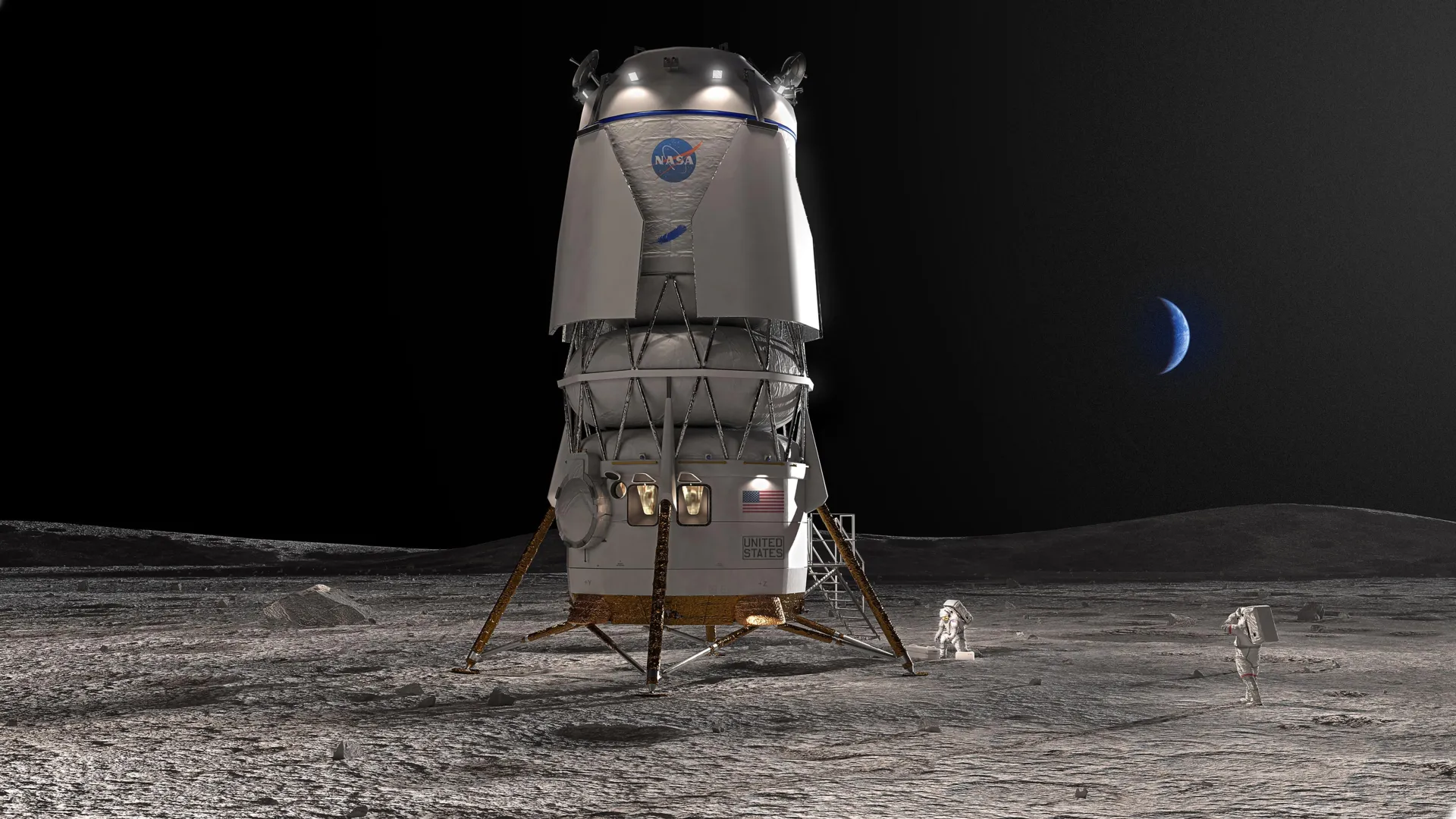
Scientists are gearing up for a new wave of lunar exploration, but a study published in the Journal of Geophysical Research: Planets suggests every landing could leave behind more than just footprints. Researchers found that methane from spacecraft exhaust can spread across the moon in days, potentially contaminating ancient ice that holds clues about how life began on Earth.
Using computer simulations based on the European Space Agency's Argonaut mission, the team modeled how methane, the main organic compound from propellant combustion, would travel after a South Pole landing. The results were sobering: methane reached the North Pole in less than two lunar days (about two Earth months), and within seven lunar days (nearly seven Earth months), over half of the released methane was trapped in cold polar regions - 42% at the South Pole and 12% at the North Pole.
“The timeframe was the biggest surprise,” said Silvio Sinibaldi, ESA’s planetary protection officer and senior author. “In a week, you could have distribution of molecules from the South to the North Pole.” The moon’s near-vacuum allows molecules to hop ballistically across the surface, meaning no landing site is truly safe. “Wherever you land, you will have contamination everywhere,” warned lead author Francisca Paiva, a physicist at Instituto Superior Técnico.
The stakes are high: permanently shadowed craters at the poles contain ice that may preserve prebiotic organic molecules - the chemical precursors to life, including DNA components - delivered by comets billions of years ago. Earth’s churning surface has erased such evidence, but the moon’s frozen vaults remain pristine - unless we muck them up with our own exhaust.
Sinibaldi and Paiva stress that contamination isn’t inevitable. Colder landing sites might keep exhaust more localized, and exhaust molecules may only coat the surface, leaving deeper ice intact. But they urge mission teams to add instruments that can validate these models. “We will miss an opportunity if we don’t have instruments on board,” Sinibaldi said. Paiva also plans to study other contaminants, like paint and rubber particles. “We have laws regulating contamination of Earth environments like Antarctica and national parks,” she said. “I think the moon is an environment as valuable as those.”
The Good Times
News in your inbox.
One sardonic roundup, delivered on your schedule. Free. Unsubscribe whenever your tolerance for wit runs out.
Already subscribed but we never reach your inbox? Check your spam folder and hit 'Not spam' (or 'Remove from spam') to bust us out of junk-mail purgatory. You'll be helping everyone else too.
Don't open any of our emails for a month and you'll be automatically removed from the mailing list.
Rewrite Article
Select parts to regenerate with a fresh AI pass. Translations will be updated automatically.
Generate AI Image
Creates a sardonic version of the article image using OpenAI.