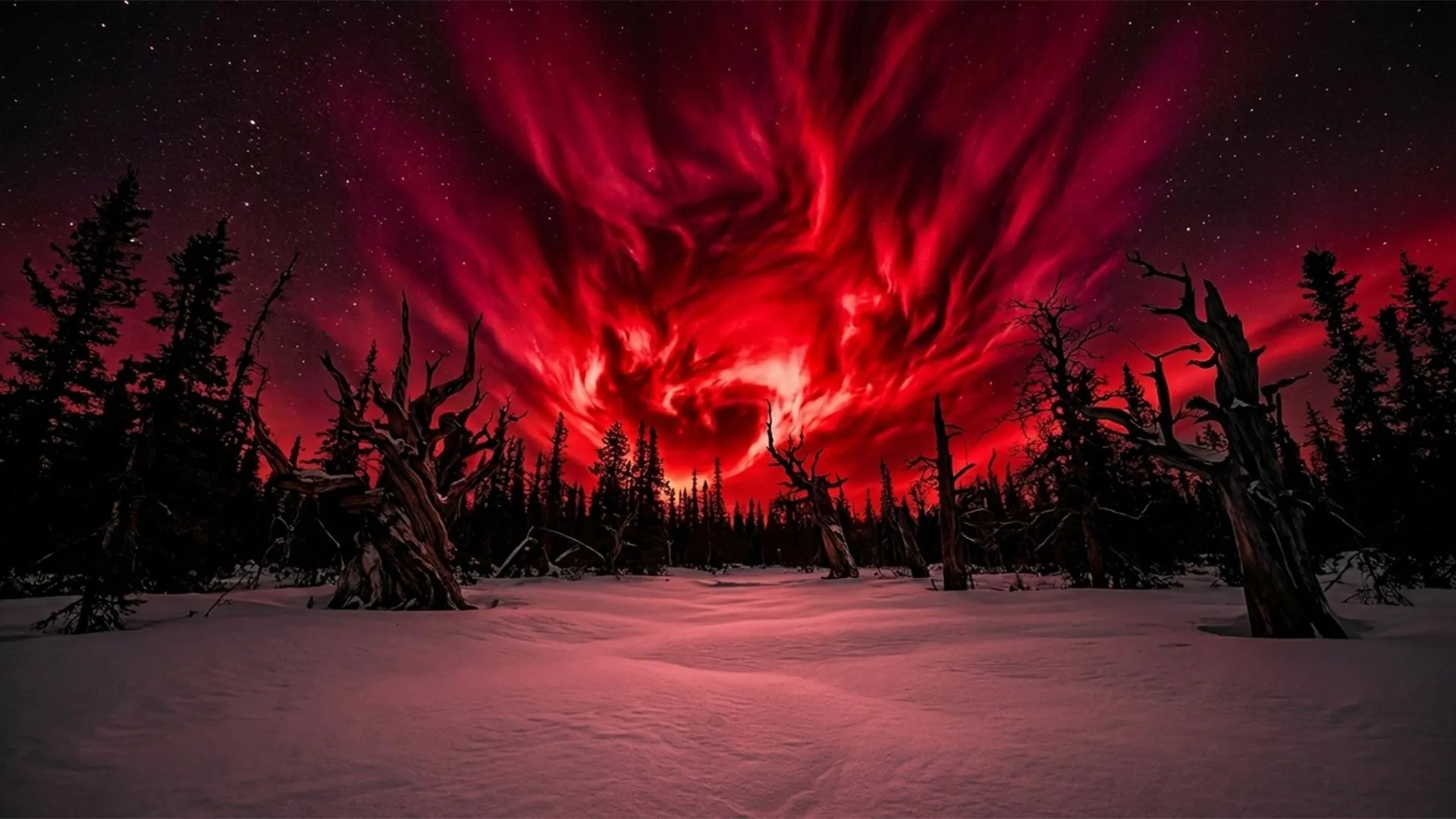
Turns out the Sun has always been a bit of a troublemaker, and we've got the tree rings to prove it. Researchers at the Okinawa Institute of Science and Technology (OIST) have combined 800-year-old tree rings with a medieval poet's diary to uncover a solar proton event (SPE) that likely occurred between the winter of 1200 CE and the spring of 1201 CE. The findings, published in the Proceedings of the Japan Academy, Series B, remind us that the Sun's violent temper hasn't changed much - it's just that now we have satellites to worry about.
Solar proton events are the Sun's way of saying, 'I'm going to ruin your day,' by blasting charged particles toward Earth at up to 90% of the speed of light. In 1972, such eruptions happened between the Apollo 16 and Apollo 17 missions - exposure during a lunar stroll would have been lethal. As space agencies prepare for future Moon exploration, understanding these unpredictable tantrums has become a bit of a priority.
Professor Hiroko Miyahara and her team used ultra-precise carbon-14 measurements from buried asunaro trees in northern Japan, cross-referenced with historical records, including the Meigetsuki diary of poet and courtier Fujiwara no Teika. In February 1204 CE, Teika noted 'red lights in the northern sky over Kyoto' - a clue that helped narrow down the search. The team's method can detect smaller 'sub-extreme' SPEs - about 10-30% of the size of the most extreme events - that were previously invisible. 'Our paper provides a basis for detecting sub-extreme SPEs,' said Miyahara, 'which are more challenging to detect but still hazardous.'
The carbon-14 spikes in the ancient wood pointed to a solar event that coincided with Chinese records of a red aurora at unusually low latitudes. The high-precision data also revealed that the Sun's activity cycle was just seven to eight years long back then, compared to the modern eleven-year cycle - meaning the Sun was having an especially energetic millennium. 'Historical literature provides a candidate time window,' Miyahara added, 'and dendroclimatology enables direct intercomparison between detected SPE and reports of sunspots and auroras.' Apparently, some prolonged low-latitude auroras in the literature seem to fall near the minimum of the reconstructed solar cycle - an unexpected finding that has the team 'excited to look further.' Because nothing says excitement like a potential radiation apocalypse.
The Good Times
News in your inbox.
One sardonic roundup, delivered on your schedule. Free. Unsubscribe whenever your tolerance for wit runs out.
Already subscribed but we never reach your inbox? Check your spam folder and hit 'Not spam' (or 'Remove from spam') to bust us out of junk-mail purgatory. You'll be helping everyone else too.
Don't open any of our emails for a month and you'll be automatically removed from the mailing list.
Rewrite Article
Select parts to regenerate with a fresh AI pass. Translations will be updated automatically.
Generate AI Image
Creates a sardonic version of the article image using OpenAI.