Man Convinces Himself Government Grant Wasn't a Scam; Bills Drop to 2p a Day
One man's journey from 'this is definitely a scam' to 'my bills are 2p a day' - proving that sometimes, the government actually does something useful. Meanwhile, the money runs out and someone else is left in the cold.
In a stunning twist that no one saw coming, a government scheme designed to make homes more energy efficient actually did what it said on the tin - much to the surprise of one homeowner who spent the entire process convinced it was an elaborate con.
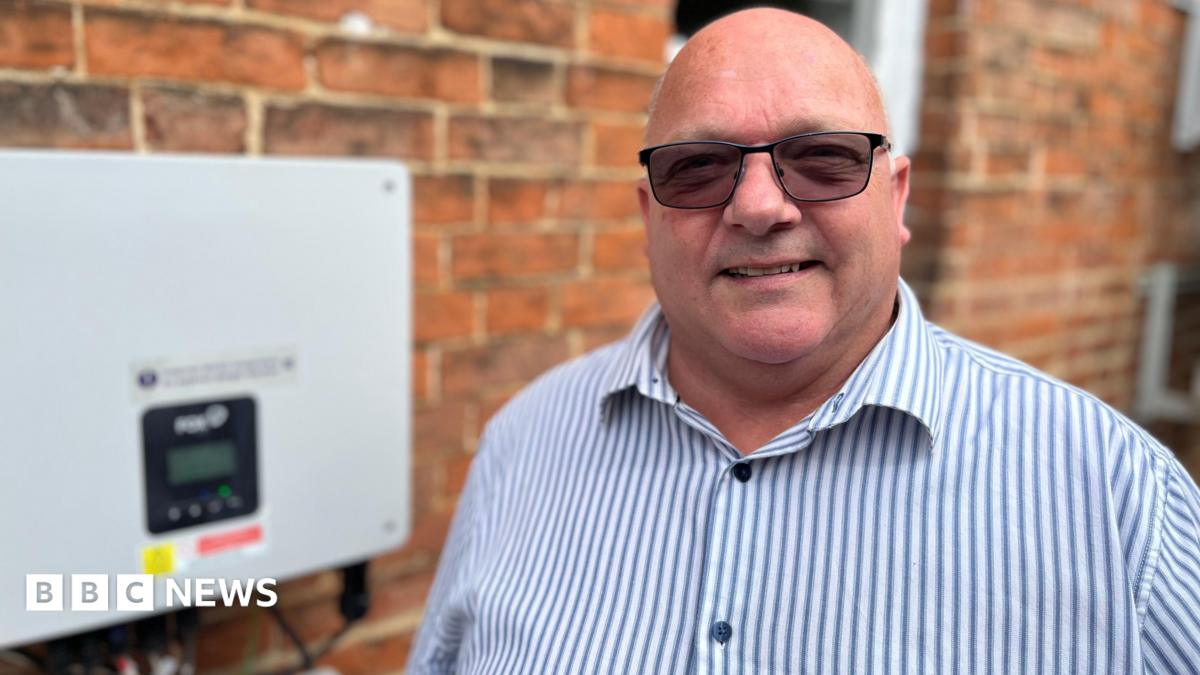
David Brain, from Wisbech in Cambridgeshire, had solar panels installed through the warm homes local grant scheme, which is aimed at folks on lower incomes. Brain admitted he was 'sceptical' from the get-go, and who can blame him? In this economy, someone offering to cut your energy bills feels about as trustworthy as a Nigerian prince. But after the panels were installed, his electricity bill plummeted to a jaw-dropping 2p a day - which, frankly, is less than the cost of a single breath mint, and far more satisfying.
The scheme, which has already helped 245 homes in Cambridgeshire, has burned through its £3.5m budget, prompting local councils to write to the government with their hands out for more. The Department for Energy Security and Net Zero (DESNZ) responded with the usual political boilerplate about the Energy Secretary's priority being 'bringing bills down for good' and a 'Warm Homes Plan' that will roll out more upgrades. Because nothing says 'we're on top of this' like a spokesperson using the word 'will' instead of 'is'.
The warm homes grant is available to homes in England with an energy performance certificate of D or below and an annual household income of £36,000 or less, or those on certain benefits. If your council has the cash, you get a survey, and then - wait for it - they actually install stuff like air-source heat pumps, insulation, and solar panels. Revolutionary, we know.
In Cambridgeshire, the grant is run through the Cambridgeshire Energy Retrofit Partnership, a coalition of six councils. Labour councillor Rosy Moore from Cambridge City Council - the lead authority - proudly announced that they've been 'so successful' that all their money is booked to be spent. So successful, in fact, that they've had to beg the government for an extension. Nothing says 'success' like running out of funds and asking for a bailout.
Brain, who heard about the scheme when a representative knocked on his door, said he and his family were 'very sceptical' but did their due diligence. They checked the government website, registered, and were then contacted by a contractor who did a survey. Throughout the process, Brain remained suspicious, but noted there was 'no hard sell or hard push' - which, in the world of door-to-door sales, is about as rare as a unicorn. He said it was only after the handover package arrived that he finally accepted it wasn't a scam. 'It does seem too good to be true, but you know, we were a beneficiary from it, thankfully.'
Not everyone is so lucky. Trevor Dewey from Little Downham was hoping for a new boiler and solar panels, but his dreams were dashed when the scheme ran out of money. 'We had a phone call the other day telling us the scheme had run out of money, and maybe there'd be more money coming in 12 months' time... we're disappointed,' he said. Disappointed is one word for it. Another might be 'freezing'.
Meanwhile, the government is exploring options for a single low-income scheme that would bring together local partnerships to develop bespoke plans. Because what this country needs is more committees and consultation documents.
In other news, the UK is set to receive £15bn for solar and green tech to cut energy bills - but don't hold your breath, it's probably just a scam.
The Good Times
News in your inbox.
One sardonic roundup, delivered on your schedule. Free. Unsubscribe whenever your tolerance for wit runs out.
Already subscribed but we never reach your inbox? Check your spam folder and hit 'Not spam' (or 'Remove from spam') to bust us out of junk-mail purgatory. You'll be helping everyone else too.
Don't open any of our emails for a month and you'll be automatically removed from the mailing list.
Rewrite Article
Select parts to regenerate with a fresh AI pass. Translations will be updated automatically.
Generate AI Image
Creates a sardonic version of the article image using OpenAI.