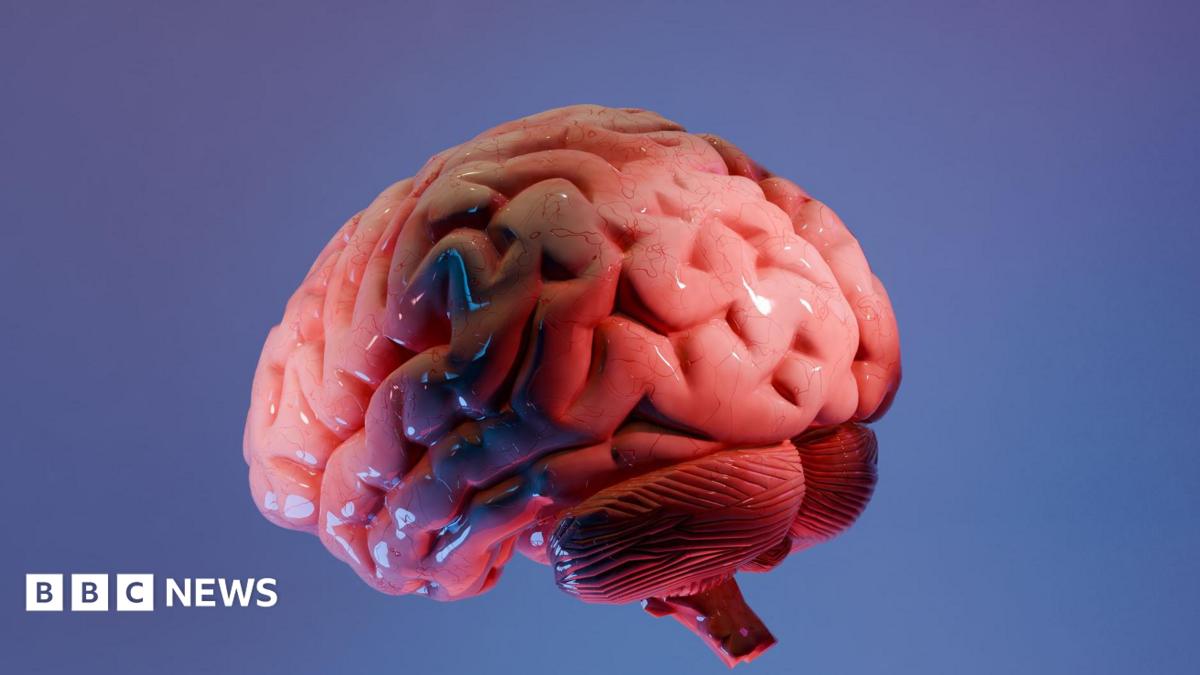
Indian Scientists Unveil Brainstem Map Detailed Enough to Make a GPS Blush
Indian scientists create a staggeringly detailed 3D map of the brainstem, letting doctors zoom from MRI to individual neurons - because apparently our brains have been operating on vague directions until now.
For over a century, neuroscientists have studied the human brain like early mapmakers squinting at a foggy coastline - lots of guesswork, not enough detail. Even today, diagnosing Alzheimer's often involves eyeballing a handful of tissue slices from an organ boasting 86 billion neurons. Now, scientists at the Sudha Gopalakrishnan Brain Centre (SGBC) at the Indian Institute of Technology, Madras (IIT-M) have produced what they call the world's most detailed 3D atlas of the human brainstem at cellular resolution. Named Anchor (Atlas of Neurochemical Characterisation of the Human Brainstem with 3D Reconstruction), it stitches together over 500 tissue sections from foetal, childhood, and adult brains. Using high-resolution microscope images (no fancy molecular techniques here), it maps more than 200 clusters of brain cells and nerve pathways, with eight chemical markers to tell cell types apart. The brainstem is a tiny sliver that keeps us breathing, sleeping, and not dead - so mapping it in detail is kind of a big deal. The atlas lets doctors zoom from an MRI of the whole brain down to individual neurons, bridging the gap between medical imaging and cellular pathology. "We are seeing a visionary programme that puts India at the international table," says Shubha Tole, an Indian neuroscientist at the Tata Institute of Fundamental Research. The atlas is free online, and researchers hope it'll help with everything from Parkinson's to SIDS. It's not a diagnostic tool, but it might help neurosurgeons avoid poking the wrong bit. The team spent 18 months manually analyzing over 200 brain sections - because sometimes you just have to do things the old-fashioned way. Next up: imaging over 100 whole brains at different life stages and with various disorders. As neuroscientist Rebecca Folkerth puts it, "Every brain is a treasure chest of new knowledge."
The Good Times
News in your inbox.
One sardonic roundup, delivered on your schedule. Free. Unsubscribe whenever your tolerance for wit runs out.
Already subscribed but we never reach your inbox? Check your spam folder and hit 'Not spam' (or 'Remove from spam') to bust us out of junk-mail purgatory. You'll be helping everyone else too.
Don't open any of our emails for a month and you'll be automatically removed from the mailing list.
Rewrite Article
Select parts to regenerate with a fresh AI pass. Translations will be updated automatically.
Generate AI Image
Creates a sardonic version of the article image using OpenAI.