Hamster-Sized Mammal That Outlasted the Dinosaurs Finally Gets a Name, Because Why Not
Scientists name a new hamster-sized mammal that survived the dinosaur extinction, proving that being small and eating bugs is a viable long-term strategy.
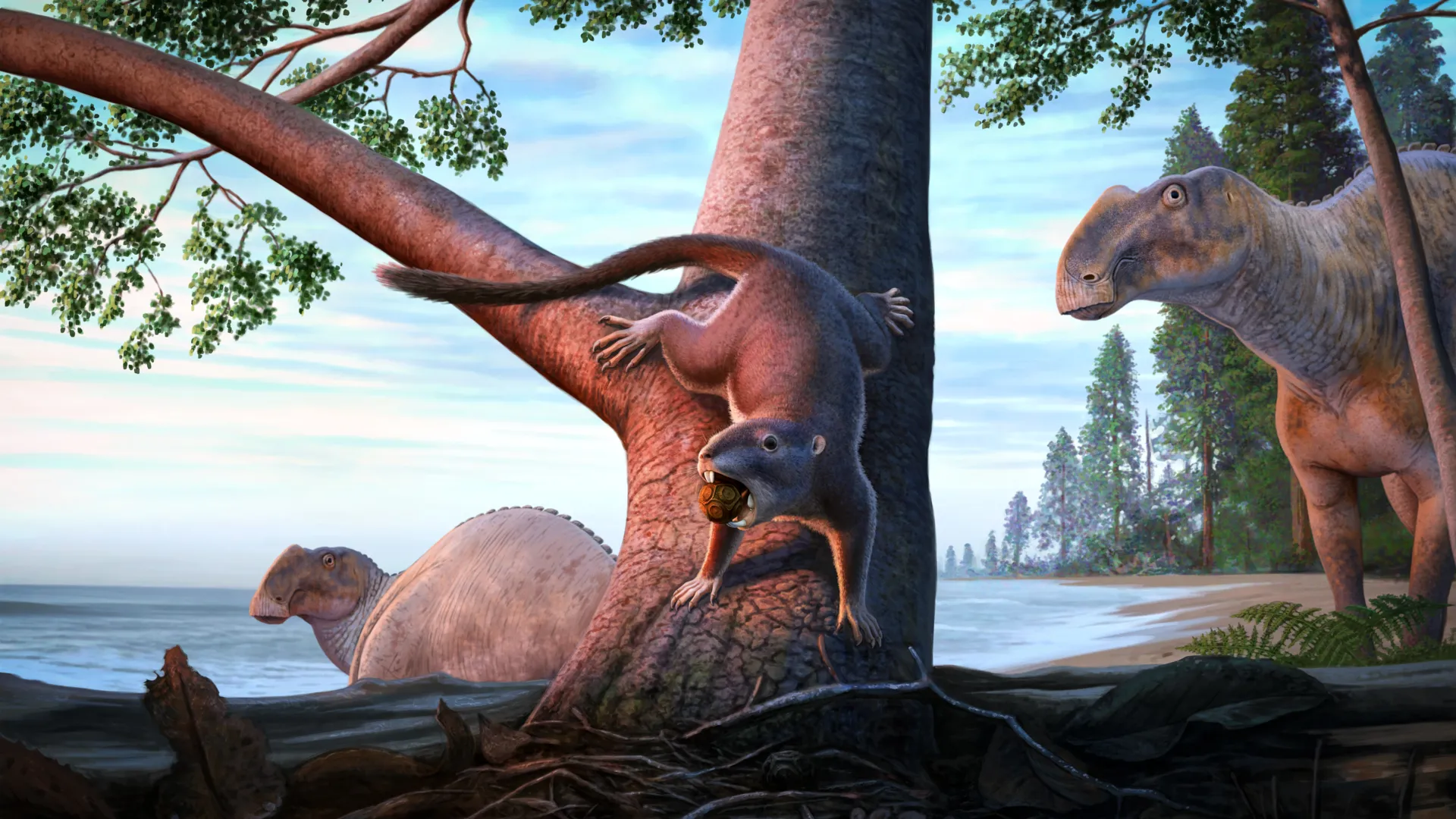
It turns out that being small, eating anything, and not drawing the attention of giant reptiles was a pretty solid survival strategy. A new study describes Cimolodon desosai, a newly identified species of multituberculate mammal that lived about 75 million years ago and was roughly the size of a golden hamster. Its ancestors managed to survive the asteroid impact that wiped out 75% of life on Earth 66 million years ago, presumably by being too tiny to bother with.
The fossil was unearthed in Baja California back in 2009 by a team led by the University of Washington. Unlike most fossils from that era, which are just teeth, this one came with a skull, jaws, a femur, and an ulna - practically a full-body portrait. The team used micro-CT scanning to compare its teeth with related species and confirm it was new to science.
“The genus Cimolodon was a pretty common mammal during the Late Cretaceous,” said senior author Gregory Wilson Mantilla, a UW professor of biology and curator at the Burke Museum. “This new species was ancestral to the ones that survived the extinction. It and its descendants were relatively small and omnivorous - two traits that were advantageous for surviving.” In other words, being a generalist with no particular ambition was the key to outlasting the apocalypse.
The species was named in honor of Michael de Sosa VI, the field assistant who first spotted the fossil. De Sosa passed away while the research was ongoing. “He was a great field assistant, and he was like a little brother to me,” Wilson Mantilla said. “It’s a great specimen to be associated with.”
The findings were published April 22 in the Journal of Vertebrate Paleontology. Funding came from UC MEXUS-CONACYT, the UW College of Arts and Sciences, and the American Philosophical Society, among others. Because even ancient hamster research needs grant money.
The Good Times
News in your inbox.
One sardonic roundup, delivered on your schedule. Free. Unsubscribe whenever your tolerance for wit runs out.
Already subscribed but we never reach your inbox? Check your spam folder and hit 'Not spam' (or 'Remove from spam') to bust us out of junk-mail purgatory. You'll be helping everyone else too.
Don't open any of our emails for a month and you'll be automatically removed from the mailing list.
Rewrite Article
Select parts to regenerate with a fresh AI pass. Translations will be updated automatically.
Generate AI Image
Creates a sardonic version of the article image using OpenAI.