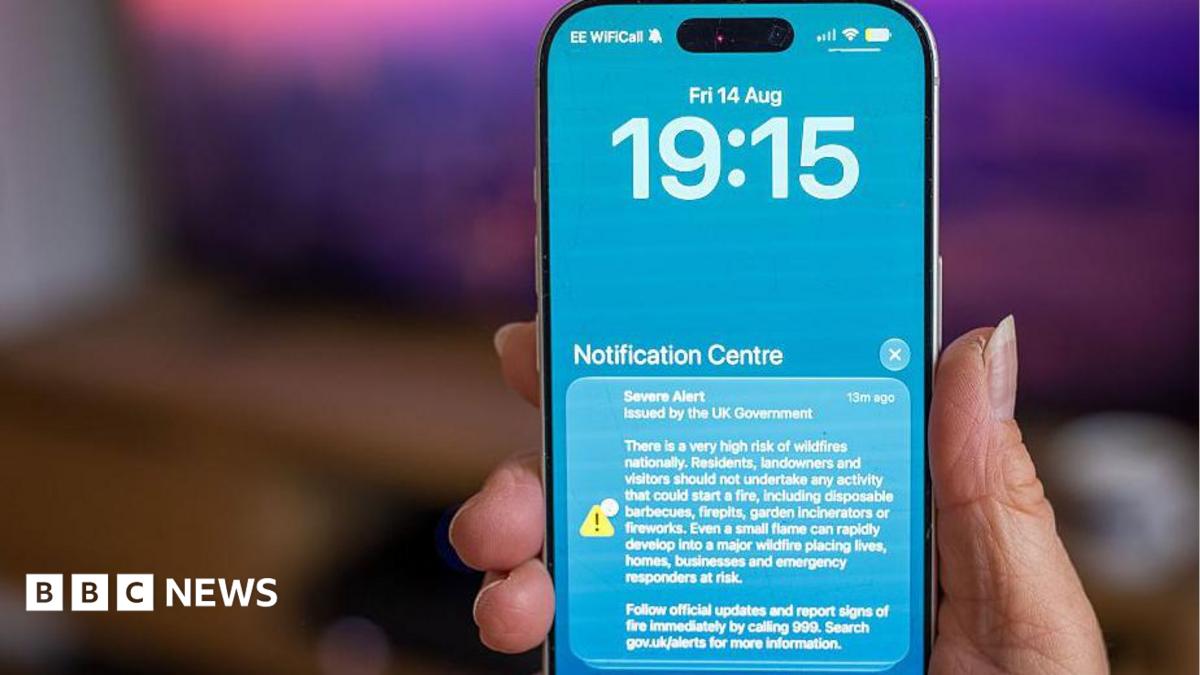
In a move that has domestic abuse campaigners collectively face-palming, the government's emergency phone alert warning of wildfires across England and Wales on Friday evening may have inadvertently put domestic abuse victims at risk. Millions of phones lit up and bleeped with a 'severe alert' at 19:00 BST, warning of a 'very high risk of wildfires nationally'. The problem? No advance warning meant that those hiding secret phones from abusers had no chance to prepare.
Charities and survivors are understandably miffed. Women's Aid, the national charity, is calling for more forewarning whenever possible. Veronica Oakeshott, the charity's head of external affairs, noted that 'survivors of domestic abuse frequently turn to second phones to help them access lifesaving support or flee from abuse.' She added, 'It is vital the devices stay hidden.' The government, in its infinite wisdom, sent the alert after a 'direct request from fire and rescue services' and claims to be working with domestic abuse charities on future tests.
The alert, which cautioned against disposable barbecues, naked flames, and fireworks, was the biggest use of the emergency alert system yet. Prime Minister Andy Burnham urged the public to take it 'seriously.' A Cabinet Office press release, posted at about 18:45, was missed by many in the media, leaving the public in the dark. The result? Panic, confusion, and a whole lot of anxiety for domestic abuse survivors.
Padua Eaton, 29, a survivor who set up support group The Harborough Doves, said her 'heart dropped' when she received the alert. 'My first thought was anxiety at the alarm - many people in domestic abuse relationships have a secret second phone in order to keep communication with friends or professionals and this alarm would have alerted abusers immediately.' She called the government's planning 'poor' and suggested they look into silent notifications, warning that if alarms become frequent, victims may no longer feel safe keeping these phones.
Maggie Evans, director of frontline services at abuse prevention charity Hourglass, echoed these concerns, demanding ministers consult organizations supporting the most vulnerable before future alerts. 'Domestic abuse victims should never be put at risk by the very systems meant to keep us all safe,' she said, adding there had been 'no meaningful advance warning to frontline domestic abuse charities' and 'no targeted safety guidance for victims.'
Some have questioned whether the alert was even necessary. Julian Jessop, fellow at the Institute of Economic Affairs, told BBC Radio 4's Broadcasting House on Sunday that the 'very high' threshold for sending one 'hasn't been reached - I don't think there's an immediate risk to life everywhere.' Frazer Rhodes, one of the system's architects, said the alert 'really has divided opinion' and the government should set out criteria for when it will and will not be used.
A government spokesperson defended the alert, noting that 'On Friday alone, crews were tackling 43 wildfires across the country and had declared 11 major incidents, stretching resources to the very limit and requiring military support.' They urged everyone to follow fire safety advice. Ministers said in 2023 that the alert system would cost up to £25.3m in its first three years. The government advises people to keep alerts on as they 'contain life-saving information,' but for those needing to opt out to conceal secret phones, advice is listed on the government website. So, you know, there's that.
The Good Times
News in your inbox.
One sardonic roundup, delivered on your schedule. Free. Unsubscribe whenever your tolerance for wit runs out.
Already subscribed but we never reach your inbox? Check your spam folder and hit 'Not spam' (or 'Remove from spam') to bust us out of junk-mail purgatory. You'll be helping everyone else too.
Don't open any of our emails for a month and you'll be automatically removed from the mailing list.
Rewrite Article
Select parts to regenerate with a fresh AI pass. Translations will be updated automatically.
Generate AI Image
Creates a sardonic version of the article image using OpenAI.