Government Asks Northern England: 'Would You Like to Host the Olympics, Perhaps?'
The UK government is exploring whether the north of England can host the 2040 Olympics, because London had one and it's someone else's turn to deal with the budget overruns.
The government has commissioned UK Sport to conduct an "initial strategic assessment" into a potential bid for the north of England to host the Olympics and Paralympics in the 2040s. That's right - they're asking nicely if anyone up there fancies a multi-billion-pound logistical nightmare with a side of national pride.
Culture Secretary Lisa Nandy told BBC Sport: "For too long we have been told the Olympics is simply too big and too important to be hosted in the north. Not any more. It's time the Olympics came north and we showed what we can offer to the world." She added, "We know that we can pull off the most incredible, not just bid, but Olympics. So we're kick-starting that with a phase-one study about the investment, the resources, the infrastructure, the transport that we're going to need."
The findings of UK Sport's study will determine whether to proceed with a more detailed "technical feasibility study," with a final decision on any bid resting with the British Olympic Association (BOA). So, basically, we're studying whether we should study it.
This comes after London Mayor Sir Sadiq Khan said last year that he wanted the Games to return to the capital - because apparently one expensive Olympics in the south wasn't enough. In February, a group of northern political leaders urged the government to ensure any future Olympic bid would be based in the region, claiming there was a "compelling" case and that it "already has many of the foundations in place to deliver a world-class Games, including elite sporting venues, major stadia and arenas."
North East Mayor Kim McGuinness said: "I'm delighted ministers and sporting bodies are now exploring how we could turn this ambition into a reality. We stand ready to work together to develop a credible, deliverable vision that can make the case to the International Olympic Committee (IOC)."
More than two-thirds of the UK public felt the £8.77bn cost of London 2012 was worth the money, according to a survey conducted the following year, despite it being three times more than the original budget. The event was credited with helping to regenerate east London and boosting the economy - but it also failed to deliver the increase in sporting participation that organisers had hoped for. So, great for the economy, less great for getting people off the couch.
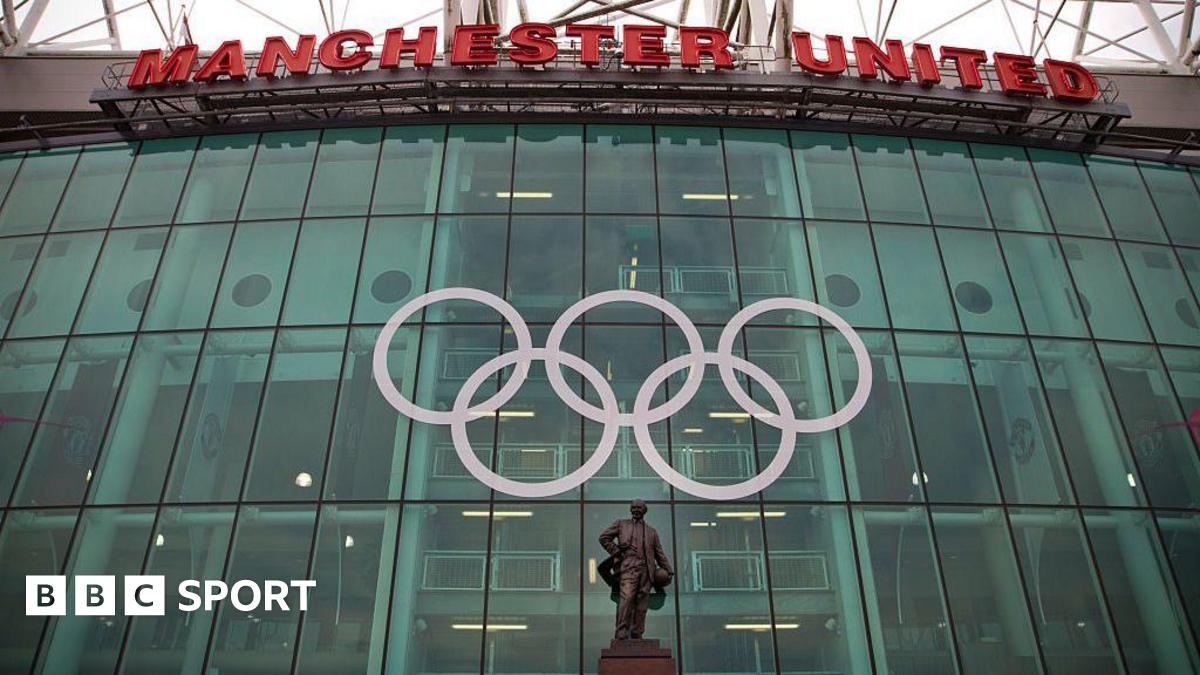
Manchester failed with bids for the 1996 and 2000 Olympics but went on to successfully host the 2002 Commonwealth Games, with the City of Manchester Stadium used as the athletics venue. It was then converted into a football arena for Manchester City, since renamed Etihad Stadium. Manchester is also home to the national velodrome and an aquatics centre. It has been suggested that Liverpool's Albert Dock and River Mersey could host sailing events, with the Lake District potentially used for open-water swimming. Manchester United have said they are aiming to have a new 100,000-seater stadium ready by 2035, while Leeds United also have plans to develop Elland Road.
When asked which stadium might form the centrepiece of any northern Olympic bid, Nandy said: "The study will look at identifying all of the potential sites that we're going to need… There are particular challenges around some of the athletics facilities, but actually these are things that any government should be addressing anyway, and an Olympic bid gives us the opportunity to do that." She added: "The reality of the current financial context is that we want to work with what infrastructure already exists. There is good infrastructure across the north of England, but it needs to be upgraded… You only need to look at some of the amazing infrastructure that we're building, like the new Everton stadium, to see exactly what we can do here."
In an effort to reduce costs and the need for spending on new infrastructure, the International Olympic Committee (IOC) is known to be more open to multi-city or regional bids. Nandy said: "We've got to prove to them that we can do this in the north of England. I believe that we can, though, and we're deadly serious about making it happen."
The government also announced the launch of the 'Stadium Regeneration Accelerator,' a project that will see it working with sports bodies like the Premier League and English Football League on infrastructure development projects that "have the potential to regenerate their surrounding areas." Because nothing says regeneration like building another stadium.
The Good Times
News in your inbox.
One sardonic roundup, delivered on your schedule. Free. Unsubscribe whenever your tolerance for wit runs out.
Already subscribed but we never reach your inbox? Check your spam folder and hit 'Not spam' (or 'Remove from spam') to bust us out of junk-mail purgatory. You'll be helping everyone else too.
Don't open any of our emails for a month and you'll be automatically removed from the mailing list.
Rewrite Article
Select parts to regenerate with a fresh AI pass. Translations will be updated automatically.
Generate AI Image
Creates a sardonic version of the article image using OpenAI.