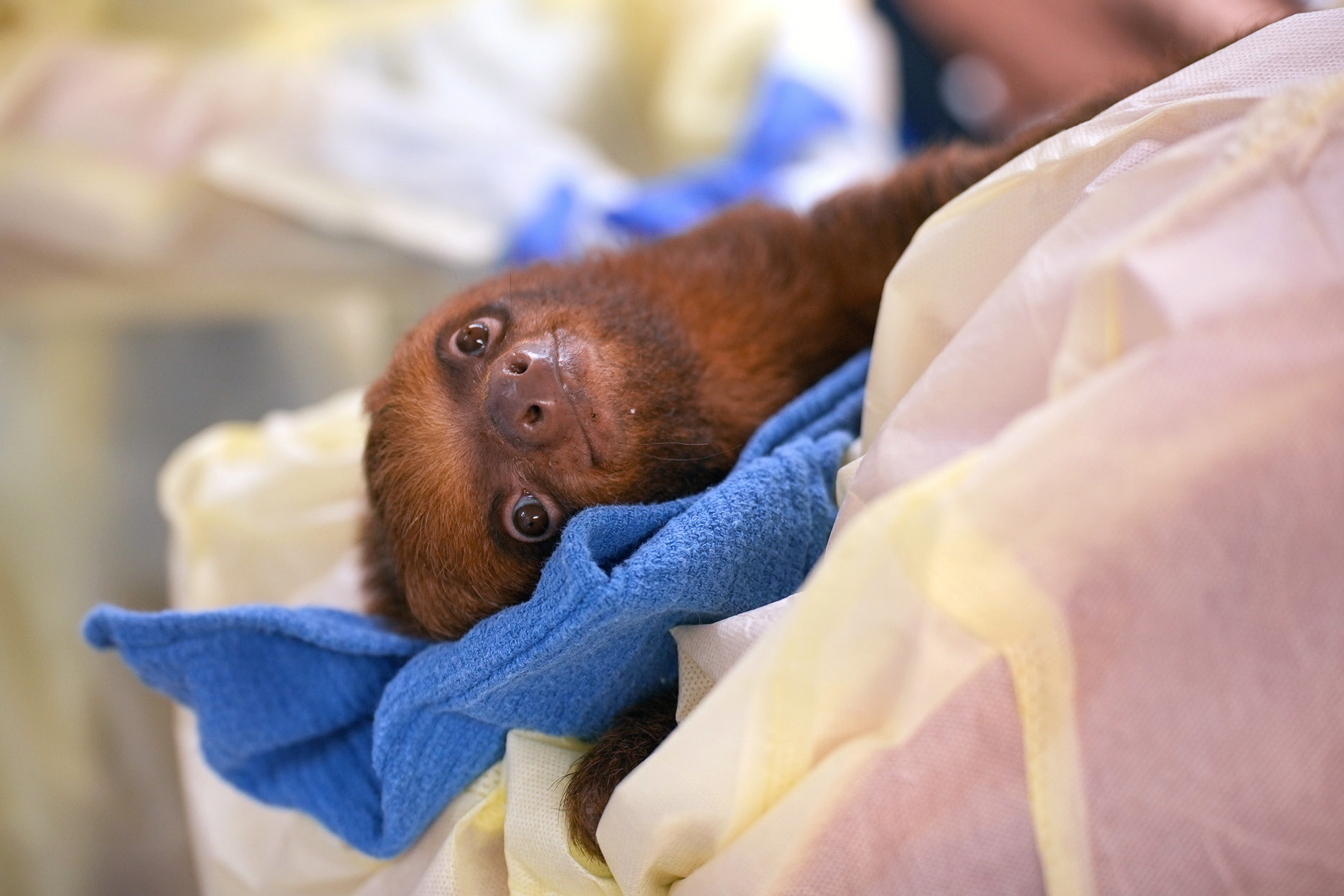
Florida Hits Pause on Sloth Imports After Dozens Meet Untimely End at Failed Tourist Trap
Florida temporarily bans sloth imports after dozens die at a failed Orlando attraction, highlighting the stress these tree-dwellers endure when forced into captivity.
Florida has temporarily banned the importation of sloths, following the deaths of dozens of the slow-moving, stress-prone mammals at a now-shuttered Orlando business. The two-month ban, ordered Wednesday by the Florida Fish and Wildlife Conservation Commission (FWC), blocks the import of wild-caught sloths for exhibition or as pets and carries national implications: more than 98 percent of U.S. sloth imports from 2011 to 2021 entered through the port of Miami, according to government data analyzed by The Sloth Institute.
In April, an Inside Climate News investigation revealed that 31 sloths died in a Sloth World warehouse after being imported from Peru and Guyana in late 2024 and early 2025. Necropsy records showed the deaths mounted due to stress and illness. The company had planned to let customers view sloths up close for $49, according to its now-defunct website. Following the reporting, Sloth World shut down and is now under criminal investigation by Florida authorities. The owner did not respond to requests for comment.
In a Wednesday meeting, FWC Executive Director Roger A. Young called the deaths a “very sad situation,” halting imports while the agency reviews regulations to “ensure that this type of incident can be prevented in the future.” The ban takes effect immediately and expires at 11:59 p.m. on July 10. Floridians can still acquire sloths legally held in captivity elsewhere in the U.S. and its territories.
State Rep. Anna Eskamani, a Democrat running for mayor of Orlando who called for a criminal investigation, celebrated the move. “Florida making this decision will send a ripple effect across the country,” she said at a press conference, though she noted that “whenever you block one passage, others are created.” Sloth conservation groups stressed the ban’s global impact. Sam Trull, executive director of The Sloth Institute, called it “a huge step for sloths all over the world,” while Sloth Conservation Foundation founder Rebecca Cliffe highlighted a “massive lack of sloth expertise in Florida and in the United States.”
Sloths - tropical mammals adapted to solitary life in rainforest canopies - lack a fight-or-flight response, may curl into a ball when stressed, and cannot regulate their body temperatures. The FWC order acknowledges their “unique physiology” and “susceptibility to severe illness caused in part by stress and inadequate husbandry practices.” Of seven sloth species, one is critically endangered; several others are in decline.
Young characterized the deaths as isolated to Sloth World, saying other facilities showed “no significant issues.” But necropsy reports paint a more complex picture: deaths stemmed from stress-related illness linked to capture, transport, cold exposure, captivity, irregular diet, and physical trauma, according to independent veterinarians. Some sloths showed signs of viruses that took hold due to “systemic stress” from the moment they were taken from the wild.
The FWC order also requires anyone in possession of sloths to report any “severe illness.” Records show Sloth World imported more than 60 sloths. In mid-April, 13 survivors were transferred to the Central Florida Zoo & Botanical Gardens, where three have since died. The remaining 10 are in quarantine; the smallest, Mr. Ginger, is in critical condition.
Asked about the ban, Republican Gov. Ron DeSantis called Sloth World a failed tourist attraction, comparing it to other ventures that “tried” and didn’t succeed, without mentioning animal welfare. Eskamani and U.S. Rep. Maxwell Alejandro Frost (D-Fla.) have called for stronger protections, including closing a loophole that allowed Sloth World to house wild animals without a USDA permit before displaying them. “My hope is that this tragic situation… can lead to us ensuring that we pass legislation [and] work with USDA to patch these loopholes,” Frost said.
The Good Times
News in your inbox.
One sardonic roundup, delivered on your schedule. Free. Unsubscribe whenever your tolerance for wit runs out.
Already subscribed but we never reach your inbox? Check your spam folder and hit 'Not spam' (or 'Remove from spam') to bust us out of junk-mail purgatory. You'll be helping everyone else too.
Don't open any of our emails for a month and you'll be automatically removed from the mailing list.
Rewrite Article
Select parts to regenerate with a fresh AI pass. Translations will be updated automatically.
Generate AI Image
Creates a sardonic version of the article image using OpenAI.