
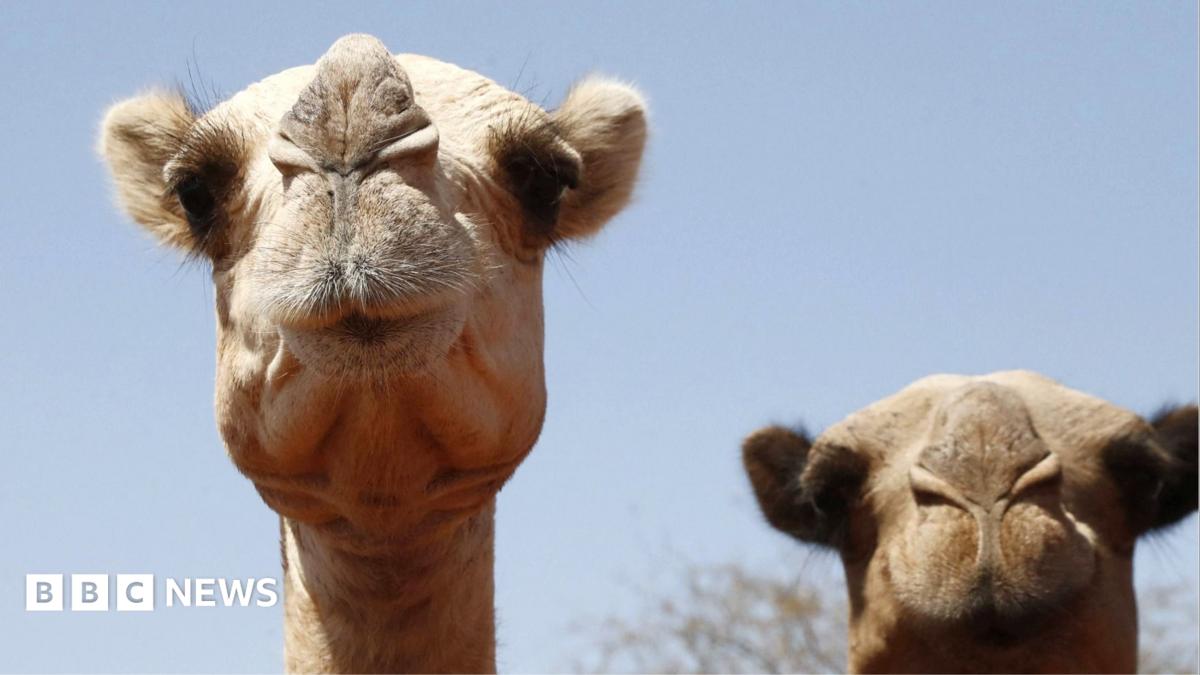
Camels have long been nature's answer to the desert - hardy, humped, and seemingly unbothered by the scorching sun. But even these four-legged heat-beasts are throwing in the towel as Africa's rising temperatures turn their habitat into an oven with no off switch.
In the Afar region of north-eastern Ethiopia - one of the hottest and driest places on Earth - camel herder Ali Umer is watching his animals suffer. 'They get blisters on their feet, their eyes become watery, and the hot sand burns their skin and eats up their hair when they are sitting,' the 40-year-old, who owns around 500 camels, told the BBC. 'Within the past one month I have lost eight camel calves because of the extreme heat. Even the wind, which used to bring cool air, now carries heat.'
Scientists, animal welfare workers, and multiple studies back up Umer's observations: stress, fatigue, dehydration, and disease are all on the rise. North Africa and the Horn of Africa host about 80% of the world's dromedary camels - the one-hump variety - and farmers have increasingly switched to them for their legendary resilience. But a 2025 study based on camel herder perceptions in southern Ethiopia found that high temperatures and climate variability are taking a toll on herd health, affecting 'health, productivity, and reproductive performance.'
In Somalia, the situation is even grimmer. Research published in June shows drought-related camel mortality affecting nearly 46% of camel-owning households. The study of nearly 6,000 pastoral households found that northern regions are hit hardest, with Sool reporting a 'staggering mortality rate of nearly 73%.' Extreme heat is the main driver, though inadequate veterinary services and poor animal management don't help.
Veterinarians are seeing the crisis firsthand. Hassan Nuya Guyo, a veterinary officer in Marsabit county, Kenya, told the BBC: 'We are seeing significant increase in cases of hyperthermia in camels... In the last two years, we have seen a more than 15% increase in camel deaths in our county due to extreme heat.' Studies across the Horn of Africa and North Africa - including one in Algeria - confirm rising death rates during summer heatwaves.
The World Meteorological Organization (WMO) reports that extreme heat events have become common in several North African countries, with heatwaves trending upward since 1981. Temperatures above 50°C were recorded in 2024 across the region and the Middle East. The WMO's State of the Climate in Africa 2025 report notes that North Africa is warming fastest among six subregions - 0.43°C per decade between 1991 and 2025.
Camels can normally handle heat up to about 40°C by letting their body temperature fluctuate, minimizing sweat, and producing concentrated urine and dry feces. Their thick skin also shields them from solar radiation. But Dr Mohammed Bengoumi, a camel health scientist with the UN's Food and Agriculture Organization (FAO), explains: 'In many parts of the Sahara, summer temperatures now frequently exceed 50°C, increasing the risk of severe heat stress.' Professor Abdelmadjid Chehma at the University of Ghardaia in Algeria adds that prolonged heat above 41 - 45°C 'directly attacks their cells,' damaging white blood cells and triggering self-destruction.
The result? Slowed metabolism, reduced food intake, lethargy, fatigue, lower milk production, and reproductive disorders. Professor Mohammed el Khasmi at the University of Casablanca lists weight loss, inflammation, muscle and bone issues, kidney problems, and parasitic infections among the effects.
Herders are voting with their feet. Daniel Gelan, a professor and pastoralist development researcher at Vision University in Ethiopia, says many are moving camels from the historically camel-rich north to the south, where water and vegetation are more available - and this is not seasonal migration. 'They are leaving the northern region for good because they can no longer sustain camel herding there because of extreme heat and drought.'
The Horn of Africa is recovering from a brutal drought from 2020 to 2023, but Oxfam warns that another round is already underway. Water prices in parts of Somalia have soared by more than 2,000%. Umer, back in Afar, fears a disease outbreak could wipe out his adult camels. His worry is well-founded, says Prof Chehma: 'While camels remain the livestock herders' last line of defence against the desert, the unprecedented intensity of current heatwaves directly threatens their vital functions, turning this historically resilient animal into a climate victim.'