El Niño Poised to Give Earth a Permanent Fever, Scientists Warn
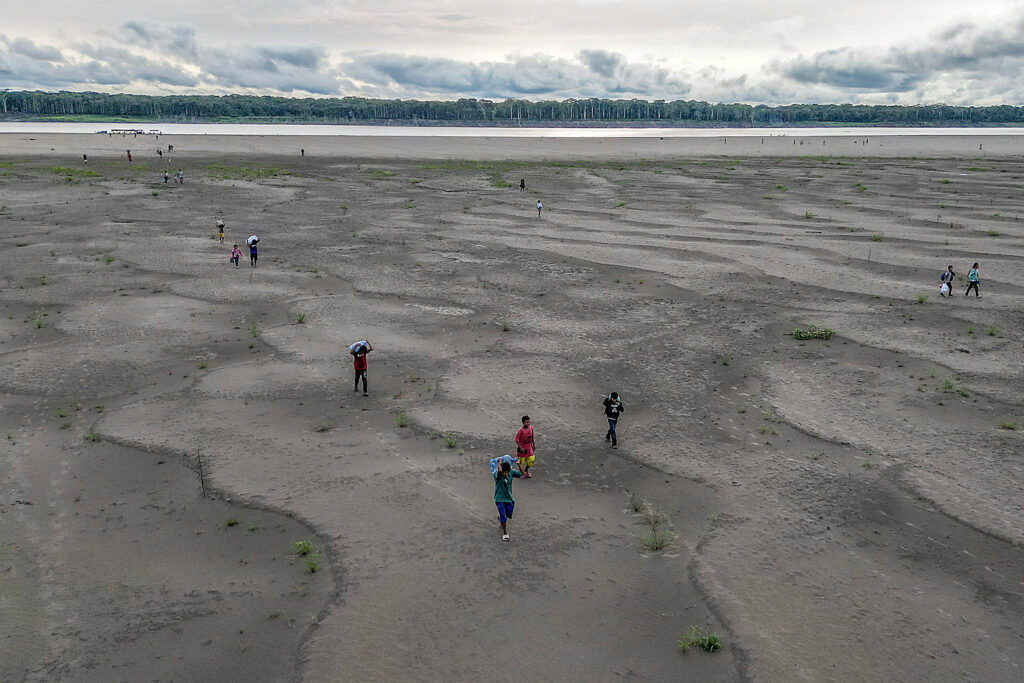
The Pacific is cooking up a super El Niño that could permanently shove Earth past the 1.5°C warming threshold, triggering regime shifts in heat, drought and rainfall patterns - because why have a stable climate when you can have a chaotic one?
The Pacific Ocean is basically a giant climate cauldron, and scientists are watching nervously to see if it's about to boil over. Their projections suggest the tropical Pacific is simmering toward a strong El Niño, the warm phase of an ocean-atmosphere cycle that can intensify and shift impacts on storms, fisheries and rainfall patterns half a world away.
In a world already superheated by greenhouse gases, a strong El Niño during the next 12 to 18 months could permanently push the planet's average annual temperature past the 1.5 degrees Celsius warming threshold - that's the line in the sand enshrined in scientific documents and political agreements as a turning point for potentially irreversible climate impacts. Even a moderately strong El Niño could drive the average global temperature to about 1.7 degrees Celsius above the preindustrial level, climate scientist James Hansen told Inside Climate News. Hansen doubts the world will meaningfully cool back down after the El Niño fades.
Climate scientists recently published a study showing that strong El Niño events can trigger what they called "climate regime shifts," meaning abrupt, lasting changes in heat, rainfall and drought patterns. The study, published December 2025 in Nature Communications, concluded that "super El Niños" are not just passing weather events, but more like climate shocks that can push parts of the Earth system into new states. A super El Niño is defined as when the sea surface temperature anomaly in the tropical Pacific exceeds 2 standard deviations above normal - not an ordinary fluctuation, but more of a systemic warning sign.
There are only three super El Niños on record: in 1982-83, 1997-98 and 2015-16. All of them contributed to regime shifts in regional ocean temperatures, leading to unprecedented marine heat waves that destroyed or damaged coral reefs and caused mass die-offs among marine organisms, from starfish to seabirds. Those impacts persisted for years and could shift some regional patterns for decades. The main "regime-shift hotspots" in oceans include the central North Pacific, the southeastern Indian Ocean, the southwestern Pacific and the Gulf of Mexico.
Even below the 1.5-degree Celsius threshold, California reservoirs no longer fill in some years and overflow with extreme rainfall in others. Coral reefs from Australia to the Caribbean have bleached beyond recovery, and vast tracts of forests burned up in megafires. Traditional crop calendars don't align with seasons. Deadly nighttime heat rises in cities, killing vulnerable people in apartments that never cool.
The practical challenge, said co-author Jong-Seong Kug of Seoul National University, is not just preparing for a single season of extremes, but for a climate shift that will also alter conditions in the future. "Super El Niño may not just cause a one-time extreme event," he wrote. "It can shift the background climate conditions that people and ecosystems rely on."
The U.N. Environment Programme's 2025 Adaptation Gap Report found that international public adaptation finance fell slightly to $26 billion in 2023, even as the cost of climate impacts rises sharply. Developing countries will need $310 billion to $365 billion per year by 2035 to prepare for worsening heat waves, floods and droughts, but global efforts will amount to less than a tenth of what's needed. Adaptation must become anticipatory, strategic and transformational: redesigning water systems, cities, agriculture and infrastructure for a climate unlike anything people have experienced.
The Good Times
News in your inbox.
One sardonic roundup, delivered on your schedule. Free. Unsubscribe whenever your tolerance for wit runs out.
Already subscribed but we never reach your inbox? Check your spam folder and hit 'Not spam' (or 'Remove from spam') to bust us out of junk-mail purgatory. You'll be helping everyone else too.
Don't open any of our emails for a month and you'll be automatically removed from the mailing list.
Rewrite Article
Select parts to regenerate with a fresh AI pass. Translations will be updated automatically.
Generate AI Image
Creates a sardonic version of the article image using OpenAI.