Data Centers Gobble Power, Leave Rust Belt Manufacturers to Eat the Electric Bill
AI data centers are hogging the power grid, leaving Rust Belt factories paying through the nose - and Trump's manufacturing revival plan is getting short-circuited.
US manufacturers in Rust Belt cities are discovering that the AI boom comes with a side of skyrocketing electricity costs, as data center energy demand strains PJM Interconnection, the country's largest power grid operator. The result: steelmakers and brick factories are getting squeezed, potentially undermining President Donald Trump's "Made in America" plan - even as Trump cheerleads the very tech companies driving the data center surge.
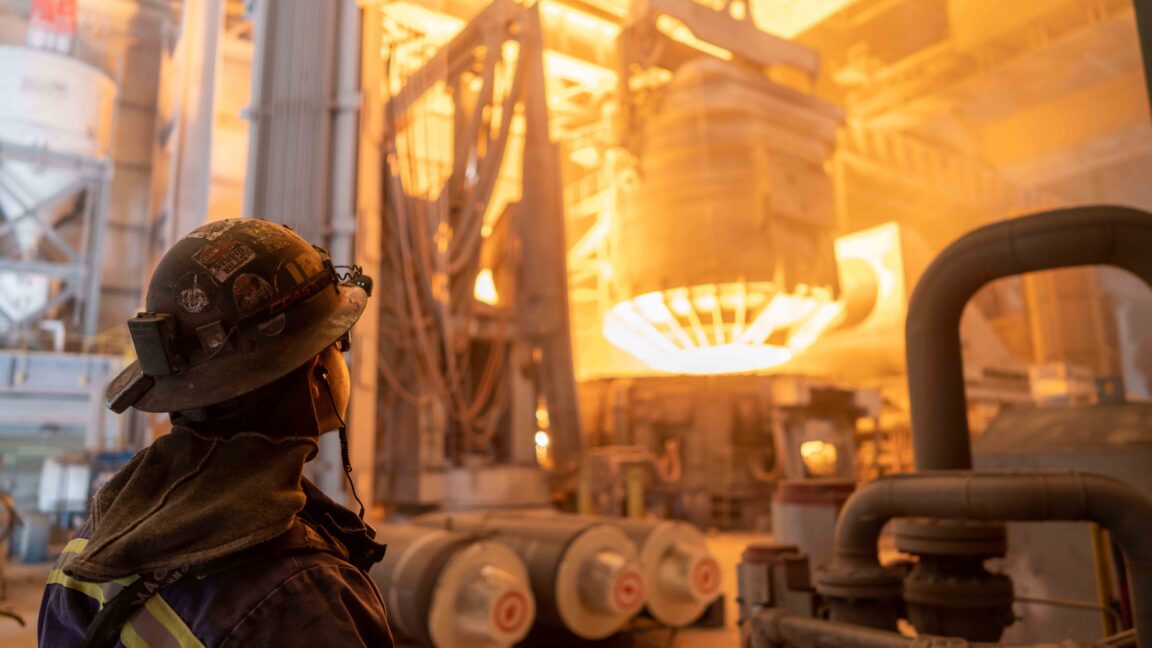
Take the Belden Brick Company, a 141-year-old Ohio institution whose monthly electricity bill leapt from $1,600 to $12,000 thanks to a higher capacity charge in PJM's 13-state region. The Steel Manufacturers Association warns that US steel companies in the Rust Belt are paying tens of millions of dollars more per year in power costs. Electricity already accounts for 20 to 40 percent of steel production costs, and each electric arc furnace guzzles between 40 and 200 megawatts. At peak production, the entire US steel industry draws up to 11 gigawatts - enough to make a data center blush.
Ironically, data center construction has boosted steel demand by about 1 million tons per year, but the energy costs are eating those gains. Ohio-based Metallus reported electricity costs up 70 percent since 2024, adding $15 million annually to its expenses. Meanwhile, PJM's capacity prices - paid to generators based on supply and demand forecasts - have soared from $28.92 per megawatt-day in 2024 to $329.17 per megawatt-day in 2026. PJM warns that electricity demand will outstrip supply by 6.6 gigawatts starting in 2027, equivalent to more than six nuclear plants.
Some manufacturers are passing costs to customers or considering relocation. Steel executives warn of production outages if grids are overwhelmed - hardly a recipe for a manufacturing renaissance, especially after 83,000 manufacturing jobs were lost in Trump's first year back. The White House touts a Ratepayer Protection Pledge from Big Tech to fund new infrastructure, but it lacks enforcement teeth. The administration also pushed PJM to hold a backstop auction for new power supply.
Still, building enough generation and transmission remains a Herculean task. In 2025 alone, 266 gigawatts of power projects were cancelled - 25 percent of US generation capacity, more than Texas's total output. Clean energy accounted for 93 percent of cancellations, fueled by Trump's wind power opposition, local resistance in data-courting states like Ohio and Indiana, and high interconnection costs for new projects. If the goal is to boost manufacturing, policymakers might need to stop shooting themselves in the plug.
The Good Times
News in your inbox.
One sardonic roundup, delivered on your schedule. Free. Unsubscribe whenever your tolerance for wit runs out.
Already subscribed but we never reach your inbox? Check your spam folder and hit 'Not spam' (or 'Remove from spam') to bust us out of junk-mail purgatory. You'll be helping everyone else too.
Don't open any of our emails for a month and you'll be automatically removed from the mailing list.
Rewrite Article
Select parts to regenerate with a fresh AI pass. Translations will be updated automatically.
Generate AI Image
Creates a sardonic version of the article image using OpenAI.