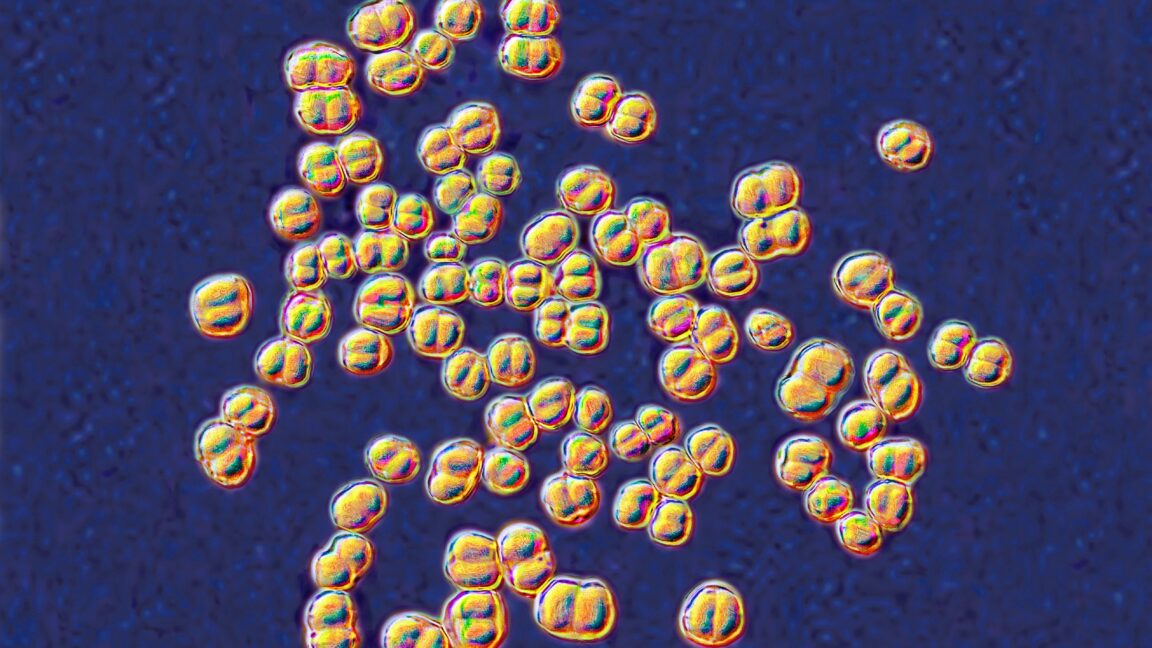
College Microbiology Class Accidentally Identifies Germ Wrong, Gives 32 People a Very Unnecessary Scare
A microbiology lab class's misidentification of a harmless bacterium as a deadly pathogen led to 32 people taking antibiotics, two spinal taps, and a whole lot of unnecessary panic.
A college microbiology lab exercise went from educational exercise to full-blown health emergency when every single student identified a harmless bacterium as a deadly pathogen. The result: 32 people started taking preventive antibiotics, two got spinal taps, and everyone learned a valuable lesson about freezer organization.
The trouble began when students were given mystery bacteria to identify. They were supposed to find Plesiomonas shigelloides, a common, non-scary germ that mostly just causes diarrhea. Instead, every student confidently identified the sample as Neisseria meningitidis, a bacterium that causes life-threatening meningitis and bloodstream infections. The instructors checked the students' work and couldn't find a flaw - the biochemical tests all pointed to the dangerous pathogen.
Panic ensued. University officials discovered that the stockroom freezer holding the harmless bacteria also contained a vial labeled N. meningitidis. They determined that 33 people - students, professors, and lab workers - had been potentially exposed. Since N. meningitidis can spread through aerosols and the students only had gloves and lab coats, no biosafety cabinets, health officials recommended everyone start a 10-day course of preventive antibiotics. All but one person complied. Two people who developed headaches got spinal taps to rule out infection.
Days later, the state public health lab ran mass spectrometry and whole-genome sequencing on the mystery bacteria. The verdict: it was N. sicca, a harmless relative of N. meningitidis. The confusion arose because this particular strain was an "atypical carbohydrate fermenter," meaning it acted like the dangerous germ in the standard tests - and someone had apparently mislabeled the freezer vial years ago.
An investigation found "inadequate inventory controls" and "limited stockroom employee supervision," among other failures. The university has since overhauled its protocols. So while no one actually got sick, 32 people got a course of antibiotics they didn't need, two got unnecessary spinal taps, and everyone got a story that will make future lab classes think twice before jumping to conclusions.
The Good Times
News in your inbox.
One sardonic roundup, delivered on your schedule. Free. Unsubscribe whenever your tolerance for wit runs out.
Already subscribed but we never reach your inbox? Check your spam folder and hit 'Not spam' (or 'Remove from spam') to bust us out of junk-mail purgatory. You'll be helping everyone else too.
Don't open any of our emails for a month and you'll be automatically removed from the mailing list.
Rewrite Article
Select parts to regenerate with a fresh AI pass. Translations will be updated automatically.
Generate AI Image
Creates a sardonic version of the article image using OpenAI.