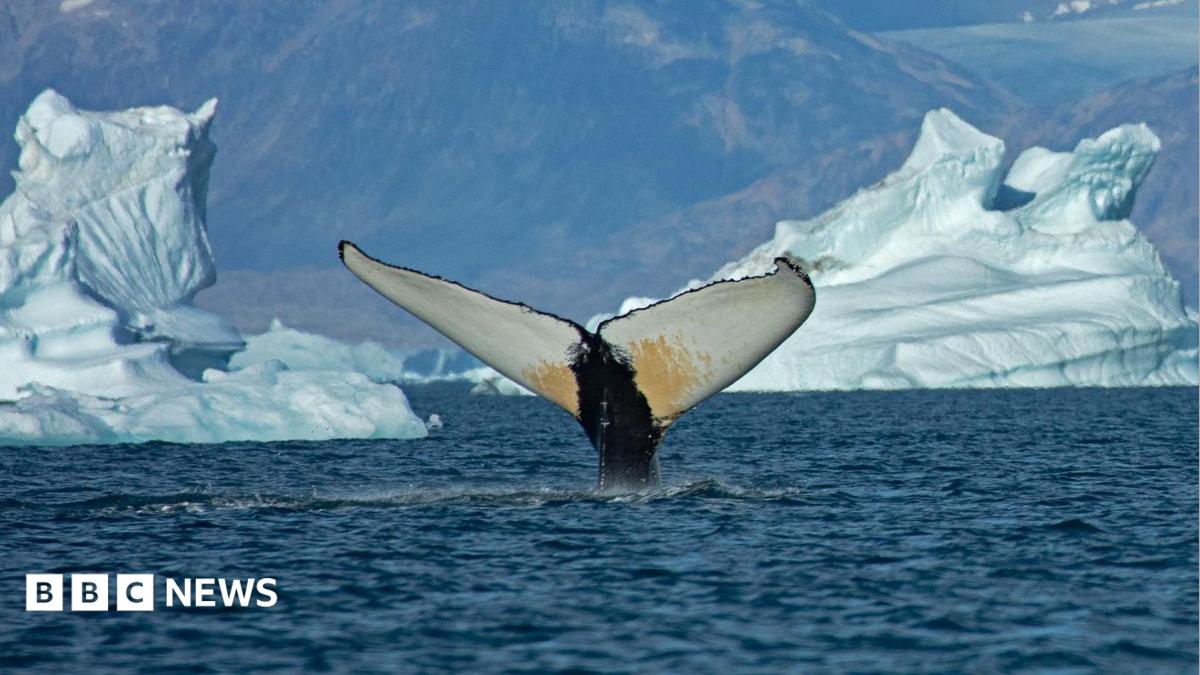
Sea ice has been disappearing from East Greenland, and in a development that has scientists raising both eyebrows and clipboards, giant whales are seizing the opportunity to move into previously inaccessible areas.
A decades-long study has recorded and filmed hundreds of the world's biggest whales - including humpbacks, minke, and fin whales - feeding in ice-free seas along the coast in summer. Historically, these marine mammals were locked out of these coastal waters by ice. But now, as climate change warms the sea and melts that ice, they've adapted. Because who wouldn't want to trade a frozen wasteland for an all-you-can-eat buffet?
Scientists describe the result as seasonal Arctic "feeding frenzies," part of a major regime shift in the ocean environment along East Greenland. The change is dramatic: ship-based surveys in the region did not record a single humpback whale sighting there until 2006. In 2007, seven humpbacks were seen, and by 2024, there were 150 ship-based sightings of these giant whales.
The first systematic aerial surveys of baleen whales - a group that includes fin, minke, and humpbacks - off the East Greenland coast were carried out by researchers during the summers of 2015 and 2024. They combined that information with the tracks of 15 satellite-tagged whales and testimony from Inuit hunters, all building a picture of what lead researcher Prof Mads Peter Heide-Jørgensen called a "major ecological regime shift."
An estimated 4,000 humpback whales, 6,000 fin whales, and 6,000 minke whales visited the Greenland Sea in the summer of 2024. Prof Heide-Jørgensen, from the Greenland Institute of Natural Resources, told BBC News that the changes in the region were "probably the most radical we can see anywhere in the subarctic." That shift is driven by rising sea temperatures and food availability. The whales appear to be feeding on fish that have moved into the warming waters of East Greenland.
The researchers estimated that the three whale species would consume at least 800,000 tonnes of fish and krill during a summer feeding season. But it's not clear from this study whether the change reflects an overall increase in whale populations or just a redistribution from other areas.
Other experts the BBC spoke to were concerned that the study suggested there was an influx of animals from West Greenland - a sensitive issue in Greenland, where some whales are hunted. But the scientists said their findings do suggest that these "opportunistic" baleen whales appear to be adapting and might even be benefiting from the change.
Other Arctic species, however, are "in trouble now," explained Prof Heide-Jørgensen. Animals including narwhals and belugas are sharing habitat with - or even being displaced by - these other whales. "For some species, climate change is not necessarily a problem - it opens up new opportunities," said Prof Heide-Jørgensen, "but other species are losing their habitat."
The study is published in the journal Frontiers in Marine Science.
The Good Times
News in your inbox.
One sardonic roundup, delivered on your schedule. Free. Unsubscribe whenever your tolerance for wit runs out.
Already subscribed but we never reach your inbox? Check your spam folder and hit 'Not spam' (or 'Remove from spam') to bust us out of junk-mail purgatory. You'll be helping everyone else too.
Don't open any of our emails for a month and you'll be automatically removed from the mailing list.
Rewrite Article
Select parts to regenerate with a fresh AI pass. Translations will be updated automatically.
Generate AI Image
Creates a sardonic version of the article image using OpenAI.