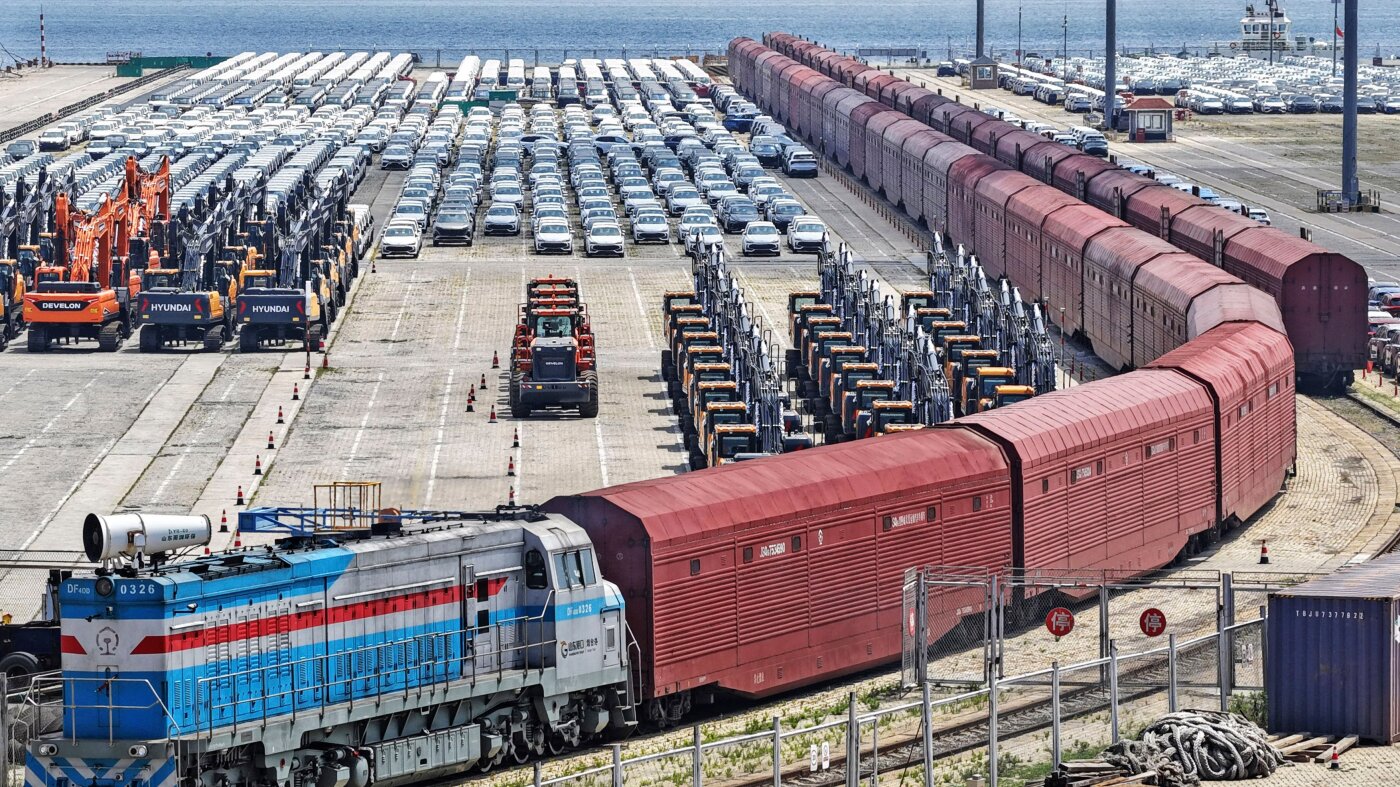
HONG KONG - China's economy clocked in at a 4.3% annualized growth rate for the April-June quarter, the government said Wednesday, marking the weakest performance in over three years and missing forecasts. That's down from a 5% pace in the first quarter, despite a surge in exports fueled by AI demand and global hunger for Chinese electric vehicles.
Exports rose 17.6% in the first half of the year compared to last year, and a whopping 27% in June alone, per customs data. China has largely shrugged off the Iran war's economic fallout, thanks to soaring energy prices pushing up global inflation - but hey, every cloud has a silver lining, right?
Domestic spending and investment, however, have been lagging, limiting the boost from export manufacturing. "This was the slowest growth in any quarter since the lockdown-impacted fourth quarter of 2022," noted Lynn Song, chief economist for Greater China at ING Bank, in a note that probably didn't make anyone in Beijing do a happy dance.
Some economists say China's economy is becoming increasingly unbalanced, with heavy state support and private investments pouring into frontier technologies like AI, computer chips, and robotics, while lower-value manufacturing and service industries wither on the vine. China ran a record $1.2 trillion global trade surplus last year, drawing complaints from other countries about those heavy state subsidies. Industrial output rose 5.4% in the first half of the year.
But the expansion of AI and robotics has also raised domestic worries about job creation. Chinese families have cut back on big purchases, constrained by a prolonged property slump and uncertainties over jobs and wages. "China's growth model has become increasingly imbalanced," said Eswar Prasad, a professor of economics at Cornell University, adding that boosting domestic demand will be tough as confidence remains weak.
Mao Shengyong, deputy head of China's National Bureau of Statistics, admitted that the imbalance between strong supply and weak demand "remains acute." He promised to build a robust domestic market and support employment stability. Meanwhile, investment in fixed assets fell 5.7% year-on-year in the first half, retail sales of consumer goods climbed a meager 1.3%, and housing prices continued to fall.
For the whole of 2026, Chinese leaders have set a growth target of 4.5% to 5%, slower than last year's 5%. Overall growth for the first half was 4.7%. The IMF recently raised its forecast for China's annual growth to 4.6%, but expects it to slow to 4.1% in 2027. So, chin up - it could be worse.
The Good Times
News in your inbox.
One sardonic roundup, delivered on your schedule. Free. Unsubscribe whenever your tolerance for wit runs out.
Already subscribed but we never reach your inbox? Check your spam folder and hit 'Not spam' (or 'Remove from spam') to bust us out of junk-mail purgatory. You'll be helping everyone else too.
Don't open any of our emails for a month and you'll be automatically removed from the mailing list.
Rewrite Article
Select parts to regenerate with a fresh AI pass. Translations will be updated automatically.
Generate AI Image
Creates a sardonic version of the article image using OpenAI.