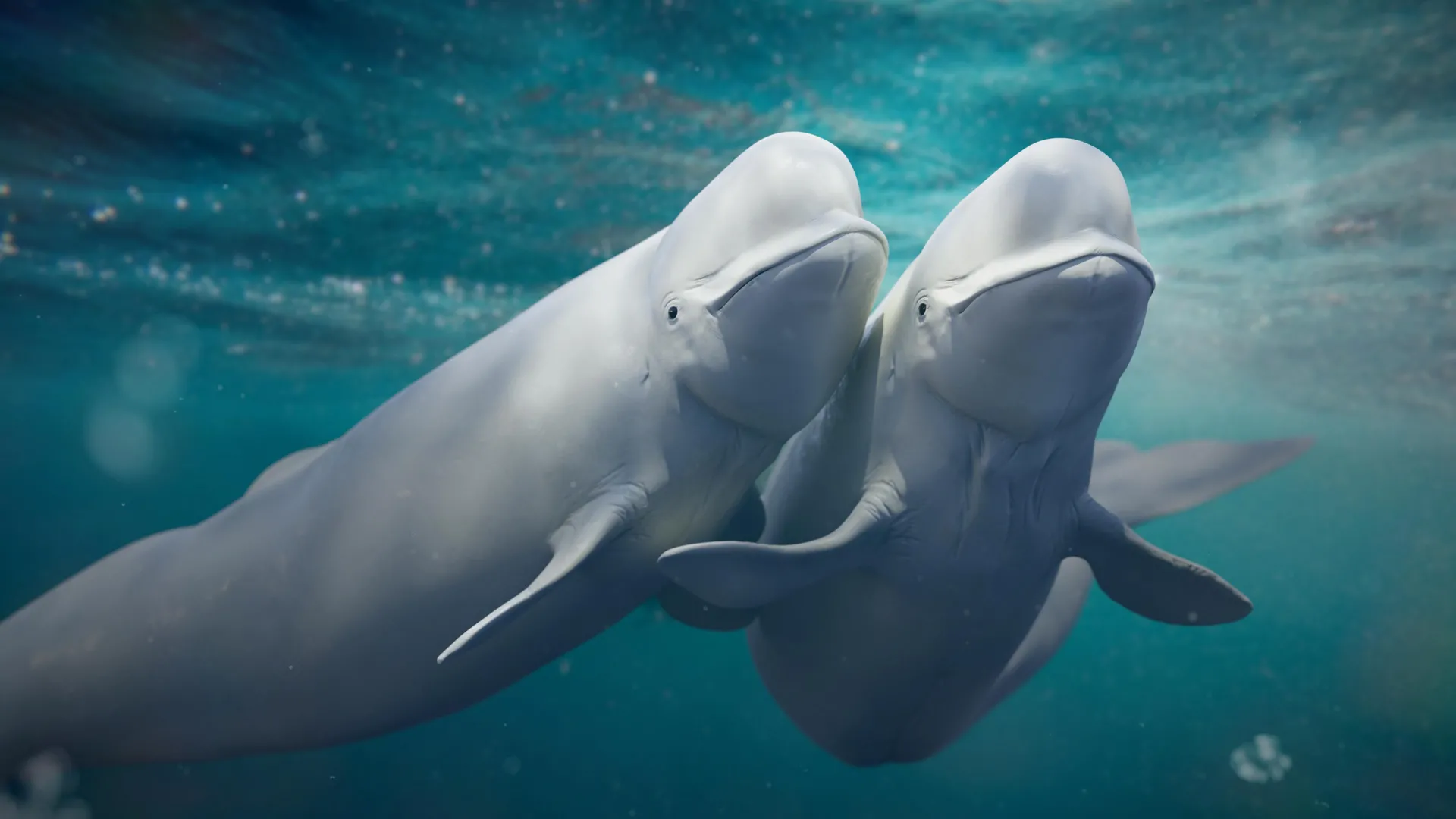
Beluga Whales Reveal They're Basically Aquatic Swinging Singles, and It's Saving Their Species
A 13-year DNA study of 623 beluga whales in Bristol Bay reveals that both males and females are frequent mate-switchers, helping a small, isolated population maintain high genetic diversity and avoid inbreeding.
Beluga whales, those charismatic white blobs of the Arctic, have long been a pain to study. They spend most of their lives under sea ice, because why make things easy for scientists? Now, a 13-year DNA study of 623 belugas in Alaska's Bristol Bay has finally given researchers a peek into their romantic lives, and it turns out these whales are more open-minded than a coastal commune.
Dr. Greg O'Corry-Crowe of Florida Atlantic University, lead author of the paper in Frontiers in Marine Science, admitted that "we still know very little about beluga whales, despite their immense popularity." The primary reason, he noted, is the difficulty of studying a species that lives beneath the waves in the cold and often frozen north. But hey, that's what makes discovery, when it happens, more exciting. Or at least that's what they tell themselves.
The team predicted belugas would have a polygynous mating system - basically, a few big, beefy males hogging all the dates. Male belugas are noticeably larger than females, and females only pop out one calf every few years, so it seemed logical. But the genetic analysis revealed a plot twist: both males and females are serial mate-switchers. Calves with siblings typically shared only one parent, suggesting that belugas are playing the field across multiple breeding seasons.
"Beluga males were indeed polygynous, but, surprisingly, only moderately so," said O'Corry-Crowe. The three-dimensional aquatic environment likely limits a male's ability to successfully court or corral multiple females. However, a long life - belugas can live 90 years or more - may be key. Males may play a long game, securing a few matings each year over a very long reproductive life. The female story is just as fascinating: they regularly switch mates across breeding seasons, possibly a bet-hedging strategy to limit the risk of mating with low-quality males. Think of it as diversifying their romantic portfolio.
One of the most unexpected discoveries involved the population's genetic health. Despite numbering only about 2,000 individuals, the Bristol Bay belugas showed high levels of genetic diversity and little evidence of inbreeding - comparable to much larger populations. "We expected to find low diversity and high inbreeding, but we found something quite different," said O'Corry-Crowe. The mating system likely explains it: frequent mate switching limits the number of highly related offspring, reducing inbreeding risks and diversity loss. "We cannot afford to be complacent, but we can be optimistic that beluga whale mating strategies provide evidence of nature's resilience."
Of course, not all beluga parties are the same. Bristol Bay belugas show relatively small differences in size between males and females compared with some other populations, suggesting different mating systems elsewhere. O'Corry-Crowe's team is now using drones at other locations to try to observe actual mating behaviors in the wild. More on that soon - assuming the whales cooperate.
The study offers one of the clearest views yet into the hidden social lives of beluga whales, suggesting their flexible mating behavior is helping them maintain strong genetic diversity despite living in a relatively small and isolated population. So next time you see a beluga, remember: it's probably got more game than you do.
The Good Times
News in your inbox.
One sardonic roundup, delivered on your schedule. Free. Unsubscribe whenever your tolerance for wit runs out.
Already subscribed but we never reach your inbox? Check your spam folder and hit 'Not spam' (or 'Remove from spam') to bust us out of junk-mail purgatory. You'll be helping everyone else too.
Don't open any of our emails for a month and you'll be automatically removed from the mailing list.
Rewrite Article
Select parts to regenerate with a fresh AI pass. Translations will be updated automatically.
Generate AI Image
Creates a sardonic version of the article image using OpenAI.