Armed Men Storm Hospital, Kidnap Six-Year-Old Ebola Patient in DR Congo - Because Nothing Says 'Medical Skepticism' Like a Knife
Armed men kidnap a six-year-old Ebola patient in DR Congo, proving that misinformation, suspicion, and knives are a terrible combination during an outbreak that's already killed nearly 200 people.
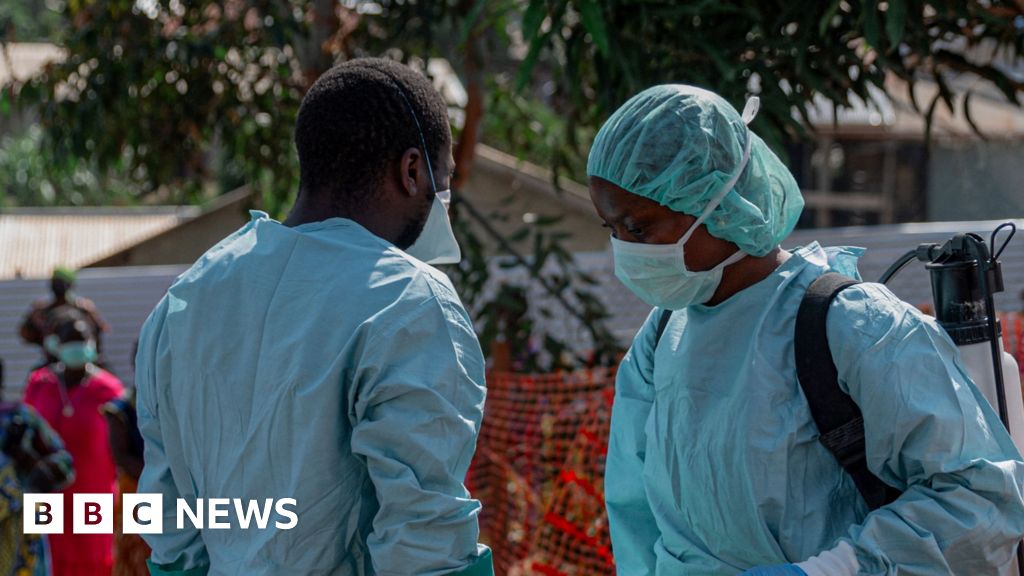
Authorities in eastern Democratic Republic of Congo are hunting for a six-year-old Ebola patient and her mother after armed men stormed the hospital where she was being treated. The child was taken from Wanamahika Hospital in Butembo by what local health official Dr. Lubambo Maboko Gaston described as 'very angry' men wielding knives. It's unclear if the kidnappers knew the child, but given the rampant suspicion and fear surrounding Ebola treatment centers in this outbreak, they probably just thought they were heroically rescuing her from a conspiracy.
Gaston pleaded with the mother and child to go to a health center, warning they risked 'worsening their health' and 'infecting their relatives' - which seems like the understatement of the year for a virus with a fatality rate that can hit 90%.
Ebola treatment facilities have been under repeated attack during this outbreak, which has already seen almost 200 deaths and 840 confirmed cases. Last month, police in Mongbwalu fired warning shots after angry crowds tried to reclaim the bodies of loved ones who died at a health facility. Days earlier, crowds torched isolation tents at a hospital in Rwampara after being prevented from taking the body of a man believed to have died from Ebola - a move that's about as wise as using a flamethrower to fight a grease fire, given that a corpse is highly infectious and can spread the virus during burial preparation.
'People are not properly informed or sensitised about what is happening,' local politician Luc Malembe told the BBC last month. 'For a certain segment of the population, especially in remote areas, Ebola is an invention by outsiders - it does not exist. They believe it is the NGOs and hospitals creating this to make money, and this is tragic.' Indeed, the only thing more tragic than a deadly virus is a deadly virus that people think is a moneymaking scheme.
The outbreak is caused by a rare species of Ebola called Bundibugyo, for which there is currently no vaccine. The World Health Organization says it could take months to develop one. Meanwhile, the head of Africa's Centres for Disease Control and Prevention (CDC), Jean Kaseya, warned that if the outbreak isn't stopped soon, it could exceed the 2014 West African epidemic that killed over 11,000 people, as well as a 2018 outbreak in DR Congo. 'If we don't stop the outbreak very soon it will be worse than what we had in West Africa and eastern DRC,' he told a meeting of African heads of state and donors.
Kaseya noted that many people who come into contact with infected individuals are still not being traced - a key control measure. 'We have an outbreak in an urban area where there is insecurity, where there is this mining and trade activity, and also where we are not reaching all the people who must be in the contact list. If we don't reach these people, we cannot say that we can win with this outbreak,' he said.
The Congolese health ministry says it has stepped up surveillance, contact tracing, and treatment infrastructure. The WHO has dedicated $3.9 million to the response, while Africa CDC has announced a $319 million budget. Cases are currently concentrated in Ituri, South Kivu, and North Kivu - where the six-year-old was abducted on Monday. Ituri remains the main transmission center. The WHO warns that conflict in eastern DR Congo, including control by the M23 rebel group over large parts of North and South Kivu, is making it even harder to tackle the outbreak. Because nothing says 'public health crisis' like adding armed insurgency to the mix.
The Good Times
News in your inbox.
One sardonic roundup, delivered on your schedule. Free. Unsubscribe whenever your tolerance for wit runs out.
Already subscribed but we never reach your inbox? Check your spam folder and hit 'Not spam' (or 'Remove from spam') to bust us out of junk-mail purgatory. You'll be helping everyone else too.
Don't open any of our emails for a month and you'll be automatically removed from the mailing list.
Rewrite Article
Select parts to regenerate with a fresh AI pass. Translations will be updated automatically.
Generate AI Image
Creates a sardonic version of the article image using OpenAI.