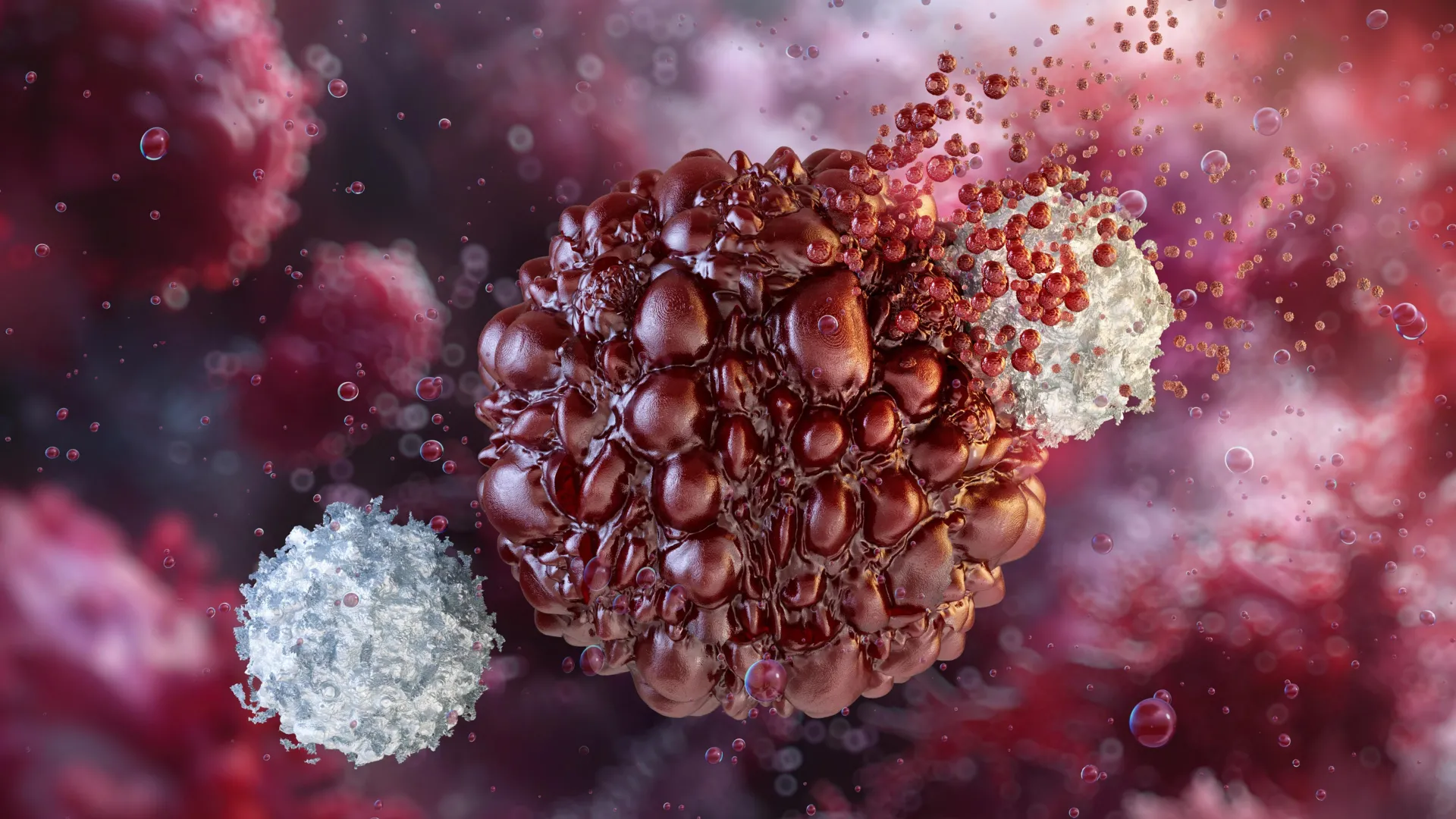
Ancient Protein That Predates Blood Circulation Shows Up to Save Cancer Immunotherapy
An ancient protein that predates blood circulation turns out to be a key player in cancer immunotherapy - but only when it stays local. Bloodstream C3 is apparently too busy being useless.
Scientists at Nagoya University have discovered that an immune molecule so old it predates blood circulation - and is found in sponges and jellyfish - might give cancer immunotherapy a much-needed boost. The protein, complement C3, can keep immune-suppressing cells from accumulating in tumors, but only when it's made locally within the tumor itself. C3 traveling through the bloodstream? Useless. Typical.
The findings, published in Nature Communications, suggest that mimicking this local effect could help patients whose tumors don't produce enough C3 naturally - which, given the alternative, is probably a good thing.
C3 is mostly produced in the liver and released into the bloodstream to fight infections, but its role when made directly inside tissues has been a mystery. "Cancer tumors are surrounded by normal cells called fibroblasts. Until now, the role of complement C3 produced by these cancer-associated fibroblasts within tumor tissue was not known," said lead author Yuki Miyai, assistant professor at the Graduate School of Medicine, Nagoya University.
In experiments, the researchers found that C3 made within tumor tissue blocks immunosuppressive myeloid cells from entering the tumor microenvironment. These cells weaken the body's ability to attack cancer, so keeping them out gives the immune system a fighting chance.
To see if bloodstream C3 mattered, the team conducted mouse experiments that distinguished between C3 from different sources. When liver-produced C3 was reduced by 90%, an immunotherapy drug (anti-PD-1 antibody) worked just as well as normal. But when fibroblasts inside the tumor stopped producing C3 - even though circulating C3 only dropped by 9% - the same treatment became less effective.
"What determined the efficacy of the immunotherapy treatment was not the C3 in the blood, but the local C3 produced at the tumor site. When this C3 breaks down, it forms a fragment called iC3b that stops harmful myeloid cells from entering the tumor. As a result, immunotherapy is more likely to work," Miyai explained.
The team then tested a drug that mimics C3's blockading effect in cancers that normally resist immunotherapy. It worked, allowing treatment to attack previously resistant tumors and significantly extending survival in mice.
The findings could help identify which patients benefit most from immunotherapy and lead to new options for non-responsive cancers. In tumor samples from lung cancer patients, those with higher C3 levels in surrounding tissue had better treatment results and longer survival. About half of patients with high local C3 responded; none with lower levels did. Bloodstream C3 levels were, once again, irrelevant.
Next, the researchers plan to test ways to increase C3 inside tumors and determine the best timing for treatment. They also suspect local C3 activity might explain other biological processes, like wound healing and inflammation regulation - because why not add more jobs to an ancient protein's résumé?
The Good Times
News in your inbox.
One sardonic roundup, delivered on your schedule. Free. Unsubscribe whenever your tolerance for wit runs out.
Already subscribed but we never reach your inbox? Check your spam folder and hit 'Not spam' (or 'Remove from spam') to bust us out of junk-mail purgatory. You'll be helping everyone else too.
Don't open any of our emails for a month and you'll be automatically removed from the mailing list.
Rewrite Article
Select parts to regenerate with a fresh AI pass. Translations will be updated automatically.
Generate AI Image
Creates a sardonic version of the article image using OpenAI.