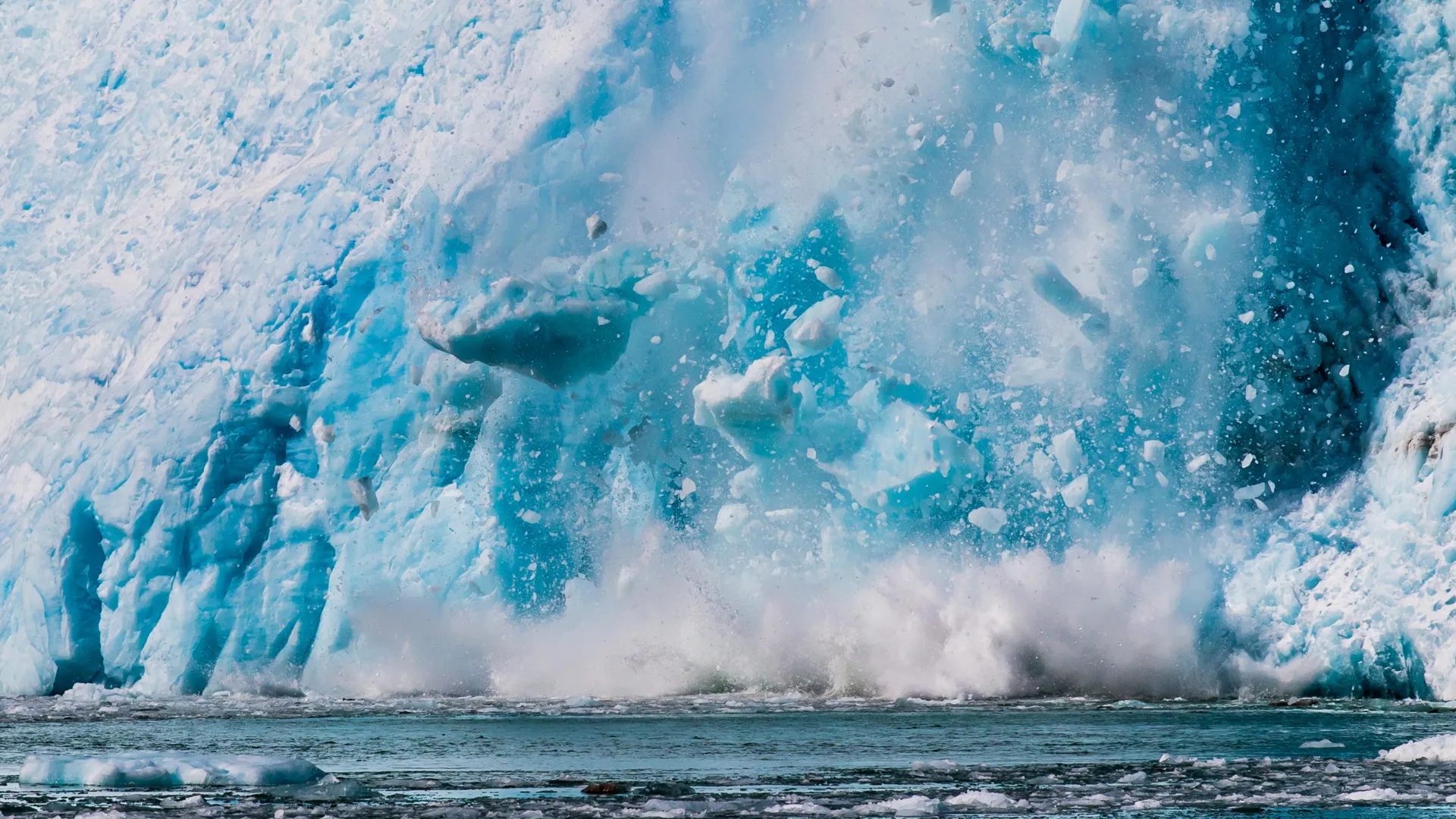
Alaska's Glaciers: A One-Degree Temperature Hike Means Three Extra Weeks of Melting, Because of Course
A one-degree Celsius temperature rise adds three weeks of glacier melting in Alaska, thanks to satellite radar that can see through clouds and darkness - because optical instruments just can't handle a little snow.
Alaska's glaciers, it turns out, are quite sensitive to rising temperatures - a revelation that will shock exactly no one. New research using satellite radar observations has confirmed that every 1 degree Celsius increase in average summer temperatures extends glacier melting by roughly three weeks. That's 1.8 degrees Fahrenheit for those keeping score at home.
The study, led by recent Carnegie Mellon Ph.D. graduate Albin Wells and co-authored by Carnegie Mellon assistant professor David Rounce and Mark Fahnestock of the University of Alaska Fairbanks Geophysical Institute, demonstrates that synthetic aperture radar (SAR) can automatically and consistently monitor glaciers and their snowlines year-round. Traditionally, scientists have measured snowlines near the end of the melt season using optical instruments - which, as Fahnestock notes, can be thwarted by something as simple as a fresh snowfall. "If you're a day late taking your picture, it might have snowed on the entire glacier, and you can't see where the bare glacier ice is down below," he said. SAR, which uses microwave pulses and doesn't rely on sunlight, can see through clouds and darkness. So it's basically the night-vision goggles of glaciology.
Using data from Europe's Sentinel-1 radar satellites, the team monitored seasonal changes on nearly every Alaska glacier larger than about half a square mile between mid-2016 and 2024 - more than 3,000 glaciers in all. They measured "melt days," which can mean a full 24-hour period of melting across an entire glacier, or a cumulative effect over several days. More melt days equals a longer melt season, which means more ice loss. The researchers also discovered that short-term heat waves can dramatically reduce the protective snow cover on glaciers. During unusually warm periods, glaciers lost up to 28% more snow than in typical years - at the scale of individual mountain ranges, anyway.
The scientists took a particularly close look at an intense Alaska heat wave from June 23 to July 10, 2019, which affected every glaciated region except the Brooks Range. For nearly two weeks, temperatures ran 20 to 30 degrees above average, breaking several all-time records, including a 90-degree Fahrenheit reading at Ted Stevens Anchorage International Airport. (Typical summer highs in Anchorage are mid-60s.) The extreme heat pushed glacier snowlines nearly 350 feet higher in elevation - levels that wouldn't normally be reached until about two months later. Bare ice and firn - that's partially compacted granular snow, for the uninitiated - remained exposed longer, increasing overall ice loss. The authors note this "highlights the sensitivity of glaciers to short-term climatic variability."
The study also found consistent differences between coastal and inland glaciers. Coastal glaciers experience more melt in summer and more accumulation in winter, while inland glaciers behave differently - even though many are losing ice at broadly similar rates. As Wells put it, "Our ability to quantify these changes is really important. Melt extents and snowlines are proxies for glacier mass balance." That's the difference between how much snow and ice a glacier gains versus loses over time. And with these temperature correlations, "we can anticipate how much melt or snowline retreat we can expect under future, warmer climates across the region." In other words: more melting, more often, for longer. You're welcome.
The Good Times
News in your inbox.
One sardonic roundup, delivered on your schedule. Free. Unsubscribe whenever your tolerance for wit runs out.
Already subscribed but we never reach your inbox? Check your spam folder and hit 'Not spam' (or 'Remove from spam') to bust us out of junk-mail purgatory. You'll be helping everyone else too.
Don't open any of our emails for a month and you'll be automatically removed from the mailing list.
Rewrite Article
Select parts to regenerate with a fresh AI pass. Translations will be updated automatically.
Generate AI Image
Creates a sardonic version of the article image using OpenAI.