World's Largest Sand Island's Lakes Dried Up During a Rainy Period, Because Nature Has a Sense of Humor
K'gari's freshwater lakes dried up during a rainy period 7,500 years ago, because wind patterns redirected the rain elsewhere - proving that even nature enjoys a cruel irony.
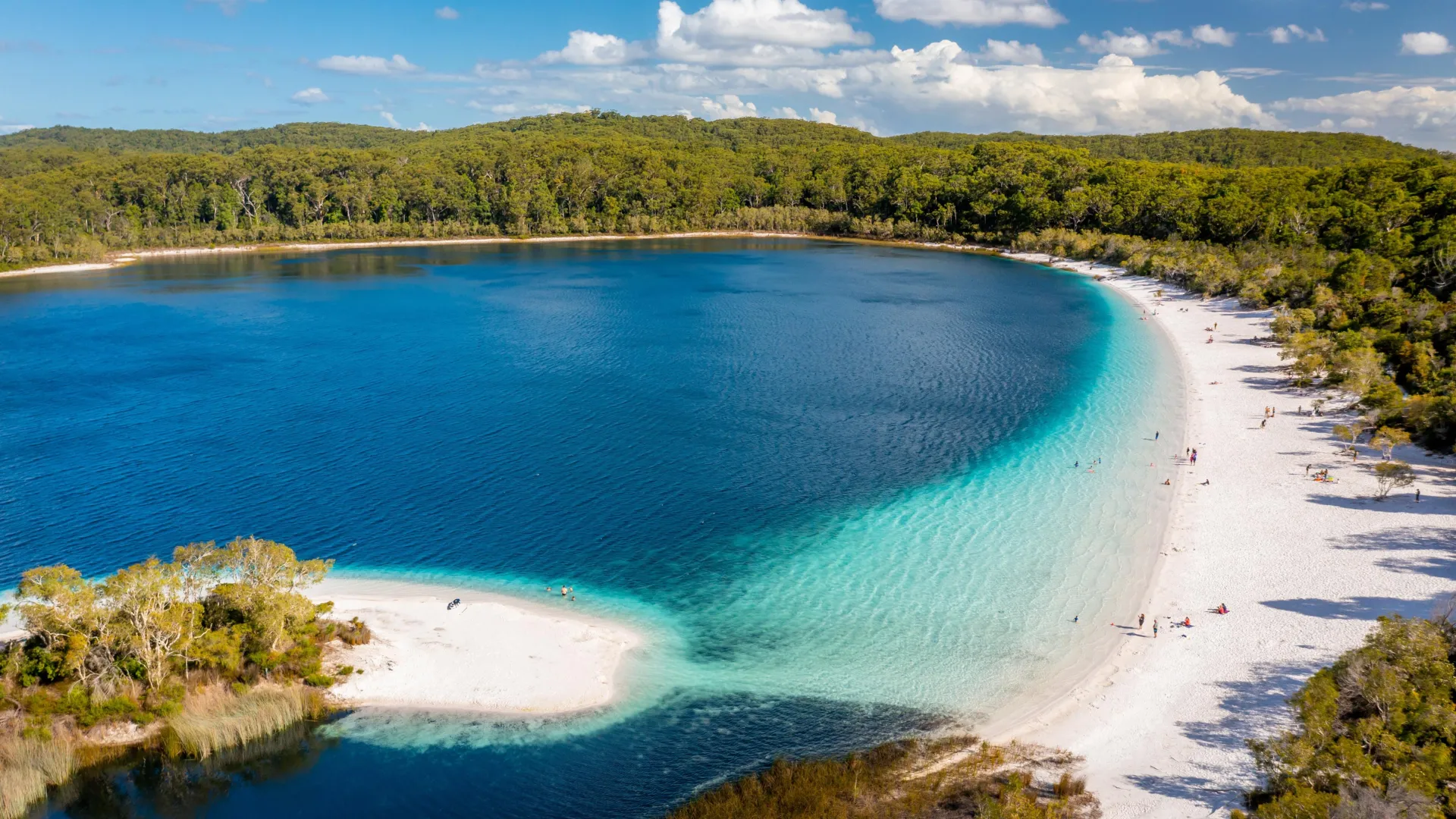
K'gari, the world's largest sand island, is famous for its stunning freshwater lakes - which, according to new research from the University of Adelaide, have a history of pulling disappearing acts even when it's pouring rain.
By digging into ancient lake sediments, researchers discovered that several of K'gari's biggest and deepest lakes dried out about 7,500 years ago, during the middle Holocene - a period that was, ironically, wetter than today. “Our research shows that about 7500 years ago, at a time of higher rainfall and long after the end of the last Ice Age, some of K'gari's deepest lakes dried out,” said lead researcher Associate Professor John Tibby, whose study was published in *Quaternary Science*.
Lake drying is not exactly headline news in Australia, where droughts regularly turn water features into dust bowls. But this particular dry spell happened during a relatively rainy era, which is like getting sunburned on a cloudy day. “The K'gari lakes we studied have been in existence for between 35,000 and 55,000 years, but the drying event we've identified happened unexpectedly during a time of heavy rainfall,” Tibby said.
The culprit? Wind patterns, apparently. Co-author Dr. Harald Hofmann from CSIRO explained that ancient south-east trade winds may have directed rain toward neighboring Minjerribah instead of K'gari. “Prior research shows Minjerribah also experienced heavy rainfall events at this time, but, because of south-east trade winds that were occurring at the time, rainfall from the south only fed into lakes on Minjerribah, not those on K'gari,” he said. So the rain fell, just not where it was needed - a classic case of meteorological misdelivery.
The researchers identified the ancient drying event by studying sediment cores from some of K'gari's oldest lakes. “A lake's sediment is like a journal where what happens in and around the lake gets recorded,” Tibby said. The journal entry between 7,500 and 5,500 years ago reads: “No water here - try again later.”
The findings raise worrying questions about the lakes' future, especially as climate change brings more intense but less reliable rainfall. “With a climate that is expected to get drier, but with more intense rainfall, we simply don't know if these lakes are at risk of drying out,” Hofmann said.
For the Butchulla people, the Traditional Owners of K'gari, the lakes are known as “The Eyes of K'gari” and carry deep cultural and spiritual significance. Co-author and Butchulla man Conway Burns put it poetically: “When you stand before the lakes of K'gari, you do not merely see reflections of sky and forest; you see the soul of Country gazing back at you.”
So while scientists scratch their heads over ancient weather patterns, the message is clear: These lakes are precious, vulnerable, and not to be taken for granted - even when it's raining cats and dogs.
The Good Times
News in your inbox.
One sardonic roundup, delivered on your schedule. Free. Unsubscribe whenever your tolerance for wit runs out.
Already subscribed but we never reach your inbox? Check your spam folder and hit 'Not spam' (or 'Remove from spam') to bust us out of junk-mail purgatory. You'll be helping everyone else too.
Don't open any of our emails for a month and you'll be automatically removed from the mailing list.
Rewrite Article
Select parts to regenerate with a fresh AI pass. Translations will be updated automatically.
Generate AI Image
Creates a sardonic version of the article image using OpenAI.