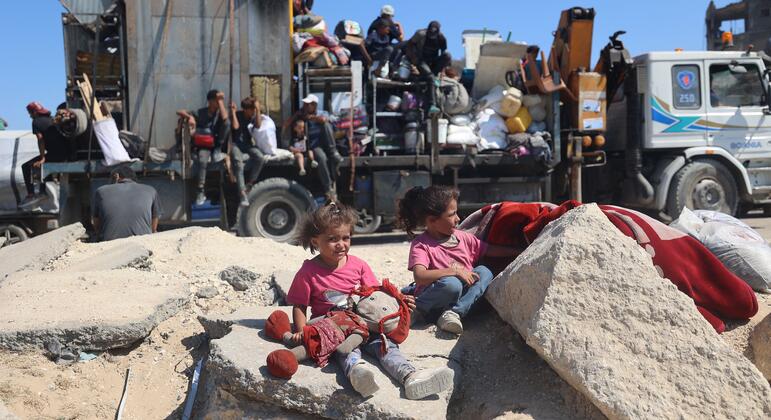
UNICEF Reports Gaza Children Trapped in 'Endless Cycle of Suffering' Parents Helpless Witnesses
UNICEF reports Gaza's children face rats, sewage, disease, and malnutrition in an 'endless cycle of suffering' while parents watch helplessly - and the agency begs for basic humanitarian access.
The Gaza Strip has become a grim playground where children are trapped in what UNICEF is calling an 'endless cycle of suffering' - and their parents can only watch, heartbroken. Salim Oweis, a UNICEF communication specialist, dropped that cheerful update at the bi-weekly humanitarian briefing in Geneva on Friday, painting a picture that makes Dante's Inferno look like a vacation brochure.
Take Hind, a mother who hasn't slept since her four-year-old daughter Masa was bitten by a rat in the night. The family shelters in a building where sewage water leaks through the ceilings and rodents crawl through cracks and climb exposed pipes. Because nothing says 'safe haven' like a rat-infested sewage waterfall.
Then there's Amani, caring for her seven-year-old daughter Lemar, who has lesions and sores on her head, back, and legs from a bacterial infection. Amani tries to clean her daughter's wounds daily with the little clean water she can get - which is hard to find - as Lemar screams in agony. It's a routine that would break anyone.
Abdel Aleem and his family have layered sandbags around their tent to ward off rats, which 'simply chew through it.' Stopping them is futile, Oweis noted. Both Abdel Aleem and his eight-month-old son Ahmad, as well as his pregnant sister-in-law, have been bitten in recent weeks. The rats are winning.
The common thread, Oweis said, is 'the sheer heartbreak of parents who no longer feel able to do the thing most innate to them - protect their children's health and safety.' Gaza, already one of the most densely populated places on Earth, now crams people into about 40 percent of the remaining space, amid broken buildings, rubble, and mounting solid waste. Families don't have enough clean water and must choose between drinking, washing, and cooking with what little they have.
UNICEF is trying to reach up to 1.5 million people a month with clean water but keeps hitting obstacles. Last month, two UNICEF-contracted truck drivers were killed while collecting water at Al Mansoura filling point - a station that more than a quarter-million people rely on, now inaccessible. Critical items like oil, water treatment chemicals, and spare parts aren't being allowed into Gaza at the needed scale. Solid waste piles up daily alongside rubble, and both need clearing.
The effects are visible: children with respiratory infections, acute watery diarrhea, and more than half of all households reporting skin diseases. Fleas, lice, and scabies are commonplace. Increasing numbers of children require hospitalization - all without a single fully functioning hospital across Gaza.
Humanitarians have managed to reverse famine conditions, but the number of malnourished and vulnerable children remains extremely serious. Without enough clean water and fuel to cook proper meals, even children who recover with treatment will quickly fall back into a cycle of malnutrition - effects that can last a lifetime.
Oweis stressed that no parent should be in a position where they cannot provide their child with basic needs, nor should they have to watch their children suffer pain from lesions or weakness due to preventable diarrhea. 'That this is happening should be - to everyone - entirely unconscionable,' he said. 'Access to water, adequate nutritious food, and healthcare should not be conditional for any child, anywhere.'
UNICEF is calling for unfettered humanitarian access, lifting restrictions on items needed to repair water and sanitation systems, and upholding international humanitarian law. In other words, the bare minimum.
The Good Times
News in your inbox.
One sardonic roundup, delivered on your schedule. Free. Unsubscribe whenever your tolerance for wit runs out.
Already subscribed but we never reach your inbox? Check your spam folder and hit 'Not spam' (or 'Remove from spam') to bust us out of junk-mail purgatory. You'll be helping everyone else too.
Don't open any of our emails for a month and you'll be automatically removed from the mailing list.
Rewrite Article
Select parts to regenerate with a fresh AI pass. Translations will be updated automatically.
Generate AI Image
Creates a sardonic version of the article image using OpenAI.