UN Warns South Sudan's First Elections Could Come With a Side of Atrocity Crimes
South Sudan's upcoming elections might be less 'democratic milestone' and more 'atrocity crime buffet,' warns a UN probe, with 407 ceasefire violations already on the menu.
South Sudan's under-reported humanitarian crisis might be about to get a sequel nobody asked for, according to a UN-backed probe that warned on Thursday that renewed fighting could lead to further atrocity crimes.
With the country gearing up for its first national elections since independence, the UN Commission on Human Rights in South Sudan stressed that "multiple risk factors for atrocity crimes are converging." The window to prevent a return to the scale of atrocities and displacement seen between 2013 - 2018 is "closing, but it has not yet completely shut." So there's still time, but the clock is ticking.
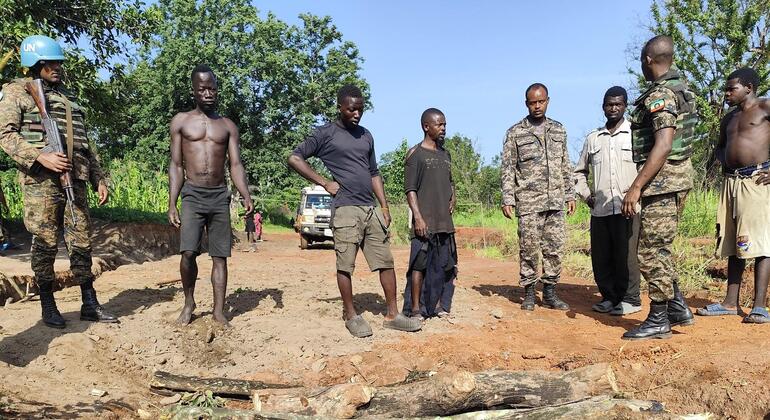
Armed conflict has resumed in several states, including Upper Nile, Jonglei, and Unity, with clashes and civilian deaths also reported in Western and Central Equatoria. A total of 407 ceasefire violations were recorded from August 2025 to January 2026. That's a lot of violations for a ceasefire that's supposed to be holding.
"Fifteen years after independence, South Sudan is at one of its most dangerous points," the Commission said, noting that "rushing to elections" without essential safeguards could deepen existing conflicts and increase the risk of genocide, crimes against humanity, war crimes, and ethnic cleansing.
Back in 2018, warring parties committed to the Revitalized Agreement on the Resolution of the Conflict in South Sudan (R-ARCSS). Today, almost half of its key provisions remain unimplemented, including the unification of security forces. Instead, the people of South Sudan endure a "worsening political, security, humanitarian and human rights situation" marked by political division and conflict-related abuses.
The Commission, established in March 2016 and renewed annually by the UN Human Rights Council, is made up of Yasmin Sooka, Barney Afako, and Carlos Castresana Fernández - senior experts in human rights and international law who don't get paid for their trouble.
According to the UN Framework of Analysis for Atrocity Crimes, which lists eight warning signs, the Commission finds "most are present and intensifying at once in South Sudan." Chief among these are "renewed armed conflict, weakened institutions, entrenched impunity, exclusionary governance, corruption, shrinking civic space and inflammatory rhetoric."
Meanwhile, the mechanisms that could mitigate these risks - ceasefire monitoring, independent justice institutions, and inclusive political dialogue - have been "weakened or suspended." Inclusive politics are "being abandoned" in Juba, civic space and constitutional safeguards are weakened, and accountability mechanisms "remain largely absent."
Significant parts of the population remain excluded from meaningful political participation, the panel noted. "Without a return to genuine and inclusive dialogue, the political contest surrounding the elections risks deepening existing divisions rather than providing a peaceful means of resolving them."
Commission Chair Yasmin Sooka insisted that South Sudanese who have "waited 15 years to cast their first ballots" have the right to choose their government through free, peaceful, and democratic elections. "Elections must not be allowed to create another violent battleground," said Commissioner Barney Afako. "The guns are returning while the safeguards for peaceful political competition are disappearing. That is a profoundly dangerous trajectory."
Commissioner Carlos Castresana Fernández added: "An election cannot be credible simply because it is held on schedule. It is credible when citizens can vote without fear, political opponents can participate freely, courts can resolve disputes independently, and institutions can constrain the exercise of power."
In other words, holding an election on time is great, but it helps if people aren't being shot while they vote.
The Good Times
News in your inbox.
One sardonic roundup, delivered on your schedule. Free. Unsubscribe whenever your tolerance for wit runs out.
Already subscribed but we never reach your inbox? Check your spam folder and hit 'Not spam' (or 'Remove from spam') to bust us out of junk-mail purgatory. You'll be helping everyone else too.
Don't open any of our emails for a month and you'll be automatically removed from the mailing list.
Rewrite Article
Select parts to regenerate with a fresh AI pass. Translations will be updated automatically.
Generate AI Image
Creates a sardonic version of the article image using OpenAI.