UK Government to Ban Under-16s from Social Media, Because Apparently Asking Nicely Didn't Work
UK plans to ban under-16s from social media, because parents are tired of fighting the infinite scroll and the government is ready to pick a fight with Silicon Valley.
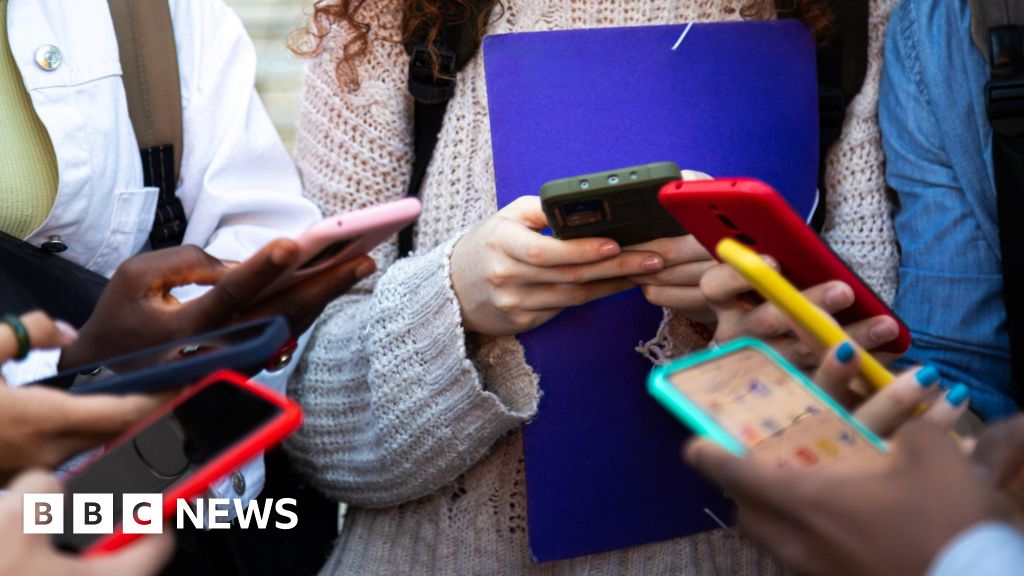
Prime Minister Sir Keir Starmer is expected to announce a ban on under-16s using major social media platforms including TikTok, Snapchat, and Instagram, in what the government is calling 'Australia-plus' - which sounds like a streaming service bundle but is actually just stricter rules for children's internet use.
The UK will also stop kids from livestreaming on 'safer' sites and prohibit them from talking to strangers on gaming apps. Ministers are, somewhat ominously, considering social media curfews for children, though they'll keep us guessing on that until next month.
Australia introduced the world's first outright ban on social media for under-16s in December 2025, and Whitehall sources say the UK scheme - to be unveiled by Starmer on Monday morning - will 'go further' with additional measures including curfews for older teenagers and restrictions on AI chatbots.
'This is a choice about whose side we're on: families across the country, or a status quo that isn't working,' Starmer said, adding he would 'call time on a system that's failing our kids.' Because nothing says 'bold action' like a prime minister using a phrase that sounds like he's closing time at a pub.
The Sunday Times reported the ban will cover the same 10 platforms prohibited for under-16s in Australia: TikTok, Snapchat, Instagram, YouTube, Reddit, Twitch, X, Threads, Facebook, and Kick. That's a lot of doomscrolling opportunities for the over-16s to enjoy.
A government consultation found that 90% of parents who responded backed a social media ban for under-16s, with more than 83% saying the benefits of social media were outweighed by the risks. But not everyone is thrilled. Ian Russell, father of Molly Russell who took her own life aged 14 after seeing harmful content online, told the BBC he would be 'dismayed' by such bans, warning they would 'create a false sense of safety' and push children to other parts of the internet.
'If he's playing politics, what he's doing is gambling with young people's lives - and I find that deplorable,' Russell said, accusing Starmer of rushing the policy for 'a political reason.'
Culture Secretary Lisa Nandy, meanwhile, told the BBC that technology firms have had 'more than enough time to get their house in order' and that the question is 'how, not whether, we better protect children online.' She acknowledged the Australian ban has shown some young people will find ways around restrictions, but argued it still creates cultural change: 'At the ages of 8, 9, 10 and 11, children aren't presuming they are going to be in these spaces because all of their friends are.'
The announcement comes a fortnight after the government's three-month consultation closed, which received 116,000 responses. As well as an outright ban, the consultation proposed less dramatic interventions like switching off addictive features (infinite scroll, autoplay), curfews, strengthened age verification, and restricted AI chatbot use. But apparently the government decided that subtlety is for people who don't have headlines to make.
The Good Times
News in your inbox.
One sardonic roundup, delivered on your schedule. Free. Unsubscribe whenever your tolerance for wit runs out.
Already subscribed but we never reach your inbox? Check your spam folder and hit 'Not spam' (or 'Remove from spam') to bust us out of junk-mail purgatory. You'll be helping everyone else too.
Don't open any of our emails for a month and you'll be automatically removed from the mailing list.
Rewrite Article
Select parts to regenerate with a fresh AI pass. Translations will be updated automatically.
Generate AI Image
Creates a sardonic version of the article image using OpenAI.