The Invisible Bacterium That Broke Biology's Nitrogen Rule (It Was Inside an Algae All Along)
A bacterium that broke biology's nitrogen rule was hiding inside an algae all along, and it took two obsessed scientists and some seaweed noodles to find it.
For decades, oceanographer Jon Zehr was haunted by an organism he knew existed but couldn't see. In the 1990s, aboard a research boat in the middle of the ocean, Zehr set out to find new nitrogen-fixing bacteria. Using cutting-edge DNA techniques, he detected a previously unknown species of unicellular cyanobacteria, about 3 micrometers in size. But when he looked under the microscope, nothing matched. The genetic footprint was there, but the bacterium was invisible.
Zehr searched everywhere - from the tropical waters of Hawaii to the Arctic - but kept coming up empty. The mystery deepened when his team discovered the organism had lost about 80% of its genome, including genes needed for photosynthesis. How was it even alive? Then Zehr noticed a pattern: every sample containing the mystery DNA also contained DNA from a specific type of algae, Braarudosphaera bigelowii. Perhaps the bacterium was hiding inside another organism.
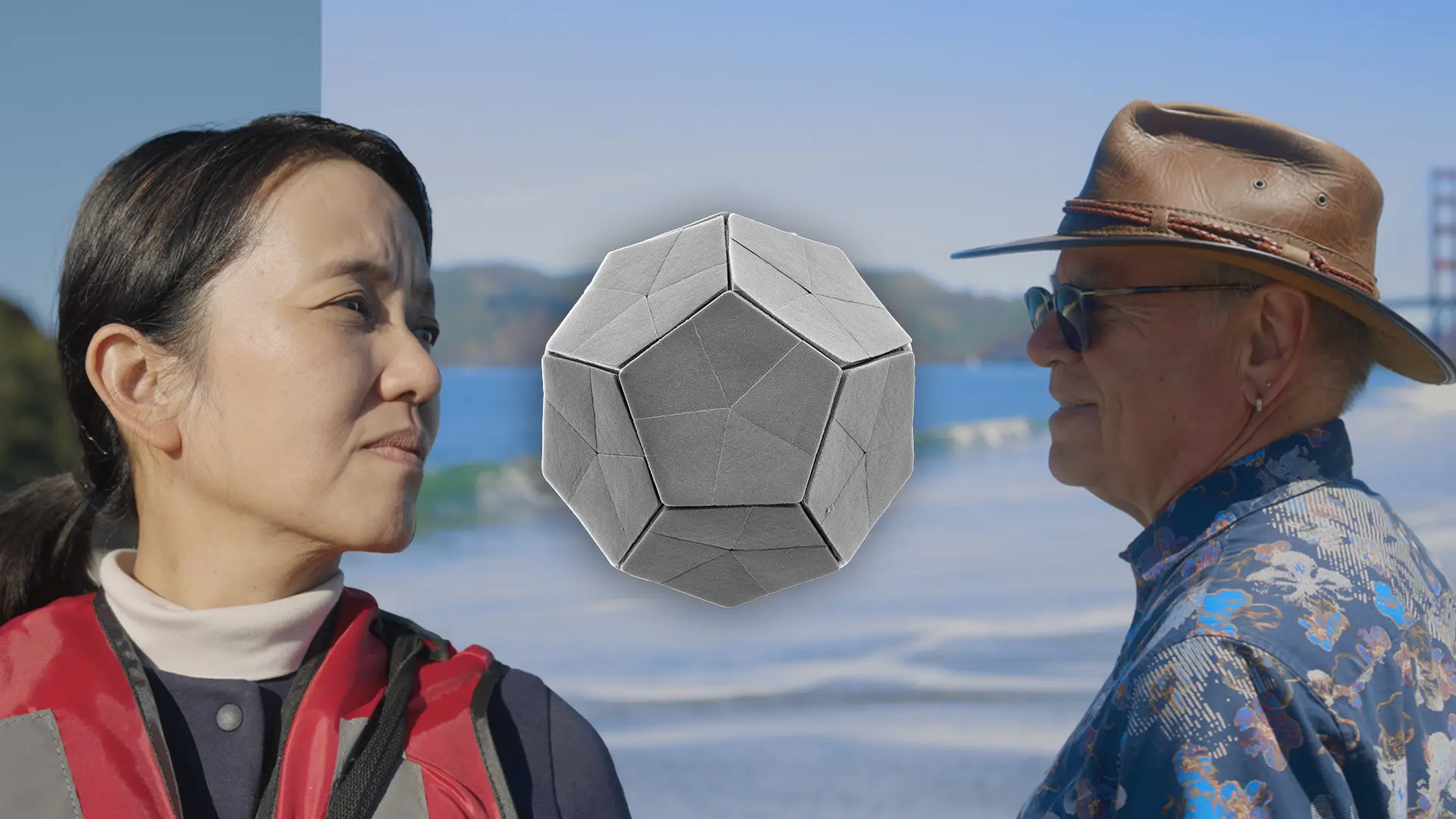
Meanwhile, on the other side of the world, Japanese algae scientist Kyoko Hagino was obsessed with the same algae. She spent years collecting seawater with her daughter, who thought the beach was just for sample collection. To grow a culture, Hagino eventually added tokoroten - a traditional Japanese seaweed noodle - which worked. Inside the algae, she spotted a mysterious black dot. Just as she was about to publish, she stumbled upon Zehr's article proposing that his invisible bacterium lived inside Bigelowii. A genetic test confirmed it: Hagino had found Zehr's missing organism.
Together, they revealed that the bacterium and algae had become so interdependent that the bacterium had essentially become an organelle - a nitrogen-fixing powerhouse called a nitroplast. This is only the third known instance of such a fusion in Earth's history, joining mitochondria and chloroplasts. The discovery rewrites a fundamental rule of biology: complex life can now fix nitrogen, opening the door to potential innovations like self-fertilizing plants - though we'll try not to get too excited until the noodles are involved.
The Good Times
News in your inbox.
One sardonic roundup, delivered on your schedule. Free. Unsubscribe whenever your tolerance for wit runs out.
Already subscribed but we never reach your inbox? Check your spam folder and hit 'Not spam' (or 'Remove from spam') to bust us out of junk-mail purgatory. You'll be helping everyone else too.
Don't open any of our emails for a month and you'll be automatically removed from the mailing list.
Rewrite Article
Select parts to regenerate with a fresh AI pass. Translations will be updated automatically.
Generate AI Image
Creates a sardonic version of the article image using OpenAI.