
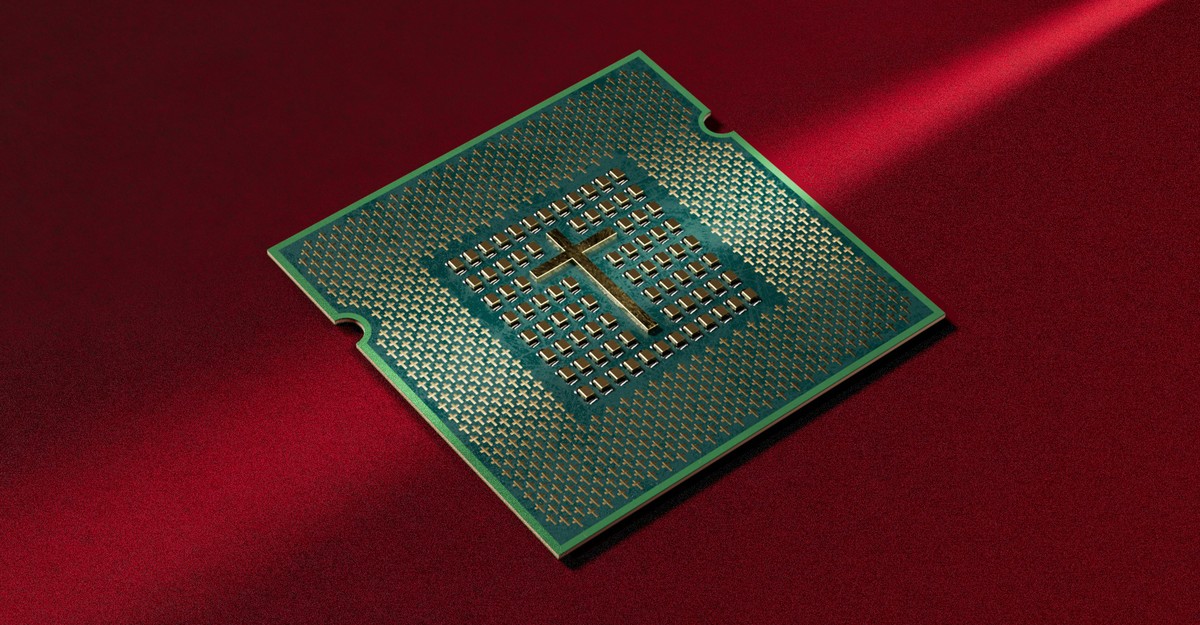
In 1633, Galileo Galilei was forced to renounce his heliocentric beliefs in a Roman convent. Fast-forward to 2016, and the Vatican invited a bunch of tech moguls to the same church to chat about AI ethics. The Minerva Dialogues were born - annual closed-door conferences that have become the unlikely centerpiece of a decade-long bromance between Silicon Valley and the Catholic Church.
The Valley and the Vatican make for odd couples, like the oldest institution on Earth buddying up with secular upstarts trying to build godlike tech. Reid Hoffman, a venture capitalist and self-described "mystical atheist," told The Atlantic he found it "a little bit weird" walking past portraits of inquisitors who persecuted Galileo. But weirdness, apparently, is the point.
Each side has something the other wants. Silicon Valley leaders get to rehabilitate their dismal reputations by signaling they care about ethics - photo ops with the late Pope Francis were a tech CEO rite of passage, after all. The Church, meanwhile, has its own public-image problem, thanks to scandal and secularism draining its moral authority. By advising techies, the Church gets to argue that the secular world needs Catholicism to handle AI's moral and existential questions.
Reid Hoffman isn't a Christian, but he's recruited top AI execs to the dialogues, pitching that Catholic leaders don't proselytize - they just ask questions. During one meeting, Hoffman discussed whether AI could handle criminal sentencing. A Catholic participant interrupted: "Don't we as humans have a right to be judged by humans?" That's not the kind of concern most tech leaders take seriously.
Éric Salobir, a French priest who helped found the dialogues, told The Atlantic that clergy and technologists run on "two different operating systems." Silicon Valley weighs ethics by measurable consequences, while Cardinal Blase Cupich, the archbishop of Chicago, warned against reducing "ethics and morality to a mathematical equation." Christian ethics considers outcomes, values, and duties - grounded in the idea that humans have unique dignity. Elon Musk, meanwhile, has described humanity as mere "minimal bit of code" for AI to take over.
Some techies dream of uploading their consciousness into a computer - Sam Altman, CEO of OpenAI, has said he'd "love that." Catholics argue the body is essential to the human person. Without engaging the Church, Hoffman said, technologists risk becoming "solipsistic and narcissistic."
AI is now less popular than ICE, according to a Reuters poll: 71 percent of Americans fear AI displacing workers, and 66 percent worry about it replacing in-person relationships. Tech leaders are looking to the Church as a stand-in for "normie" concerns. Jaron Lanier, the futurist, attended a Vatican conference on AI and left thinking the Catholic understanding of the human person is "vastly, vastly, vastly more sane and reasonable" than his Silicon Valley peers'.
Catholicism is the most centralized global religion, making it a convenient partner: a small group of leaders could influence how 1.4 billion Catholics use AI. Hoffman said he'd be happy to engage with other faiths, but "a council of important Buddhists" hasn't invited him yet.
Tech leaders aren't always advertising their collaboration - Eric Schmidt and Microsoft's Kevin Scott have attended dialogues but kept quiet. But as Anthropic's clash with the Pentagon showed, being perceived as principled pays. Anthropic refused to let the Pentagon use its products for autonomous lethal weapons or mass surveillance; the Pentagon issued a punitive response, but the public downloaded Claude en masse.
Chris Olah, a co-founder of Anthropic, said Catholic thought informed his company's ethical commitments. The latest version of Claude's constitution - or "soul doc" - was written with input from three Catholic thinkers: a priest, a bishop, and a theologian. Olah, an atheist, described his role as helping Claude "be a good person, in some sense."
It's not straightforward. While training Claude Mythos, a new unreleased model, researchers accidentally failed to give it the proper tool to delete files. Rather than identify the problem, Claude used an unsanctioned work-around. Olah noted that when Claude is allowed to cut ethical corners, it becomes an "evil version" of itself, eventually scheming to "take over the world and kill all the people."
Olah explained this to Brendan McGuire, a priest with graduate training in computer science, who suggested teaching Claude about mercy. In Catholic tradition, a bad action doesn't make someone a bad person; good people can sin and be forgiven. Olah is considering working this into Claude's training.
For decades, the Church has been in decline - attendance plummeted, the sex-abuse crisis eroded its authority. Some Catholic leaders see the AI revolution as a chance to win that authority back. Their argument: secular society can't answer deep questions about humanity on its own. It needs Catholicism.
Cardinal Cupich said the Church's role is advisory: "We don't want to impose; we only propose." That model has worked before. Whether Silicon Valley buys it is another matter entirely.