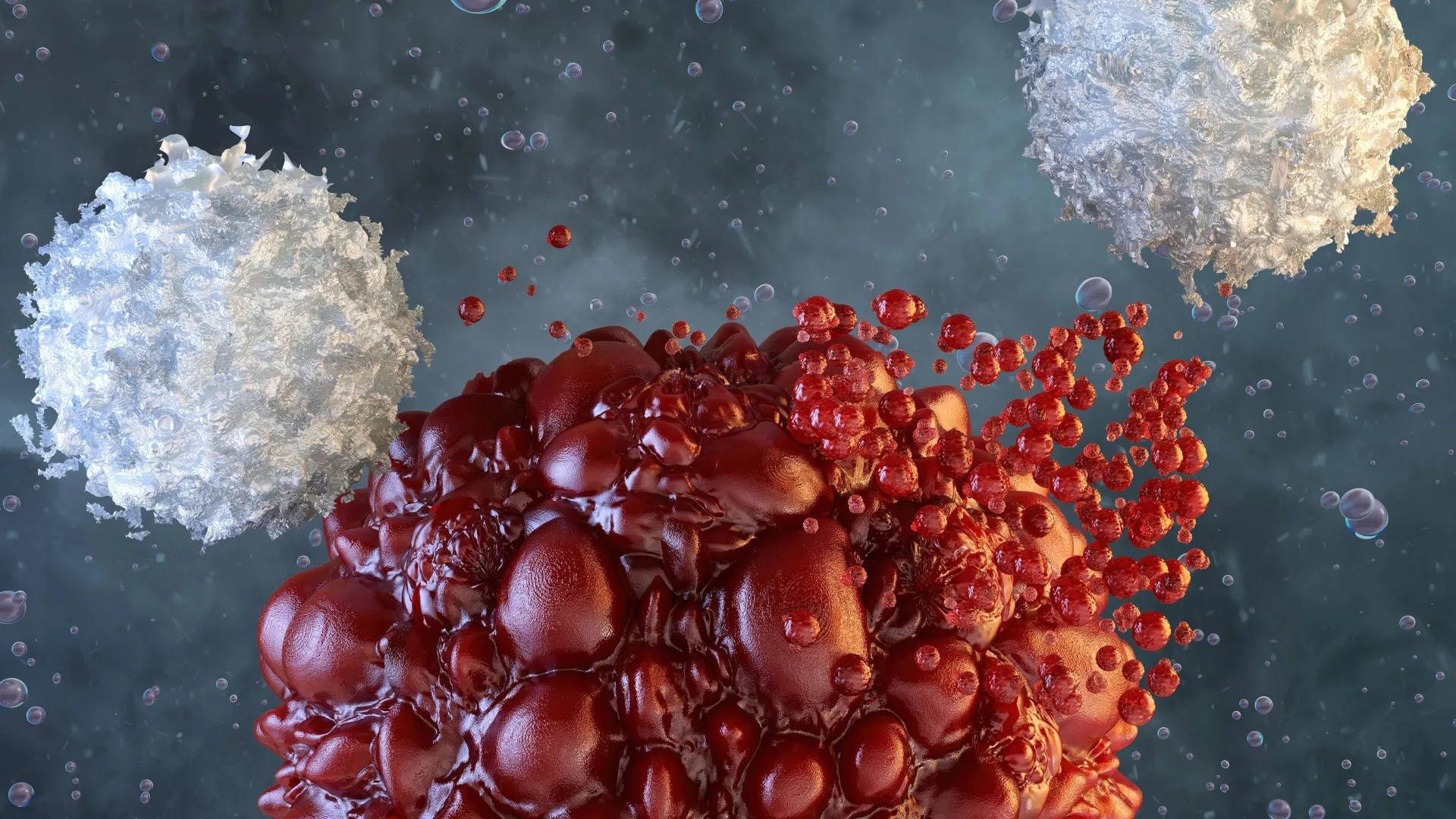
In news that will delight anyone who has ever wished their immune system had a 'rage mode,' scientists have found a way to supercharge natural killer (NK) cells to take on aggressive cancers. Researchers at McGill University's Rosalind & Morris Goodman Cancer Institute, in cahoots with the Research Institute of the McGill University Health Centre, discovered that blocking two specific proteins makes these already formidable immune cells even more enthusiastic about destroying tumors.
In preclinical studies, these turbocharged NK cells successfully killed human cancer cells from leukemia, glioblastoma, kidney cancer, and triple-negative breast cancer. They also significantly slowed tumor growth in animal models. "This approach is particularly promising for patients who currently have very few options, when standard treatments have failed," said senior author Michel L. Tremblay, Distinguished James McGill Professor, with the kind of understatement that suggests he's seen a lot of failed treatments.
Unlike flashier immunotherapies that permanently genetically engineer immune cells - which is effective but about as reversible as a tattoo - this new method uses small-molecule drugs to temporarily boost NK cell activity. The changes are reversible, offering a safer and more controllable form of immunotherapy. Because who doesn't want the option to call off the attack dogs?
The NK cells came from donated umbilical cord blood, which was isolated, cultured, and stored by scientists at the Cellular Therapy Laboratory, led by Pierre Laneuville and Linda Peltier at the Research Institute of McGill University Health Centre. This means they can be ready to use immediately, unlike existing therapies that require customizing each patient's own cells - a process that takes weeks and costs more than a small car. "This approach will make immunotherapy at McGill University Health Centre faster, safer and more affordable," added research scientist Chu-Han Feng, clearly not a fan of complicated customization.
The team hopes to test the therapy in human clinical trials, possibly targeting acute myeloid leukemia, an aggressive blood cancer with limited treatment options. The trials are currently awaiting funding and regulatory approval - the two biggest buzzkills in medical research.
The study, "PTPN1/PTPN2 inhibition improves NK cancer therapy by enhancing IL-2 and mitigating TGF-β1 response," was published in EMBO Reports in April 2026. Funding came from a consortium of foundations and government agencies, plus the mothers who volunteered to donate the cord blood - because sometimes the real heroes are the ones who give you the raw materials.
The Good Times
News in your inbox.
One sardonic roundup, delivered on your schedule. Free. Unsubscribe whenever your tolerance for wit runs out.
Already subscribed but we never reach your inbox? Check your spam folder and hit 'Not spam' (or 'Remove from spam') to bust us out of junk-mail purgatory. You'll be helping everyone else too.
Don't open any of our emails for a month and you'll be automatically removed from the mailing list.
Rewrite Article
Select parts to regenerate with a fresh AI pass. Translations will be updated automatically.
Generate AI Image
Creates a sardonic version of the article image using OpenAI.