Scientists Finally Beat a Superconductivity Record That’s Been Sitting There Since 1993, Just Because
University of Houston physicists break a 30-year-old superconductivity record by reaching 151 Kelvin at normal pressure, bringing room-temperature superconductors slightly closer to reality - still about 140°C away, but hey, progress is progress.
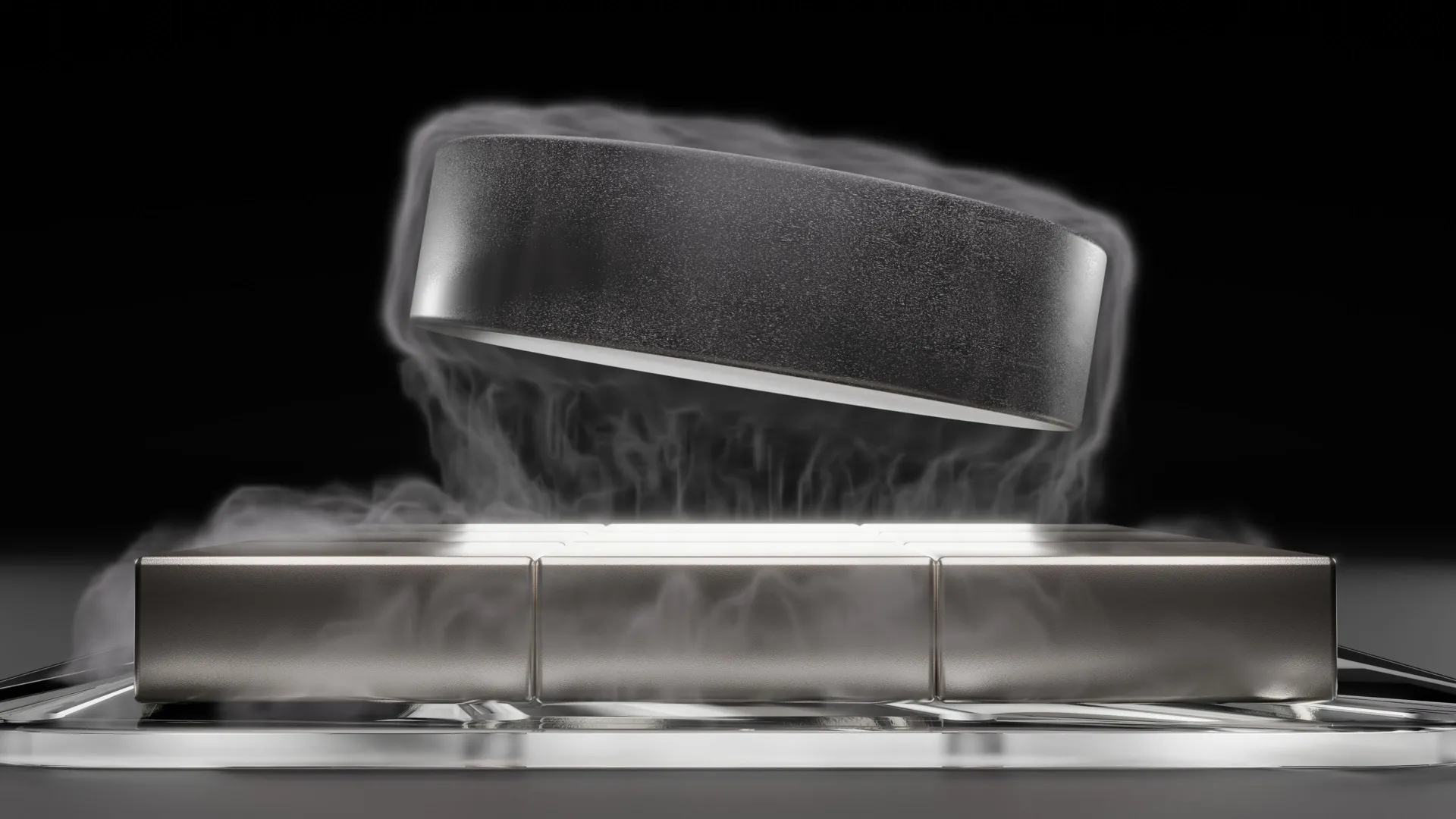
University of Houston researchers have shattered a 30-year-old superconductivity record by achieving a transition temperature of 151 Kelvin under normal pressure. That’s about minus 122 degrees Celsius, which still sounds cold, but for superconductors it’s basically a beach vacation. The advance, led by physicists Ching-Wu Chu and Liangzi Deng, was published in the Proceedings of the National Academy of Sciences and funded by Intellectual Ventures, the state of Texas, and several foundations. The team from the Texas Center for Superconductivity (TcSUH) and the UH physics department now holds the highest Tc ever reported at ambient pressure since superconductivity was first discovered in 1911.
“Transmitting electricity in the grid loses about 8% of the electricity,” said Chu, the paper’s senior author. “If we conserve that energy, that’s billions of dollars of savings and it also saves us lots of effort and reduces environmental impacts.” Superconductors are materials that let electricity flow without resistance, meaning no energy is wasted as heat. That could make everything from power grids to MRI machines to fusion reactors way more efficient - if only they didn’t usually require expensive cooling systems. The previous record, set in 1993 by a mercury-based copper-oxide ceramic called Hg1223, stood at 133 K (minus 140 degrees C). The new UH achievement pushes that up by 18 degrees C.
The breakthrough relied on a technique called pressure quenching - basically squeezing the material under extreme pressure, cooling it to a carefully chosen temp, then suddenly releasing the pressure. The rapid release locks in the enhanced superconducting properties even at normal pressure. “Other researchers have shown that reaching superconductivity at room temperature under pressure is achievable,” Chu said. “Our method shows that it is possible to retain that state without maintaining pressure.” Room temperature is roughly 300 K, so there’s still about 140 degrees C to go. But Rohit Prasankumar, director of superconductivity research at Intellectual Ventures, said, “The UH team's result shows that this goal is closer than ever before.” He added that closing the gap will require a concerted effort from materials scientists, chemists, engineers, and physicists - basically everyone except maybe the marketing department.
The Good Times
News in your inbox.
One sardonic roundup, delivered on your schedule. Free. Unsubscribe whenever your tolerance for wit runs out.
Already subscribed but we never reach your inbox? Check your spam folder and hit 'Not spam' (or 'Remove from spam') to bust us out of junk-mail purgatory. You'll be helping everyone else too.
Don't open any of our emails for a month and you'll be automatically removed from the mailing list.
Rewrite Article
Select parts to regenerate with a fresh AI pass. Translations will be updated automatically.
Generate AI Image
Creates a sardonic version of the article image using OpenAI.