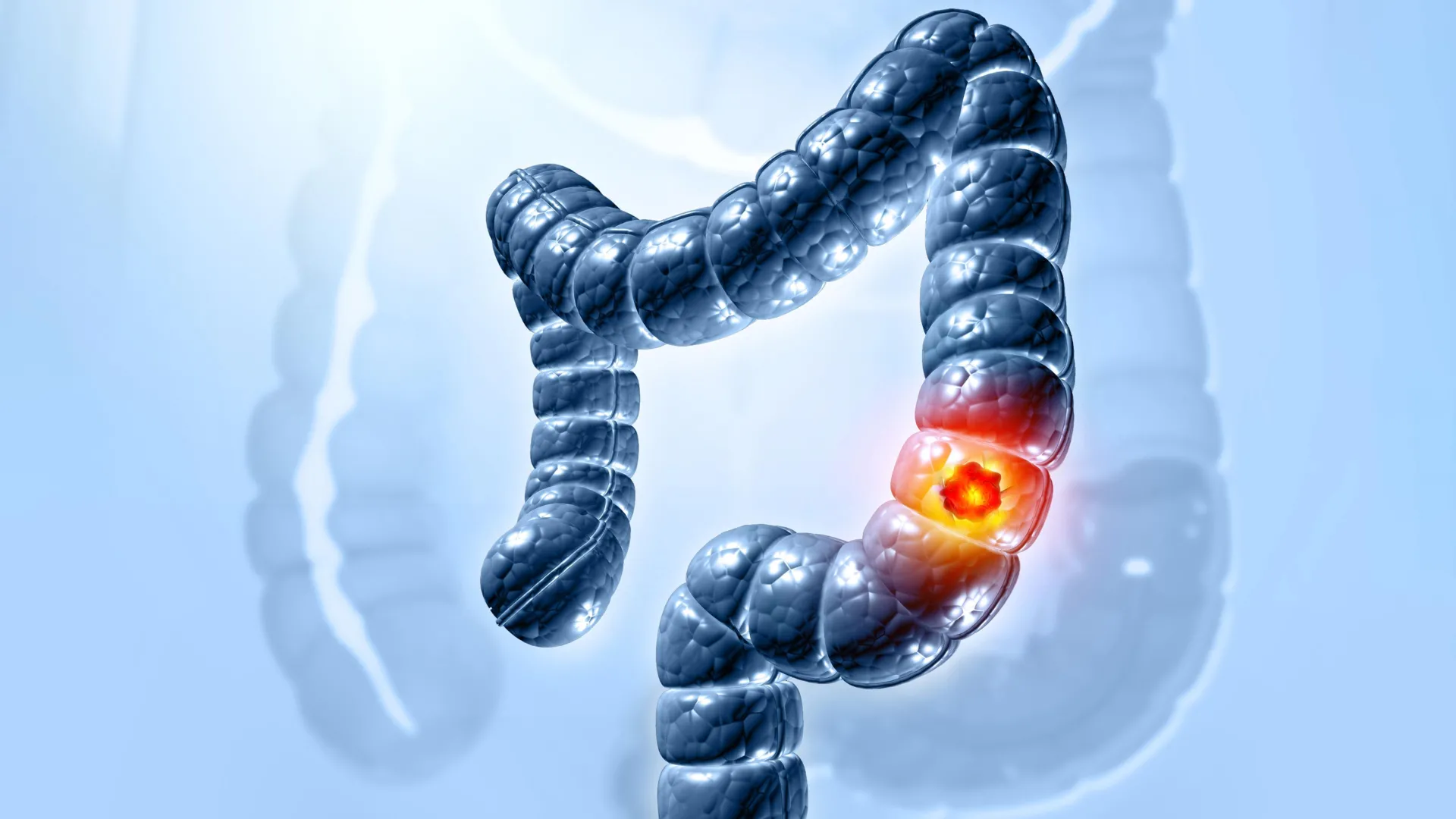
Colorectal cancer, a leading cause of cancer-related deaths in Western countries, has long been linked to the usual suspects: age, diet, and lifestyle. But the exact triggers have remained frustratingly elusive, leaving scientists to sift through the vast, chaotic ecosystem of the gut microbiome for clues.
Now, researchers from the University of Southern Denmark and Odense University Hospital have identified a new lead: a previously unknown virus hitching a ride inside a common gut bacterium, Bacteroides fragilis. This viral stowaway appears more frequently in people with colorectal cancer, offering a fresh, if unsettling, piece of the puzzle.
For years, Bacteroides fragilis has been a paradox, linked to colorectal cancer yet also found lounging harmlessly in most healthy guts. "It has been a paradox that we repeatedly find the same bacterium in connection with colorectal cancer, while at the same time it is a completely normal part of the gut in healthy people," says Flemming Damgaard, a medical doctor and PhD at the institutions involved.
The team's investigation revealed the key difference wasn't the bacterium itself, but its plus-one. In patients who later developed colorectal cancer, Bacteroides fragilis was much more likely to be carrying a specific, newly described bacteriophage - a virus that infects bacteria. "We have discovered a virus that has not previously been described and which appears to be closely linked to the bacteria we find in patients with colorectal cancer," Damgaard notes.
The discovery began with data from a large Danish population study of about two million people. By focusing on patients with serious Bacteroides fragilis bloodstream infections, some of whom were diagnosed with colorectal cancer shortly after, researchers spotted a pattern. Bacterial samples from cancer patients were more likely to contain these specific viruses.
To see if this was more than a local Danish phenomenon, the team analyzed stool samples from 877 individuals across Europe, the United States, and Asia. The pattern held: people with colorectal cancer were about twice as likely to host these gut viruses. "It was important for us to examine whether the association could be reproduced in completely independent data. And it could," Damgaard confirms.
While the statistical link is strong, the study does not prove the virus causes cancer. "We do not yet know whether the virus is a contributing cause, or whether it is simply a sign that something else in the gut has changed," Damgaard cautions. Up to 80 per cent of colorectal cancer risk is thought to be influenced by environmental factors, including the gut's microscopic inhabitants.
The complexity of the gut microbiome, with its thousands of bacterial species, has made pinpointing culprits notoriously difficult. "Previously, it has been like looking for a needle in a haystack. Instead, we have investigated whether something inside the bacteria -- namely viruses -- might help explain the difference," Damgaard explains.
Looking ahead, the discovery opens a potential new avenue for screening. Current tests often look for hidden blood in stool. In the future, screening for these specific viruses might help identify high-risk individuals. Early analyses suggest certain viral markers could flag about 40 per cent of cancer cases, while being absent in most healthy people. "In the short term, we can investigate whether the virus can be used to identify individuals at increased risk," says Damgaard, while stressing this work is in its early stages.
The research was supported by the Region of Southern Denmark, the Harboe Foundation, and the Novo Nordisk Foundation.
The Good Times
News in your inbox.
One sardonic roundup, delivered on your schedule. Free. Unsubscribe whenever your tolerance for wit runs out.
Already subscribed but we never reach your inbox? Check your spam folder and hit 'Not spam' (or 'Remove from spam') to bust us out of junk-mail purgatory. You'll be helping everyone else too.
Don't open any of our emails for a month and you'll be automatically removed from the mailing list.
Rewrite Article
Select parts to regenerate with a fresh AI pass. Translations will be updated automatically.
Generate AI Image
Creates a sardonic version of the article image using OpenAI.