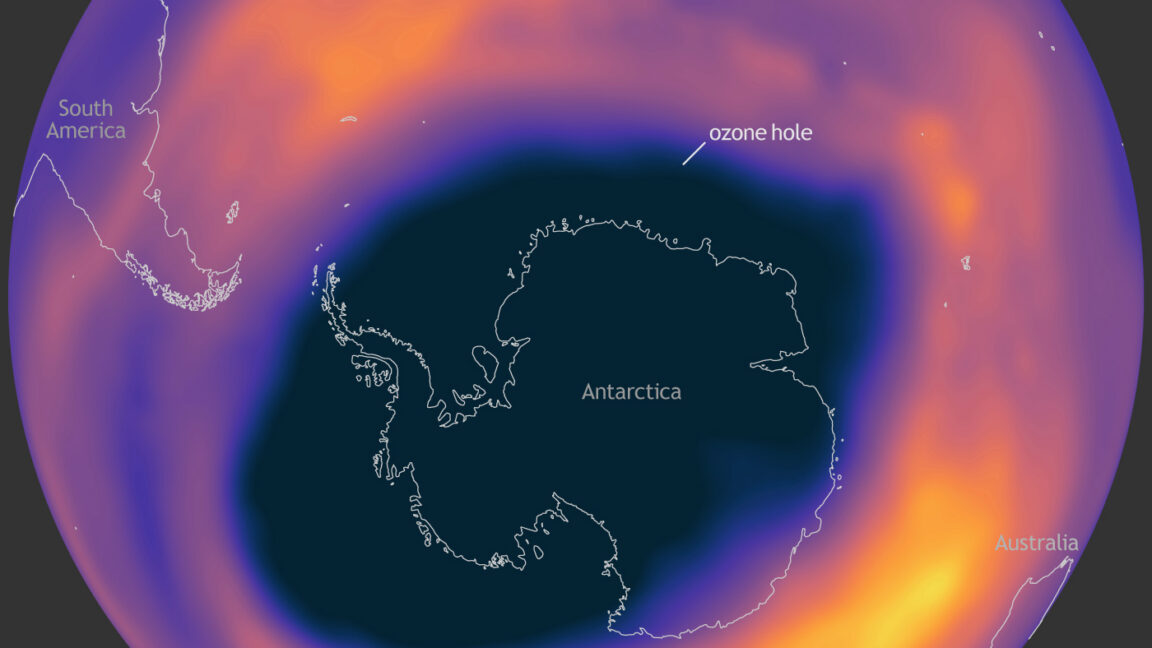
Ozone Depletion Was Detectable Decades Earlier, Study Finds, Because We Weren't Paying Attention
MIT study finds ozone depletion was detectable by 1957 with modern tools - meaning we could have saved the ozone layer even earlier, if only we'd had the foresight to invent satellites sooner.
The global ban on ozone-depleting substances is often held up as one of humanity's finest moments - a rare instance where we saw a problem, agreed to fix it, and actually did. But a new study from MIT suggests we could have been even more smug if we'd started a little earlier.
The study, led by Jian Guan, asks a tantalizing what-if: what if we'd had today's satellite monitoring back in the 1950s, when chlorofluorocarbons (CFCs) were just starting to waft into the atmosphere? The answer, published in PNAS, is that we could have spotted ozone depletion as early as 1957 - nearly three decades before the Antarctic ozone hole was actually discovered.
But here's the kicker: the first culprit wasn't CFCs. It was carbon tetrachloride, an industrial solvent that had been around for decades. Ice core records show that by 1950, carbon tetrachloride levels in the atmosphere were 3 - 4 times higher than early CFC concentrations. So even before we started spraying deodorant into the sky, we were already messing with the ozone.
Detecting the damage wasn't easy. Ozone levels fluctuate naturally due to solar cycles and volcanic eruptions - like the 1963 eruption of Mount Agung, which added noise to the data. But in the upper stratosphere over the tropics, where variability is low and sensitivity to pollutants is high, the trend would have been statistically significant by 1957. At that point, half to two-thirds of the ozone-eating chlorine up there was from carbon tetrachloride, not CFCs.
By 1976, the depletion would have been detectable in the lower stratosphere, including over Antarctica - a full decade before scientists actually noticed the hole. So yes, we could have intervened sooner. But the researchers also note that the satellite currently doing this monitoring has been orbiting since 2004 and is past its expiration date. Last year's White House budget proposal even called for shutting it down. Because nothing says 'we learned our lesson' like dismantling the very tools that taught it to us.
The Good Times
News in your inbox.
One sardonic roundup, delivered on your schedule. Free. Unsubscribe whenever your tolerance for wit runs out.
Already subscribed but we never reach your inbox? Check your spam folder and hit 'Not spam' (or 'Remove from spam') to bust us out of junk-mail purgatory. You'll be helping everyone else too.
Don't open any of our emails for a month and you'll be automatically removed from the mailing list.
Rewrite Article
Select parts to regenerate with a fresh AI pass. Translations will be updated automatically.
Generate AI Image
Creates a sardonic version of the article image using OpenAI.