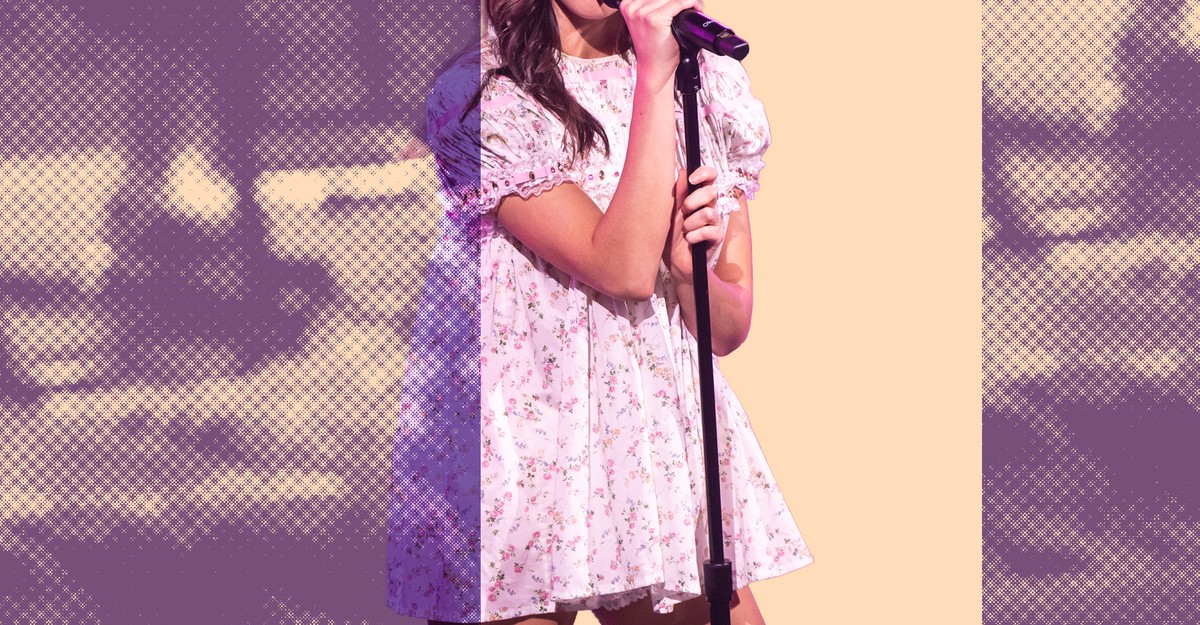
Earlier this month, Olivia Rodrigo celebrated a Spotify-streaming milestone by wearing a floral baby-doll dress, pink bloomers, and knee-high leather boots in Barcelona. The internet, predictably, lost its collective mind. Some accused the singer of promoting "pedo core"; others defended her right to wear what she wants. Rodrigo, for her part, cited inspirations Kat Bjelland and Courtney Love, who used the same look in the '90s to push back against the fetishization of girlhood. Which, of course, got them similarly roasted - one 1994 reviewer described Love's style as that of a "raddled Baby Jane whose notion of clothes-shopping is to lie in a skip outside a paedophile brothel." Subtlety was apparently not the critic's strong suit.
But the baby-doll dress has been a magnet for moral panic for decades, fashion historians note, and its history is far messier than any hot take. In the Victorian era, some children wore corsets. In the 1920s, adult shift dresses were deemed childlike. Short, flowy garments started as practical playwear for kids - one American boy's 1855 garment looks like something Rodrigo or Sabrina Carpenter might wear on tour today. Adults began adopting the style in the 1860s, when women swapped sidesaddle for bicycles and needed shorter, more functional outfits. Critics promptly freaked out, claiming it looked like women were showing their underwear. Eventually, culottes happened.
By the 1950s and '60s, the silhouette was reconceptualized as lingerie, thanks to designer Sylvia Pedlar, who chopped nightgowns in half during WWII fabric shortages. The style got its name from the 1956 movie Baby Doll, about a 19-year-old forced to marry an older man, cementing its association with the over-sexualization of young women. Fashion, as Rutgers professor Daniel Cook notes, tends to be a Rorschach test for societal anxieties. Each new age category - "teenager," "subteen," "preteen," "tween" - has been a negotiation over when it's okay to put a girl's body on display. Now, with social media blurring the lines between child and adult fashion, stores like Lululemon and Zara are popular with girls, while Limited Too sells pleated skirts in adult sizes.
Amid the frenzy, Courtney Love reposted a series of Instagram reels in Rodrigo's defense. "You can pry my babydoll dress," one read, "from my cold dead hands." So the spirit of defiance lives on, even if the cultural habit of scrutinizing women's wardrobes does too.
The Good Times
News in your inbox.
One sardonic roundup, delivered on your schedule. Free. Unsubscribe whenever your tolerance for wit runs out.
Already subscribed but we never reach your inbox? Check your spam folder and hit 'Not spam' (or 'Remove from spam') to bust us out of junk-mail purgatory. You'll be helping everyone else too.
Don't open any of our emails for a month and you'll be automatically removed from the mailing list.
Rewrite Article
Select parts to regenerate with a fresh AI pass. Translations will be updated automatically.
Generate AI Image
Creates a sardonic version of the article image using OpenAI.