Myanmar Explosion Reminds Everyone That 'Accidental' Doesn't Mean 'Safe'
An explosion in a rebel-held Myanmar village kills at least 55, with the TNLA blaming mining explosives and residents wondering why anyone thought storing them near homes was a good idea.
In what can only be described as a very bad day for the village of Kaung Tat, a massive explosion has killed at least 55 people and wounded dozens more in a rebel-held area of Myanmar's Shan State, near the Chinese border. A source familiar with the grim tally said 25 women and 30 men died, though other reports quibble over the exact numbers - because when you're counting bodies, precision is paramount.
The blast, which occurred around noon local time on Sunday, sent a huge cloud of smoke billowing over the village. The Ta'ang National Liberation Army (TNLA), the ethnic armed group that controls the area and has been busy fighting the military junta, quickly clarified that this was an "accidental explosion" involving explosives used in mining and quarrying. Because nothing says 'responsible rebel governance' like storing massive amounts of explosives near residential areas.
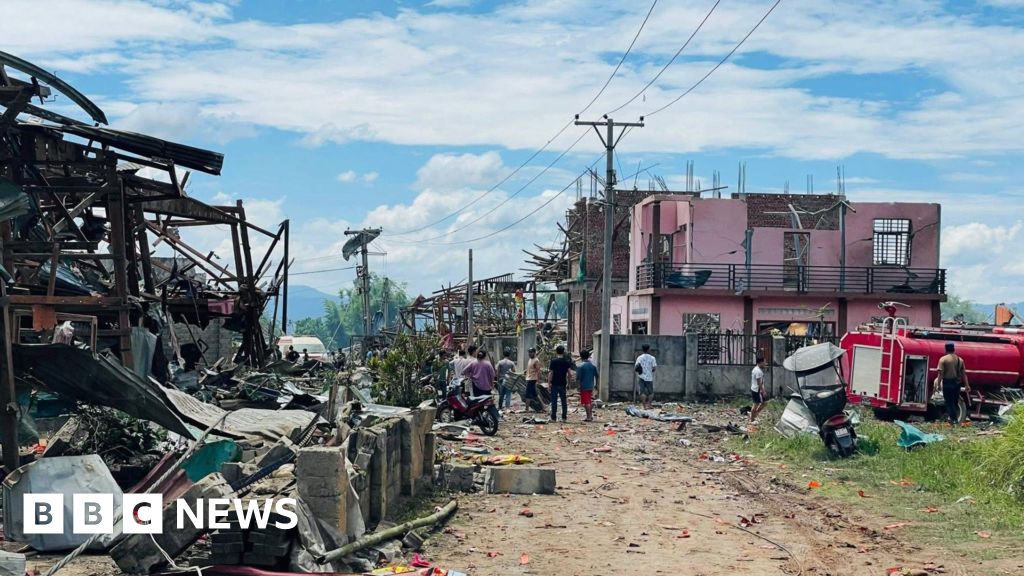
Footage from the scene shows a vast crater surrounded by shattered buildings, with smoke still drifting from charred debris and twisted trees. Residents described scenes of panic and grief, with one survivor posting on social media that she initially thought it was an air strike. "By sheer luck, my phone saved my life," she wrote. "I was sitting in my bedroom eating noodles and looking at my phone. If I had been eating in the kitchen, I probably would not be alive today." It's a testament to both modern technology and the unpredictable nature of explosives that a noodle break and a smartphone can be the difference between life and death.
Children were among the dead, and hundreds of homes were damaged, affecting almost an entire neighborhood. The survivor, who suffered a minor leg injury and lost her home, questioned why a facility containing explosives was allowed to operate so close to residential areas. It's a fair question, though the TNLA - one of the most powerful ethnic armed groups opposed to the junta - hasn't offered much of an answer beyond calling it an accident.
Many of Myanmar's rebel groups rely on mining precious minerals to fund their campaigns, and lax safety measures make mine collapses and other accidents common. So while this particular tragedy may have been accidental, it's the kind of accident that happens when you prioritize funding insurgencies over, say, not blowing up your own people.
The Good Times
News in your inbox.
One sardonic roundup, delivered on your schedule. Free. Unsubscribe whenever your tolerance for wit runs out.
Already subscribed but we never reach your inbox? Check your spam folder and hit 'Not spam' (or 'Remove from spam') to bust us out of junk-mail purgatory. You'll be helping everyone else too.
Don't open any of our emails for a month and you'll be automatically removed from the mailing list.
Rewrite Article
Select parts to regenerate with a fresh AI pass. Translations will be updated automatically.
Generate AI Image
Creates a sardonic version of the article image using OpenAI.