
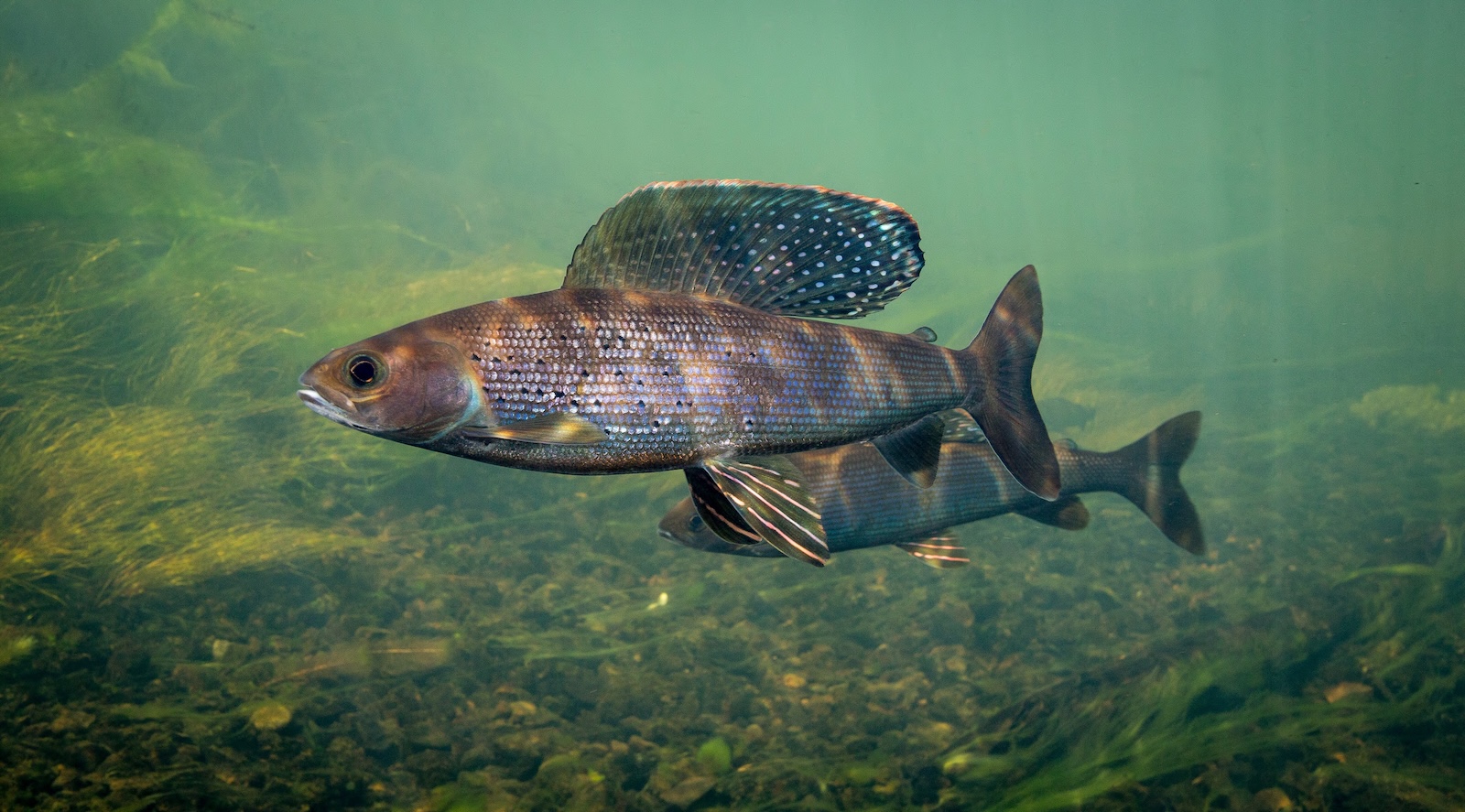
Arctic grayling, a fish with a shimmering iridescent hue and a flair for dramatic exits, hasn't been seen in Michigan waters since the 1930s. Industrial logging, overfishing, and competition from non-native fish wiped them out, but now three northern Michigan tribes - the Grand Traverse Band of Ottawa and Chippewa Indians, the Little River Band of Ottawa Indians, and the Little Traverse Bay Bands of Odawa Indians - along with the state, are trying to bring them back. Because apparently, a century of absence is just long enough to forget why we lost them in the first place.
On a brisk September morning, fish and wildlife biologist Sean Leask counted and measured hundreds of young grayling at the Grand Traverse Band's streamside rearing facility outside Traverse City. "Some of these might be catchable by the end of next year," Leask said. "I don't know what their growth will look like in the wild." That's the thing about reintroducing a species - the wild doesn't always follow the spreadsheet.
For the tribes, this isn't just about fish. "Our taking care of them and helping them to reestablish their population helps us to reestablish ourselves, our culture, and our traditions," said Tina Frankenberger, the Grand Traverse Band's tribal environmental resiliency lead. It's part of a broader movement among tribes nationwide to restore native species - salmon, oysters, condors - that are culturally and economically important, while also bolstering ecosystems against threats like climate change. No pressure, little fish.
One year in, the biologists are grappling with whether the fish are surviving and how to adapt to extreme weather. So far, no released grayling have been seen in the wild. Flood conditions and the small initial numbers are complicating survey work. But the tribes remain optimistic, because that's what you do when you're trying to resurrect a species. Biologists estimate it will take six to eight years to know if the reintroduction has been successful. "This is an experiment," said Dan Mays, inland policy biologist for the Grand Traverse Band. "We're trying our best." Inspiring, if not exactly a guarantee.
This summer and early fall, the Grand Traverse Band raised around 8,000 young grayling and released them into the Boardman-Ottaway River. They're one of three tribes that received grayling eggs from a state hatchery in 2025, along with the Little River Band and the Little Traverse Bay Bands. The eggs came from Alaska's Chena River, where Arctic grayling are plentiful and more genetically diverse than the only remaining population in the Lower 48, in Montana's Big Hole River. Because nothing says "restoration" like importing fish from 3,000 miles away.
Mays is already feeling more optimistic about the number and size of this year's grayling compared to last year, when a power outage at the tribe's rearing facility killed a majority of the fish. "Overall, four times as many grayling," he said. "We're also stocking a higher proportion of bigger grayling this year. Greater size, greater survival." A low bar, but a bar nonetheless.
Raising the fish is one challenge; tracking them is another. None of the three tribes have recaptured a grayling yet. "It's like looking for a needle in a haystack, and the haystack is the size of a river," said Alex Ontkos, an inland fisheries biologist with the Little River Band. Earlier this year, that tribe stocked 391,000 grayling eggs using in-stream incubators on the Manistee River near Kalkaska. Not all hatched - viability rates were estimated around 50 to 60 percent. While biologists observed tens of thousands of fry leaving the incubators, they have yet to see or recapture a grayling. "I don't think that that's because they're not out there," Ontkos said. "It's just a matter of being in the right place at the right time." Ah, the eternal excuse of the hopeful angler.
Being in the right place at the right time has been trickier for the Little Traverse Bay Bands. Hatchery manager Kris Dey said two years of ice storms and extreme flooding have made it hard to tell how fish are surviving or growing, as parts of the watershed are still swollen or blocked by storm debris. "All the places that we scouted for years and prepped and prepared," Dey said, "we have not had a great time getting out into the river and evaluating where they're at and how they're doing." Climate change: the uninvited guest at every restoration party.
Looking ahead, Dey worries about how a shifting climate might affect grayling restoration beyond worsening extreme weather. The Arctic fish thrives in cold waters, and Michigan waterways will likely trend warmer. "Trying to plan for a warmer future is very, very difficult," Dey said. And even after a successful reintroduction, some tribes are grappling with maintaining a species' stability. Thanks to efforts from the St. Croix Chippewa Indians of Wisconsin, lake sturgeon have made a comeback in the Lake Winnebago watershed, but scientists question whether populations can adapt quickly enough to warming winters. Because nature doesn't do set-it-and-forget-it.
In northern Michigan, biologists said there are ways to adapt their grayling efforts for a changing climate. Dey wants to upgrade the Little Traverse Bay Bands' current egg incubator system to allow the grayling to grow more before release, in hopes of increasing their likelihood of surviving in the wild. "Climate change and the dramatic weather that we're having may make us do things in a different way," Dey said. Adaptation: the only option when you can't turn back the clock.
While none of the partner tribes have recaptured a grayling yet, there have been signs of the grayling stocked last year by the Grand Traverse Band. Monitors along the Boardman-Ottaway River have picked up some signals from fish tagged prior to release last year. Leask said the signals could've been from a brown trout or an otter with a grayling in its stomach, but he wants to be optimistic. "I'm hopeful they were a live fish with a tag," Leask said. "It wasn't many, but enough to give you a little hope." The tribe plans to do predation studies next year to find out which animals are eating the grayling. Spoiler: it's probably the otter.
After counting and measuring, staff with the Grand Traverse Band waded out into the north branch of Boardman-Ottaway River with buckets of grayling. Frankenberger sprinkled some tobacco on the water in an Anishinaabe tradition that helps their ancestors hear prayers more clearly, she said. After saying her prayer, Frankenberger gently tipped the bucket, then watched the grayling slowly disperse downstream. "I think about them reestablishing their connection to this river," she said. "I like to think it'll help rebuild those connections for our people." And if a few of them end up in an otter's stomach, well, that's the circle of life - or at least the circle of experimental reintroduction.