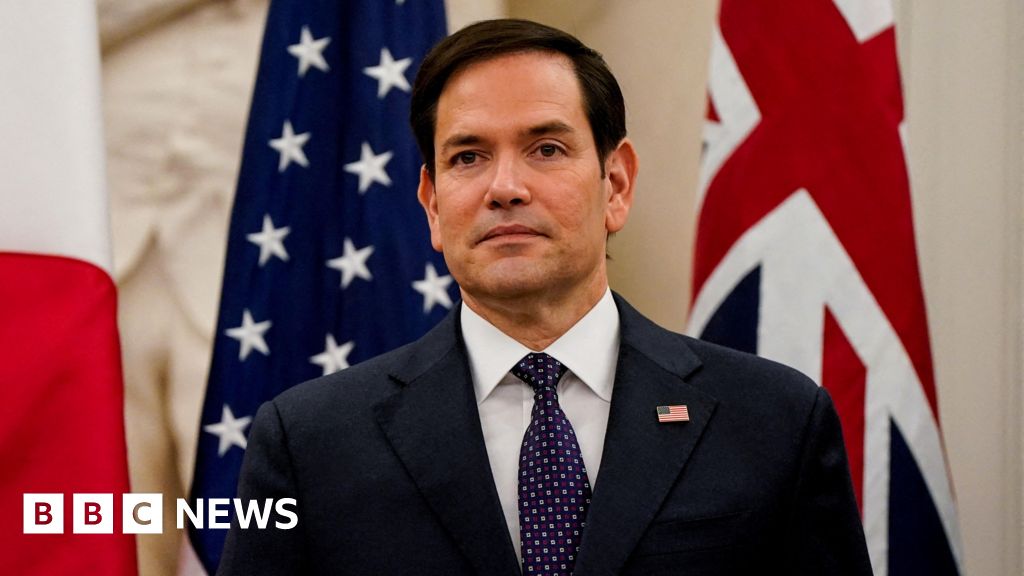
US Secretary of State Marco Rubio touched down in India on Saturday for a four-day visit, because nothing says 'diplomatic mission' like a stopover in Kolkata (formerly Calcutta, for those keeping score at home) during a global energy crisis. His itinerary includes Delhi, Jaipur, and Agra - because when the Strait of Hormuz is effectively closed due to the Iran war, you might as well see the Taj Mahal.
Rubio is set to meet Indian Prime Minister Narendra Modi, with energy likely topping the agenda - since energy shipments through the Strait of Hormuz have ground to a halt after Israel and the US attacked Iran in February. Iran, ever the strategist, has weaponized the closure as a bargaining chip in fragile peace talks. India, which imports over 80% of its energy needs, is particularly screwed: its 1.4 billion people depend on overseas fuel for everything from cooking gas to petroleum products.
Rubio has acknowledged India's predicament, saying, 'We want to sell them as much energy as they'll buy. And obviously, you've seen, I think, we're at historic levels of US production and US export.' This is convenient, because India's trade deficit with the US - $58.2 billion in 2025, up 27.1% from 2024 - has been a thorn in President Donald Trump's side. Buying more American energy could help bridge that gap, though it's a longer and costlier route than India's usual sources.
Analysts are skeptical. 'Energy security is going to be the key theme of this visit because the Iran situation is not going to be resolved anytime soon,' said Vineet Prakash, an associate professor of US studies at Jawaharlal Nehru University. The US has already given India a waiver on buying Russian oil, but Delhi is likely to push for more concessions.
Rubio's visit also comes amid tensions over trade negotiations and conflicting claims about who settled the brief India-Pakistan conflict last year. Trump insists he brokered peace; Delhi denies it, sticking to its policy of not inviting third-party mediators. Adding insult to injury, Trump has called Pakistani army chief Asim Munir his 'favourite field marshal,' which hasn't thrilled India. Pakistan's peace mediation between Iran and the US has only brought Islamabad and Washington closer, but Rubio is expected to keep Pakistan talk behind closed doors.
On the brighter side, Trump lowered reciprocal tariffs on India from 50% to 18% earlier this year, then to 10% after a Supreme Court ruling, easing pressure on Indian exporters. This came after India committed to buy $500 billion worth of American goods - including energy, aircraft, technology, and agricultural products - under an interim trade agreement in February. Trade experts are skeptical about that figure, given India's current trade with the US is a fraction of it. Mukesh Ambani, one of India's richest men, has been conspicuously silent on Trump's claim that his company Reliance Industries will back a $300 billion oil refinery in Texas.
Despite uncertainties, India's exports to the US hit $87.3 billion in the year ending March 2026, up 0.9% year-on-year despite steep reciprocal tariffs. They rose further to $8.5 billion in April after tariff reductions, though Crisil Research warns the trajectory remains 'monitorable.' India has also liberalized its notoriously protectionist trade policy, closing free trade agreements with the UK, EU, Australia, and Oman. While Trump says India will lower all tariffs to zero, experts note these deals allow both parties to safeguard sectors like agriculture and dairy.
Beyond trade, Rubio's public statements on India's role in the Iran war will be interesting. India is reluctant to play any role beyond diplomacy in keeping the Strait open, opposing Trump's calls for military assets. Then there's the Quad - a group including Australia, Japan, India, and the US. Rubio will attend a Quad foreign ministers meeting on May 26, ahead of a potential leaders' summit later this year in Delhi. Trump's lukewarm response last year led some to say the Quad was on 'life support.' Whether this meeting revives it is anyone's guess.
For Delhi, the leadership summit is crucial for burnishing its geopolitical credentials. But it's also hosting a Brics summit in September, which includes China, Russia, and Iran - because nothing says 'balancing act' like juggling Quad and Brics simultaneously. Delhi will likely assess Rubio's Quad comments before making firm statements. The China factor is as important for India as it is for the US, and both sides know it.
The Good Times
News in your inbox.
One sardonic roundup, delivered on your schedule. Free. Unsubscribe whenever your tolerance for wit runs out.
Already subscribed but we never reach your inbox? Check your spam folder and hit 'Not spam' (or 'Remove from spam') to bust us out of junk-mail purgatory. You'll be helping everyone else too.
Don't open any of our emails for a month and you'll be automatically removed from the mailing list.
Rewrite Article
Select parts to regenerate with a fresh AI pass. Translations will be updated automatically.
Generate AI Image
Creates a sardonic version of the article image using OpenAI.