Humans Were Apparently Roughing It in Rainforests 150,000 Years Ago, Because Why Not
Scientists discover humans lived in West African rainforests 150,000 years ago, doubling previous estimates and proving our ancestors were the ultimate campers.
For decades, researchers assumed early humans stuck to open grasslands and coastal regions, treating dense tropical rainforests like that one friend who never gets invited to parties. A new discovery in West Africa has upended that assumption, revealing that Homo sapiens were living in wet tropical forests roughly 150,000 years ago - more than double the previous estimate for rainforest habitation.
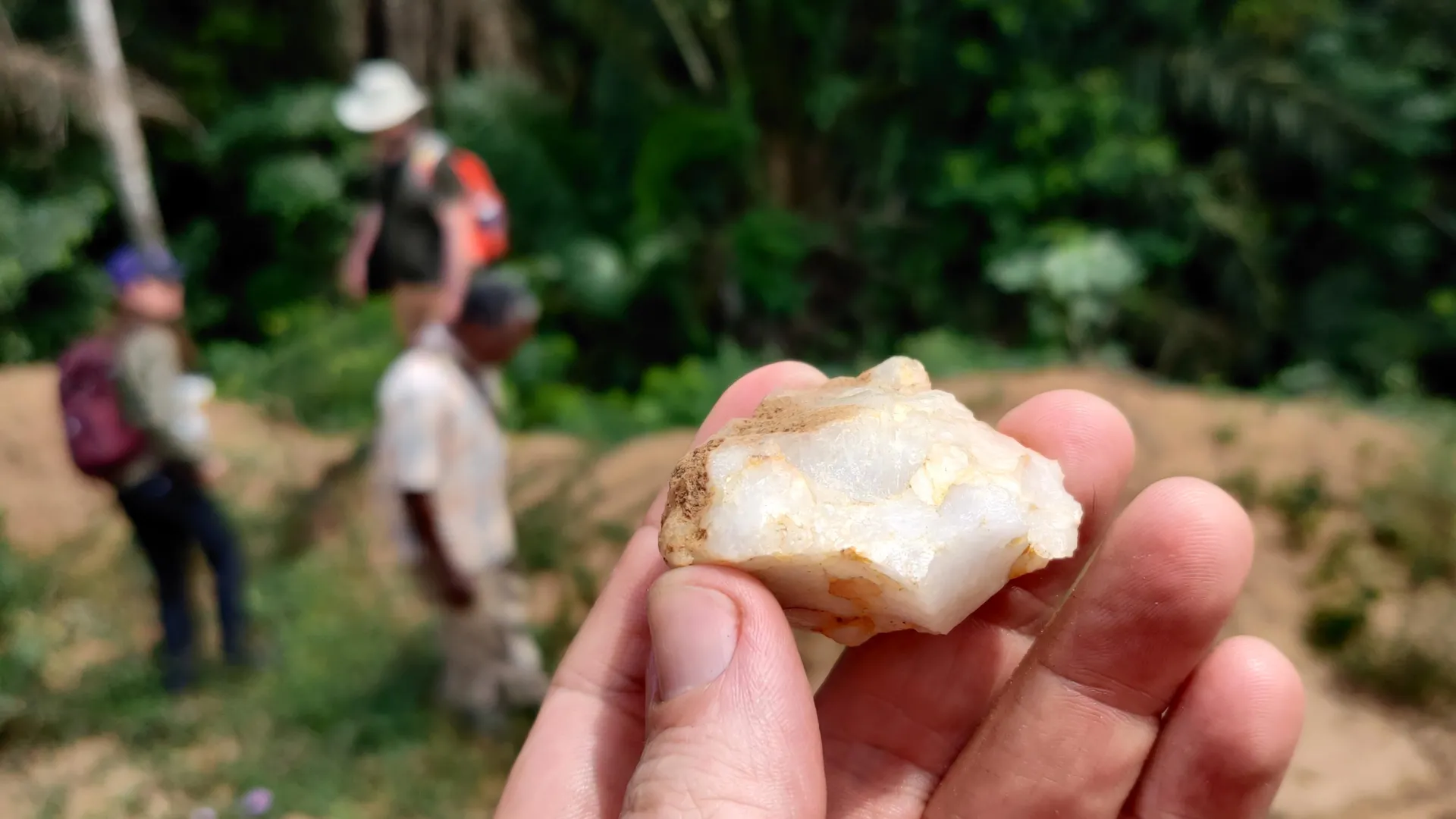
The findings, published in Nature, come from the Bété I site in present-day Côte d'Ivoire. Originally excavated in the 1980s by a joint Ivorian-Soviet mission led by Professor Yodé Guédé, the site yielded stone tools buried deep underground. Back then, scientists couldn't accurately date the tools or determine the ancient environment. But an international team returned with modern technology - just in time, as mining has since destroyed the site.
Using Optically Stimulated Luminescence and Electron-Spin Resonance, researchers pegged the occupation at around 150,000 years ago. Pollen, phytoliths, and chemical traces confirmed the area was heavily forested at the time, with low grass pollen levels indicating dense woodland rather than a forest fringe.
Before this, the oldest secure evidence of humans in African rainforests was about 18,000 years ago, and the global record - from Southeast Asia - was 70,000 years. Lead author Dr. Eslem Ben Arous noted the discovery "pushes back the oldest known evidence of humans in rainforests by more than double the previously known estimate."
The study adds to evidence that early Homo sapiens were ecological generalists, thriving across deserts, coastlines, and forests. This flexibility may have helped our species spread globally while other human relatives fizzled out.
Rainforest archaeology is notoriously difficult: fossils rot in humid conditions, and dense vegetation makes digging a nightmare. So researchers suspect there are even older rainforest sites waiting to be found across Africa. The study also raises questions about ancient human impacts on tropical ecosystems through hunting, fire use, and plant management.
Senior author Professor Eleanor Scerri summed it up: "Convergent evidence shows beyond doubt that ecological diversity sits at the heart of our species." Translation: We've always been adaptable overachievers.
The Good Times
News in your inbox.
One sardonic roundup, delivered on your schedule. Free. Unsubscribe whenever your tolerance for wit runs out.
Already subscribed but we never reach your inbox? Check your spam folder and hit 'Not spam' (or 'Remove from spam') to bust us out of junk-mail purgatory. You'll be helping everyone else too.
Don't open any of our emails for a month and you'll be automatically removed from the mailing list.
Rewrite Article
Select parts to regenerate with a fresh AI pass. Translations will be updated automatically.
Generate AI Image
Creates a sardonic version of the article image using OpenAI.