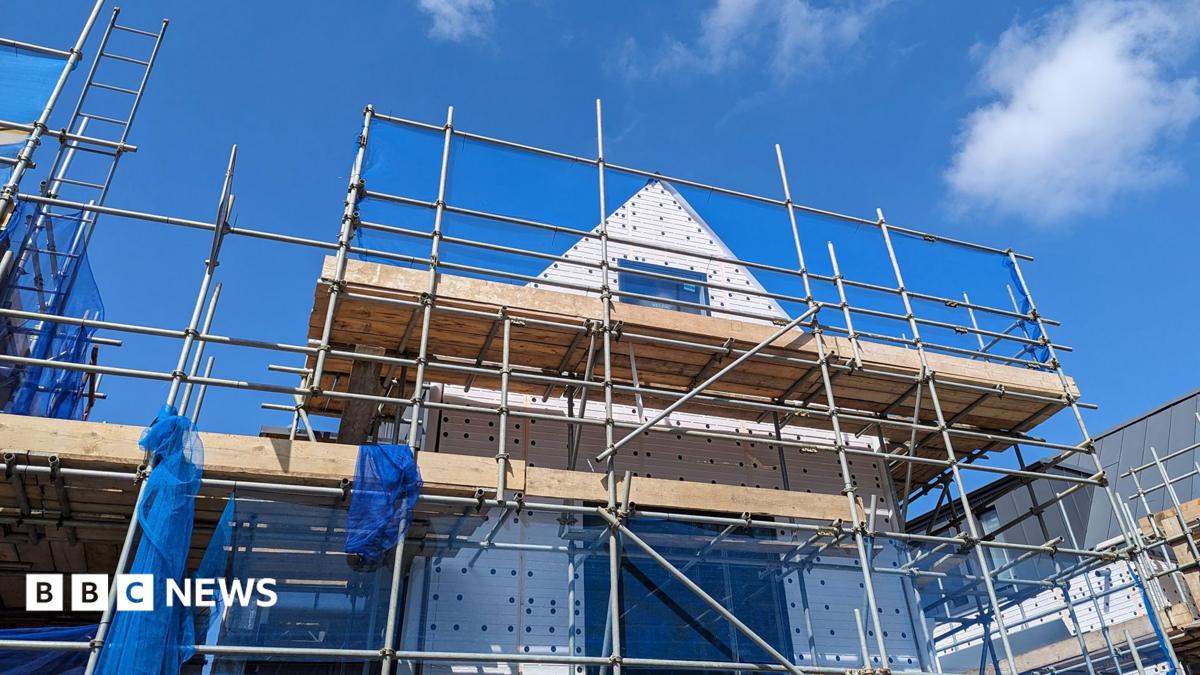
In a move that housing charities have politely described as 'a start, but not nearly enough,' ministers have announced where more than 70,000 social and affordable homes will be built in England over the next decade. The initial allocation of almost £10bn will fund projects in Greater Manchester, the West Midlands, West Yorkshire, South Yorkshire, North East England, and Liverpool, with an additional £6bn previously earmarked for London. This is the first instalment of a grander scheme to construct 300,000 social and affordable homes under the government's £39bn social housebuilding programme.
Housing charities welcomed the news with the enthusiasm of someone receiving a single biscuit when they asked for the whole packet, while the Conservatives dismissed it as an 'unfunded spending commitment.' Social housing, for the uninitiated, provides affordable homes at low cost, managed by social landlords, including affordable rented properties and low-cost home ownership schemes like shared ownership.
Before he became prime minister, Andy Burnham had audaciously suggested spending the entire £39bn on homes for social rent - where costs are about half of market rents with strict eligibility criteria. 'I would actually devote all of it to social housing,' Burnham told The Social Housing Podcast in May. Of the new homes announced on Monday, a mere 60% will be for social rent. Housing Minister Matthew Pennycook, perhaps anticipating the backlash, told BBC Breakfast he did not accept that Burnham had failed his commitment, citing a 'pragmatic approach' to 'get money out the door.' The next tranche of funding, he promised, would focus more on council houses - those traditionally built by local authorities.
Ministers apparently decided against giving councils more of the first tranche because they doubted councils could actually build the required number of homes. This might be because half of councils currently don't own or build any homes themselves, a fact that seems both relevant and slightly damning.
Meanwhile, homeless figures have soared to record levels under Labour, with 177,530 children in temporary accommodation as of earlier this month. Natasha, a 22-year-old living in a Milton Keynes hotel with her five-week-old son Zayd, described the place as 'like a prison,' with shared kitchens and a room that once became infested with ants. She's one of 1.34 million households on social housing waiting lists as of March 2025.
London will get the largest share of funding, though the number of homes there remains a mystery. Ministers said Monday's allocation was just the start, with more than £16bn still to be allocated outside London. Housing Secretary Angela Rayner, visiting a development in south-east London, expressed understanding of the 'frustration' felt by those in temporary accommodation, while insisting she and the PM were 'doing everything we can to get councils building once again.'
Burnham had promised 'the biggest council house building programme since the post-war period,' but the announcement fails to clarify how funding will be split between council and housing association homes. In the 1950s, councils built nearly 200,000 homes a year; now they manage about 65,000 affordable homes annually, with just over 12,000 for social rent - the highest since 2013-14.
Charities like Shelter and the National Housing Federation have long argued that at least 90,000 social homes are needed each year to meet demand. Charlie Berry, policy manager at Shelter, called the announcement 'not near the level we need to truly tackle that backlog and end homelessness,' but acknowledged it was a 'significant improvement.' She'd love Rayner to commit to an annual target for socially rented homes.
Shadow housing secretary Sir James Cleverly dismissed the plan as 'sleight of hand,' pointing out that homes don't have to be delivered until 2039. 'Fewer homes will be delivered than previous programmes in this Parliament as social rent is more expensive. Labour have scaled back their affordable housing programme and expect us to thank them for it.' The Conservatives also floated a plan to end social housing for foreign nationals, which they claim would 'free up' 228,144 homes for 'British families.' Reform UK, not to be outdone, proposed prioritising British-born workers under 35 for social housing.
Liberal Democrat housing spokesperson Gideon Amos welcomed parts of the plan but said it 'won't cut it' and called for a programme that 'meets the scale of the challenge.'
And what of Labour's grand promise to build 1.5 million homes by 2029? BBC Verify, using Energy Performance Certificates as a proxy, estimates about 203,000 new homes were delivered in the year ending June 2026 - well short of the 300,000 annual pace needed. But who's counting?
The Good Times
News in your inbox.
One sardonic roundup, delivered on your schedule. Free. Unsubscribe whenever your tolerance for wit runs out.
Already subscribed but we never reach your inbox? Check your spam folder and hit 'Not spam' (or 'Remove from spam') to bust us out of junk-mail purgatory. You'll be helping everyone else too.
Don't open any of our emails for a month and you'll be automatically removed from the mailing list.
Rewrite Article
Select parts to regenerate with a fresh AI pass. Translations will be updated automatically.
Generate AI Image
Creates a sardonic version of the article image using OpenAI.