Ferns: Nature's Kindling? Ancient Plants Turned Triassic Europe Into a 300,000-Year Barbecue
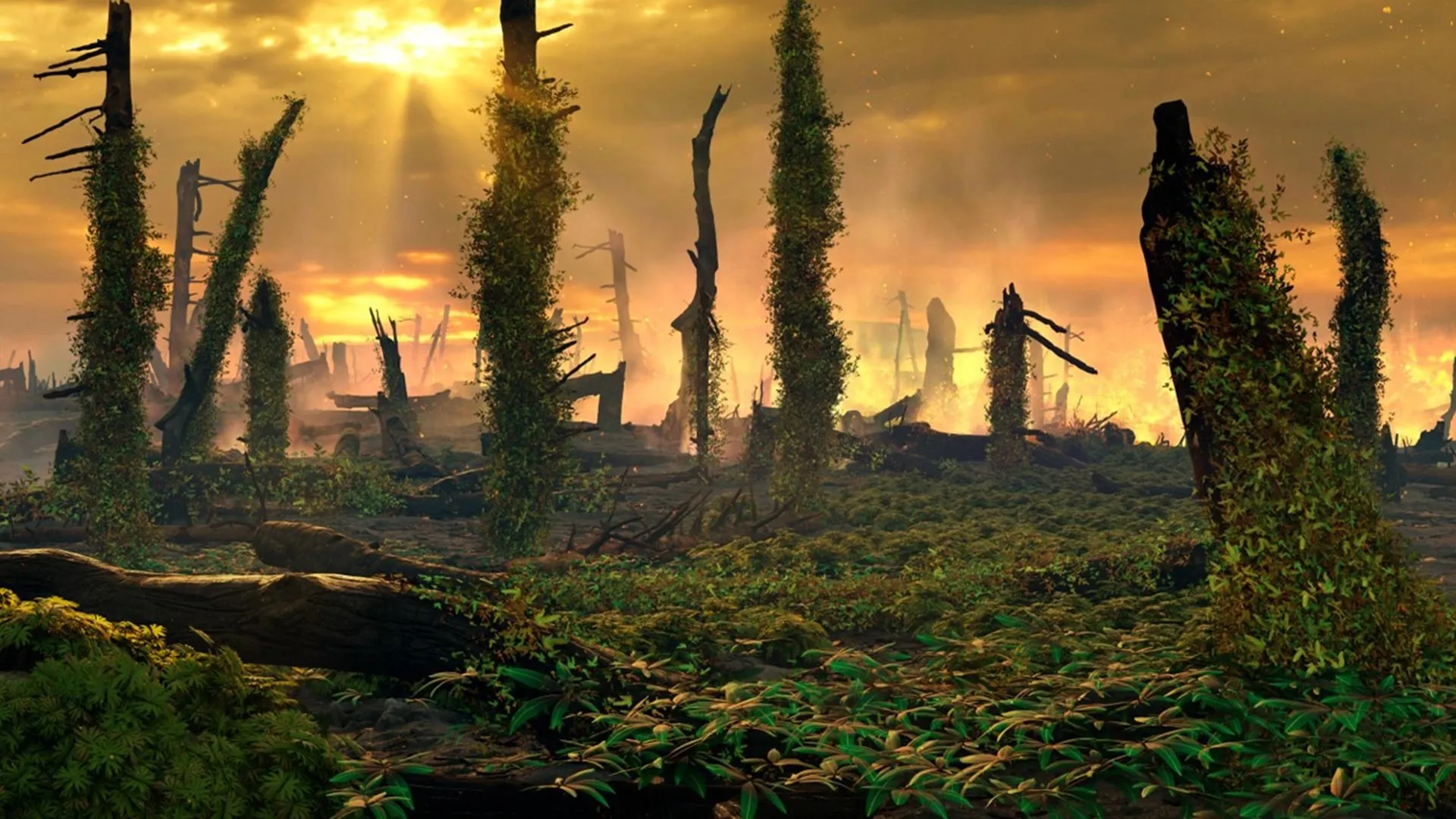
Ferns turned Triassic Europe into a 300,000-year wildfire inferno by acting as perfect kindling, creating a hellish feedback loop of fire and regrowth.
Some 201 million years ago, Earth decided to host a mass extinction party, and everyone was invited. The cause? Enormous volcanic eruptions tied to the break-up of Pangea, which pumped enough CO₂ into the atmosphere to crank global temperatures up by 5 to 10 degrees Celsius. Trees, being the sensible sort, collapsed. Ferns, being the opportunistic sort, moved right in, turning Northwest Europe into a savannah-like paradise for fire. According to new research from an international team led by geologists at Utrecht University, these ferns didn't just enjoy the view - they supplied the fuel for a wildfire inferno that lasted at least 40,000 years and possibly as long as 300,000 years. The findings, published in Nature Geoscience on July 21, 2026, suggest that the ferns themselves may have been the kindling that kept the flames spreading.
To investigate this prehistoric barbecue, the team studied exceptionally well-preserved sediment from four drill cores, including a recently collected 640-meter-long core from the United Kingdom. They reconstructed ancient fire activity by measuring fossil charcoal and organic compounds called polycyclic aromatic hydrocarbons (PAHs) - essentially, the smoke signals of the Triassic. When combined with records of fossil pollen and spores, the data pointed to a sharp increase in wildfire activity during the main extinction phase, coinciding with a dramatic fern expansion. But traditional indicators have their quirks: large charcoal pieces can break into fragments, making fire seem more abundant, and PAHs can travel far from their source. So the researchers developed a new method: the Palynomorph Darkness Index.
"The novelty of this study came from the analysis of color changes of organic microfossils," explains Dr. Bas van de Schootbrugge, senior author. "We used a simple and very low-cost technique that quantifies the 'darkness' of fossil pollen and spores." Normally, deeper burial means darker fossils due to heat and pressure. But here, the oldest and deepest pollen remained lightly colored, while fossils from the extinction interval became progressively darker, reaching an extremely dark brown, then returning to pale yellow once the extinction ended. "We were quite puzzled," van de Schootbrugge admits, noting the pattern occurred in all four cores at exactly the same time, despite different geological histories.
The researchers completed 15,000 measurements of pollen and spores from before, during, and after the extinction, comparing tree pollen with fern spores to rule out biological differences. "All plant groups show the same effect, which is a strong indication that it was the result of an outside force." That outside force: severe wildfire activity during the fern spike. "The darkening overlaps exactly with the fern spike, the main extinction interval, and elevated abundance of charcoal and PAHs."
Ferns, it turns out, are disaster species. They spread quickly across damaged ground, and while their visible parts burn, they regrow from root systems below the surface, returning faster than competitors. "When the ferns dry out, the thick mats act as the ideal fuel to trigger massive wildfires," van de Schootbrugge explains. Some ferns even acted as fire ladders, helping flames move through the landscape while crowding out other vegetation. The result was a destructive feedback cycle: climate warming and forest loss opened the landscape to ferns, which then supplied dry fuel for new fires, after which they regrew and spread again. "A truly hellish world."
"The lesson we can learn from this," van de Schootbrugge concludes, "is that the combination of climate change, deforestation, and the spread of opportunistic species can provide all the ingredients for a perfect storm." So next time you see a fern, maybe give it a wary nod - it's been practicing for the apocalypse.
The Good Times
News in your inbox.
One sardonic roundup, delivered on your schedule. Free. Unsubscribe whenever your tolerance for wit runs out.
Already subscribed but we never reach your inbox? Check your spam folder and hit 'Not spam' (or 'Remove from spam') to bust us out of junk-mail purgatory. You'll be helping everyone else too.
Don't open any of our emails for a month and you'll be automatically removed from the mailing list.
Rewrite Article
Select parts to regenerate with a fresh AI pass. Translations will be updated automatically.
Generate AI Image
Creates a sardonic version of the article image using OpenAI.