Europe's Trawlers: Bulldozing the Ocean Floor and Handing Taxpayers a $18.5 Billion Bill
New report finds Europe's bottom trawlers rack up $18.5 billion in environmental costs annually, destroy marine habitats, and make taxpayers pay 90 times more than the industry profits - all while catching a lot of things nobody actually wanted.
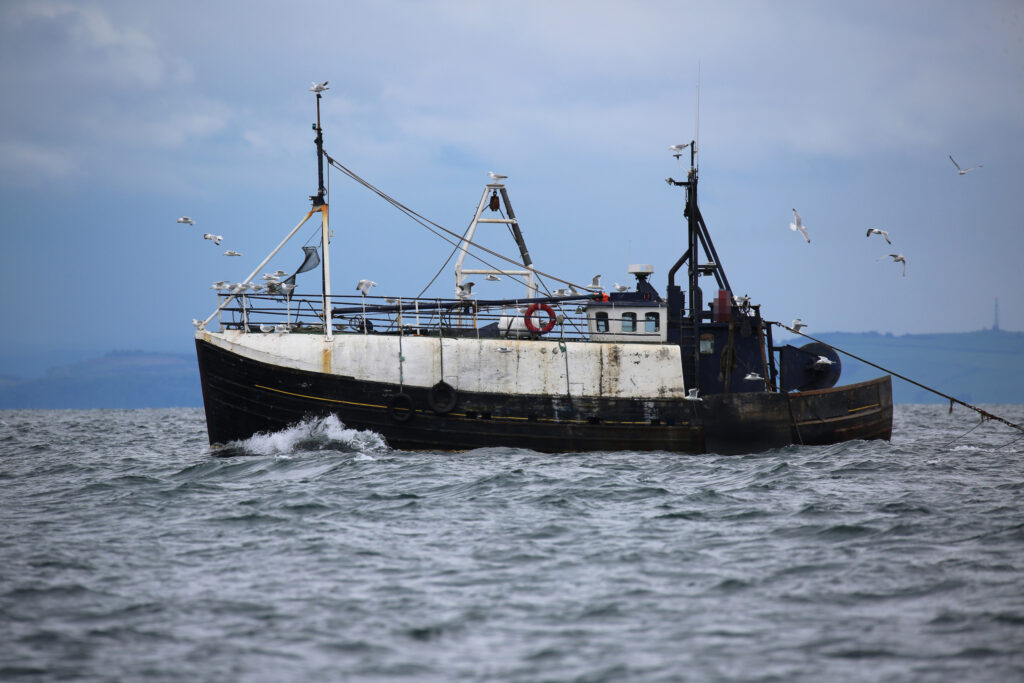
By the time it was dumped on deck, the heaved contents no longer resembled ocean life - just a soup of dead crabs, conger eels, half a ton of mud, and squashed starfish, all violently bounced across the seafloor for four hours before being dragged into the light post-mortem. This is the daily reality aboard nearly 5,000 trawlers operating from the Mediterranean to the Arctic, fishing for cod, haddock, and shrimp but scooping up sharks, rays, and seahorses as bycatch.
According to a new report by National Geographic's Pristine Seas researchers, bottom trawling in European waters costs up to $18.5 billion annually through disturbing seafloor sediment and releasing carbon dioxide. The continent's trawlers spend over 5.5 million hours each year fishing, with almost a quarter of all activity occurring inside Marine Protected Areas (MPAs). Professor Enric Sala, National Geographic explorer in residence and study co-author, put it bluntly: "Our study makes it clear that bottom trawling in European waters is not just an environmental disaster, it's an economic failure."
While the industry generates over $200 million in net profits, European taxpayers foot a bill roughly 90 times higher. "The emitters of carbon dioxide create costs they don't have to pay for, it is the rest of society who pays for them," Sala said. The report also notes that up to 75 percent of marine life caught in bottom trawling nets die, with bycatch of dogfish, rays, sharks, sponges, and seahorses valued at a quarter of a billion dollars each year.
Bally Philp, a third-generation fisherman from Scotland's Isle of Skye who was fired from his uncle's trawler for trying to release living bycatch, now chairs the Scottish Creel Fishermen's Federation. "You can't fix the selectivity issue, you can't fix the seabed abrasion issue, and you can't fix this carbon issue," he said. "Carbon adds a whole other layer of compelling arguments as to why we might want to restrict trawling."
Despite boasting more than 300,000 square miles of marine reserves, only 0.07 percent of Europe's waters had "full" or "high" protection against trawling, the researchers found. Since 2020, more than 1.3 million tons of fish have been caught by trawlers inside Britain's protected waters - enough to fill 500 Olympic-sized swimming pools, according to Greenpeace. Michael Sealey, senior policy advisor at Oceana in Europe, summed up the absurdity: "When you eat a shrimp, you're eating a shrimp, but for that shrimp you killed sharks, you killed skates, you released tons of carbon dioxide."
The report highlights a wider global blind spot: over 3,000 different fish species are caught in bottom trawls worldwide, with 95 percent of species caught not being the intended target. Sarah Foster, lead author of a related study in Reviews in Fish Biology and Fisheries, said bottom trawling isn't just a fisheries challenge but a climate change challenge: "They consume the most fuel and release carbon from the ocean floor in a way that no other fisheries do."
Despite their immense ecological harm, trawlers provide just 2 percent of Europe's animal protein and employ less than a third of the number of people working in low-impact, small-scale fisheries. The corporate divide is stark: just 26 boats catch over 50 percent of Scotland's seafood by value. Philp noted that on Scotland's largest super-trawlers, "the guys who work on these boats, they don't even have oilskins" - a telling sign of who's really profiting from the ocean's destruction.
The Good Times
News in your inbox.
One sardonic roundup, delivered on your schedule. Free. Unsubscribe whenever your tolerance for wit runs out.
Already subscribed but we never reach your inbox? Check your spam folder and hit 'Not spam' (or 'Remove from spam') to bust us out of junk-mail purgatory. You'll be helping everyone else too.
Don't open any of our emails for a month and you'll be automatically removed from the mailing list.
Rewrite Article
Select parts to regenerate with a fresh AI pass. Translations will be updated automatically.
Generate AI Image
Creates a sardonic version of the article image using OpenAI.