Egyptian Farmers Try Solar Panels as Sunscreen for Crops, Because the Sun Is Now Too Much of a Good Thing
Egyptian farmers are reviving their ancient innovation streak by planting crops under solar panels, generating power while keeping the produce from turning into crispy snacks.
Ancient Egyptians mastered the art of turning desert into breadbasket, feeding the Roman Empire on the strength of the Nile's annual tantrums. Fast-forward a few millennia, and their farming descendants are facing a less cooperative climate: water's getting scarce, and the sun's gone from helpful to just... a lot. So, naturally, they're improvising again, this time with a trick called agrivoltaics - slapping solar panels over fields to generate electricity, shade the crops, and keep the soil from turning into a dust bowl.
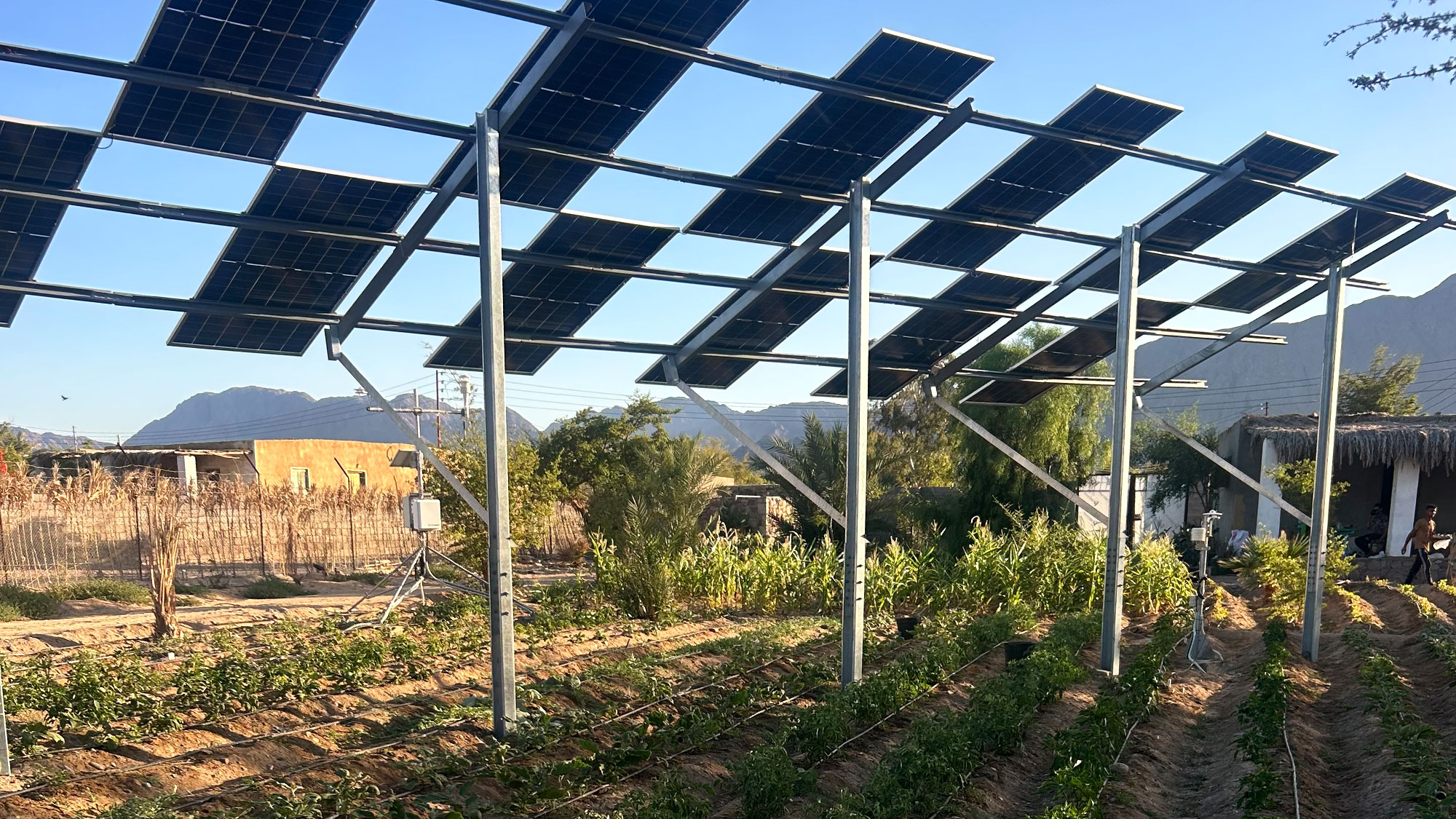
Two pilot projects in Egypt, backed by various funders and partners, are putting this idea to the test, both on small farms and at a bigger scale. “There is no perfect guideline on how to get there, so I imagine many projects like ours will be trying out different things,” said Gofran Chowdhury, head of innovation at renewable energy company 3E, one of the partners. Because why have a rulebook when you can just wing it? Researchers worldwide are discovering that shade-loving plants actually thrive under solar panels, which is great news for crops that never signed up for a life of full sunbathing. The Egyptian projects are experimenting with checkerboard panel arrangements - not as efficient for electricity as a solid solar farm, but it lets more sunlight through to the plants, which seems fair.
Meanwhile, the shade cuts water loss from the soil. Over in Nevada, researchers found this hydrological protection helps a rare desert plant. In Colorado, rooftop agrivoltaics uses a third less water than unshaded plants - plus, it protects them from wind and relentless sun. They're even trying transparent solar panels, for that 'light through, power out' combo. Every crop has its quirks, so the Egyptians are keeping it local. Early results are promising: cucumbers on those Colorado roofs are growing to baseball-bat size. Nobody's forcing Egyptian farmers to grow cucumbers, though. They'll stick to what they know. “We want to adapt and see what is the community doing right now,” Chowdhury said, “and trying to see if we can support them with that adaptation.” All the while, data on plants and panels is being collected to inform future agrivoltaics deployments.
Maged El-Said, founder of Habiba Community, which runs a regenerative farm in South Sinai, says it's too early to tell which crops will shine under panels installed in May. But watermelon is already a frontrunner. “Honestly, it's growing well for the first time,” El-Said said. The community's also wrestling with bigger questions: Should farms go agrivoltaics solo or team up? Who gets the clean electricity? For now, it powers irrigation, but it could also run desalination plants to purify brackish water - a self-reinforcing cycle that could make more places farmable. In short, solar panels are turning agriculture into a more resilient enterprise as temperatures climb.
Agrivoltaics neatly sidesteps the classic land-use showdown: food or energy? Why not both? “I have the solution that I can have both,” El-Said said. “Well, why not?” Indeed. Because when ancient Egyptians built pyramids, they didn't choose between tombs and temples - they went big. So why should today's farmers choose between shade and sunlight?
The Good Times
News in your inbox.
One sardonic roundup, delivered on your schedule. Free. Unsubscribe whenever your tolerance for wit runs out.
Already subscribed but we never reach your inbox? Check your spam folder and hit 'Not spam' (or 'Remove from spam') to bust us out of junk-mail purgatory. You'll be helping everyone else too.
Don't open any of our emails for a month and you'll be automatically removed from the mailing list.
Rewrite Article
Select parts to regenerate with a fresh AI pass. Translations will be updated automatically.
Generate AI Image
Creates a sardonic version of the article image using OpenAI.