
BROOMFIELD, Colo. - Colorado's top wildfire officials have delivered their annual summer forecast, and spoiler alert: it's not great. They're expecting a significantly increased risk of wildfire this summer, and while they'll share resources with neighboring states up to a point, that point is roughly at the state line.
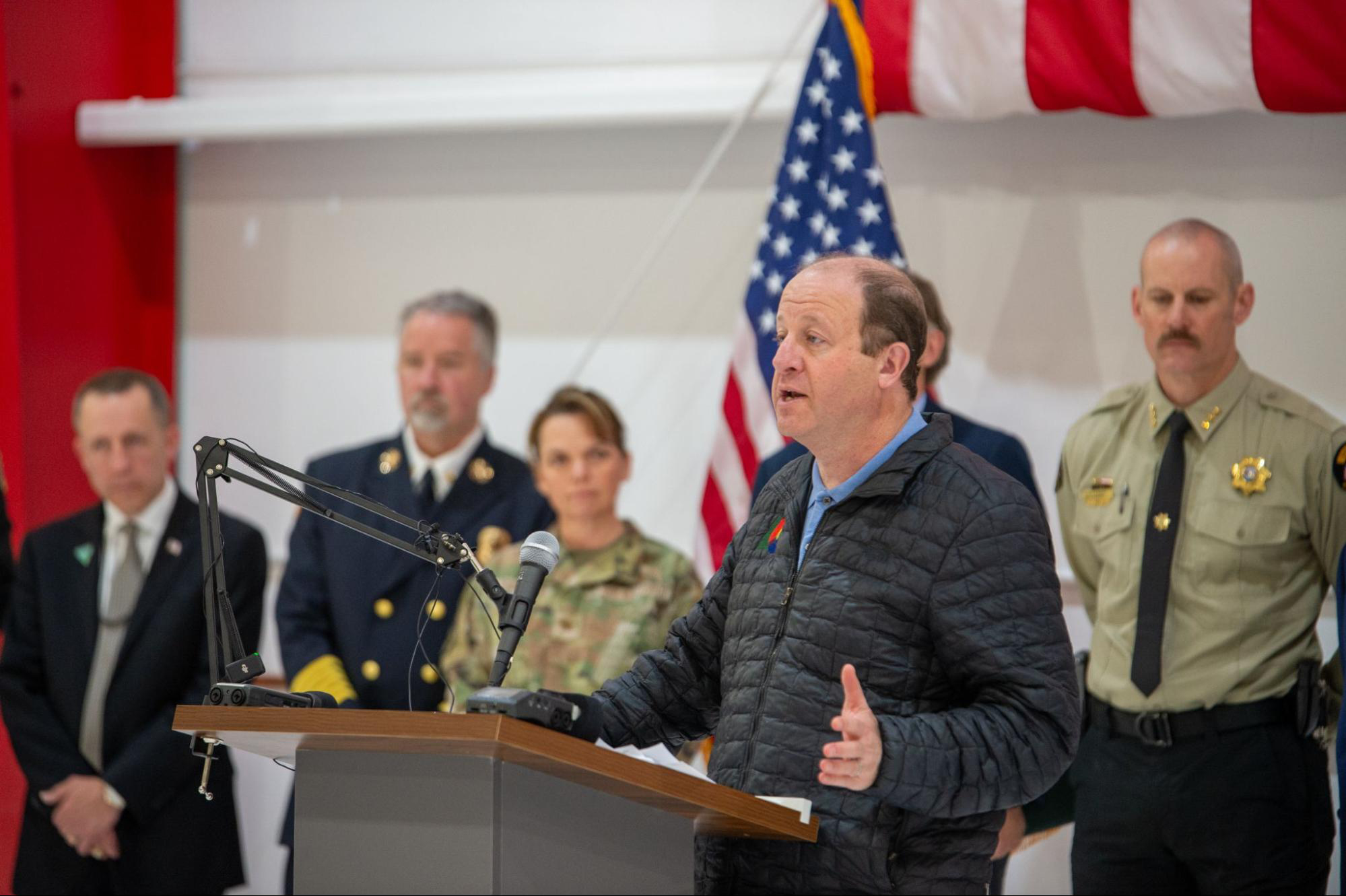
A dismal snowpack this winter has left the landscape looking like a tinderbox, from the ski slopes to the eastern plains. Governor Jared Polis, delivering the state's annual wildfire outlook briefing on April 30, described the upcoming summer as “challenging” across the West, with an “elevated fire risk” threatening Utah, New Mexico, and Arizona, alongside Colorado.
Polis, who is term-limited and out the door, noted that three of the largest fires in state history raged during his eight years in office, including the 2021 Marshall Fire that torched over 1,000 homes in a Boulder suburb. But he insisted the state is better prepared than ever, boasting two state-owned multimission aircraft, single-engine tankers, leased large air tankers, type 1 and type 2 helicopters, multiple engines, hand crews, and more intelligence than ever before. “While the risks have increased,” he said, “our preparedness has grown exponentially.”
As for lending that shiny new equipment to neighbors, Polis said he'll consider it case by case, but the priority is keeping resources home. “We don’t want to sacrifice that,” he said of rapid response within Colorado.
The increased risk stems from climate change, drought, and a growing population pushing deeper into the Wildland Urban Interface, or WUI - where homes meet flammable landscapes. Matt McCombs of the Colorado State Forest Service noted that more than half of Colorado residents now live in the WUI. “Ultimately, Coloradans know - we all understand - we have to learn to live with wildland fire,” he said.
So far this year, 24,222 fires have burned nearly two million acres across the country, blowing past the 10-year average for this time of year. Colorado typically sees 6,000 to 7,000 wildfires annually, most human-caused. In the first 117 days of 2026, the state dropped over 200,000 gallons of water and retardant on more than 50 flight days, said Stan Hilkey, director of public safety.
At the federal level, the new U.S. Wildland Fire Service has been announced, though Inside Climate News previously reported layoffs, confusion, and budget cuts have sparked doubts. Paul Hohn, the Rocky Mountain geographic area fire chief, said staffing levels are the same as last year, and that deferred resignation programs haven't applied to firefighters.
Polis has had friction with the Trump administration, criticizing the denial of major disaster declarations for two recent wildfires. “If that’s going away, as it seems to be… that would fundamentally change the nature of the federal relationship with the states,” he said. In response, Colorado's Democratic senators introduced the “Disaster Declaration Transparency Act of 2026,” allowing Congress to override presidential denials. FEMA declined to comment.
Former governors Bill Ritter (Democrat) and Bill Owens (Republican) penned a guest column in The Denver Post, calling for a “more mature conversation” about forest management - thinning, fuel reduction, and prescribed burns. “Stewardship is not abuse,” they wrote. “Refusing to use proven tools in fire-prone landscapes is its own kind of recklessness.”
Polis, who hadn't read the column, said his state is “light years” ahead of a decade ago. Colorado's fire czar, Michael Morgan, said the strategy this year will focus on “rapid, aggressive initial attack” to keep fires small. “Every ignition we can stop, that’s one less stressed-out, overworked firefighter,” he said.
Polis declared May Wildfire Awareness Month and urged citizens to “think like a firefighter.” McCombs stressed that mitigation work - reducing burnable fuel and hardening homes - might not make headlines but pays off. Polis acknowledged that prescribed burning requires “an awful lot of paperwork” and hinted at cutting bureaucracy.
Ultimately, officials said the real work falls on individuals. “Doing your part to protect your home, protect your community, prevent fires from starting… that’s what’s going to make the difference,” Morgan said.