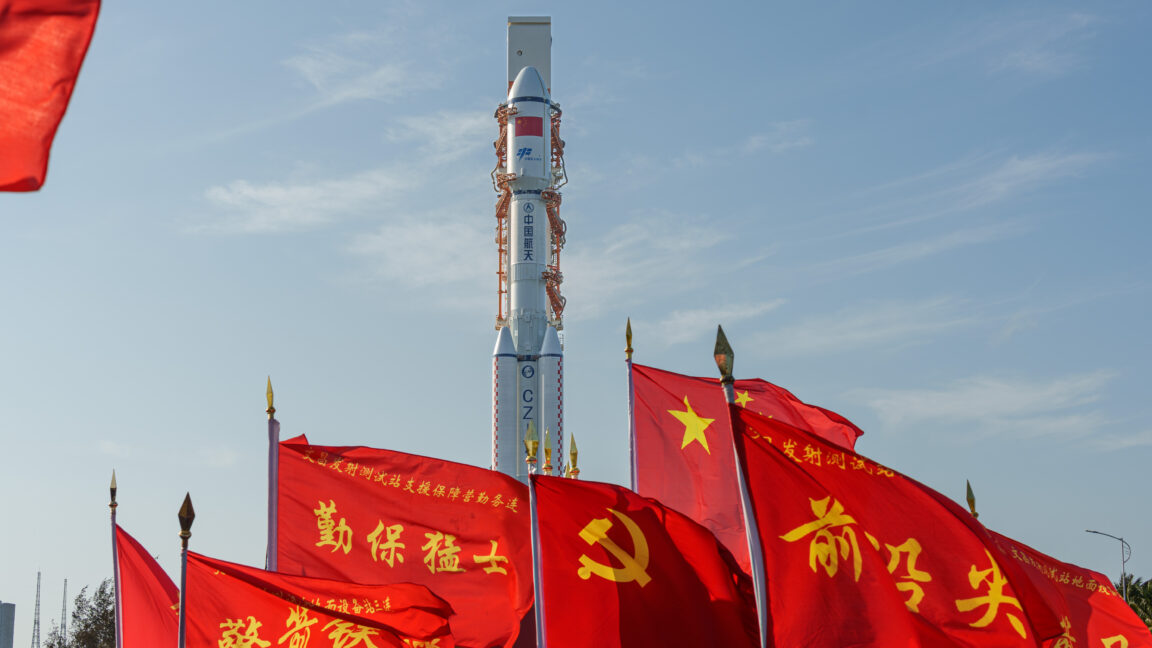
China's trusty Long March 7A rocket decided to add a little excitement to Monday evening by exploding about 80 seconds after liftoff from the Wenchang Space Launch Site. The payload was classified - likely a military communications satellite - so we can't say what was lost, but the video is quite the spectacle.
The rocket, developed by the China Aerospace Science and Technology Corporation, appeared to have a nominal liftoff before its first stage decided to part ways dramatically. The explosion occurred around the time of maximum dynamic pressure, which is a fancy way of saying the rocket was feeling the pressure. It's possible the onboard flight termination system triggered, which is essentially a self-destruct button for wayward rockets.
China's state-run space program has been on a roll lately, with 50+ launches a year and only a handful of failures. So this is a rare oops. The cause is unknown, and given the secretive nature of the program, it might stay that way. But if the culprit is the YF-100 engine - the workhorse of China's space fleet, with 270,000 pounds of thrust and a diet of liquid oxygen and kerosene - there could be bigger problems.
The YF-100 has been powering the Long March 7 and 7A for a decade, handling everything from satellite launches to Tianzhou cargo missions. But it's also used in various configurations on up to nine other rockets, including the Long March 5, 8, and even the upcoming Long March 10. So if it's an engine issue, we could see some delays.
Speaking of delays, the Chang'e 7 Moon mission is scheduled to launch on a Long March 5 in about two weeks. That rocket uses YF-100 engines in its boosters. Chang'e 7 is a big deal - it's a combo orbiter, lander, rover, and mini-hopper heading to the Moon's South Pole near Shackleton crater. It would be the first rover to explore that area, where both China and NASA are eyeing resources. So, no pressure, but this explosion might have just thrown a wrench in the works.
The Good Times
News in your inbox.
One sardonic roundup, delivered on your schedule. Free. Unsubscribe whenever your tolerance for wit runs out.
Already subscribed but we never reach your inbox? Check your spam folder and hit 'Not spam' (or 'Remove from spam') to bust us out of junk-mail purgatory. You'll be helping everyone else too.
Don't open any of our emails for a month and you'll be automatically removed from the mailing list.
Rewrite Article
Select parts to regenerate with a fresh AI pass. Translations will be updated automatically.
Generate AI Image
Creates a sardonic version of the article image using OpenAI.