
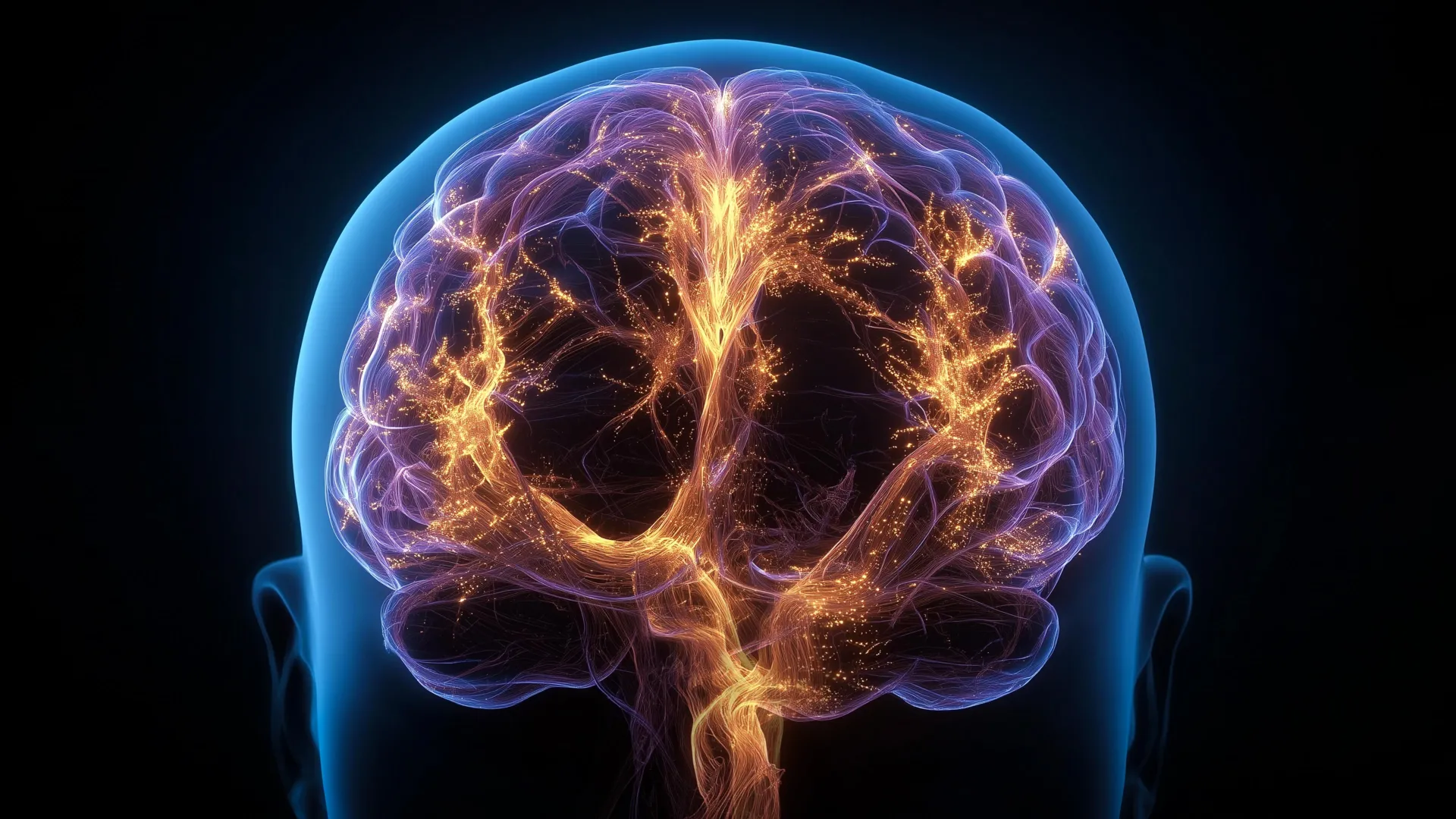
Neuroscientists have confirmed what many of us suspected: psychopaths are literally wired differently, and the difference is measurable - specifically, about 10 percent larger. A study published in the Journal of Psychiatric Research by researchers from Nanyang Technological University, Singapore (NTU Singapore), the University of Pennsylvania, and California State University found that the striatum, a brain region involved in reward and motivation, was about 10 percent larger on average in individuals with psychopathic traits compared to a control group.
The striatum sits deep in the forebrain and handles movement planning, decision-making, motivation, reinforcement, and how the brain responds to rewards. So if you've ever wondered why some people seem pathologically driven to seek thrills, excitement, and impulsive behavior regardless of consequences, you can now blame a slightly oversized chunk of gray matter.
Psychopathy is generally associated with an egocentric and antisocial personality pattern - reduced empathy, little remorse, and, in some cases, a greater likelihood of criminal behavior. Not everyone with psychopathic traits commits crimes, and not every criminal is a psychopath, but research has consistently linked psychopathy with a higher risk of violent behavior. This study adds evidence that biology, not just social and environmental experiences, plays a role.
The researchers scanned the brains of 120 people in the United States and interviewed them using the Psychopathy Checklist - Revised, a widely used psychological assessment. Assistant Professor Olivia Choy from NTU's School of Social Sciences, a neurocriminologist and co-author, said: "Our study's results help advance our knowledge about what underlies antisocial behavior such as psychopathy. We find that in addition to social environmental influences, it is important to consider that there can be differences in biology, in this case, the size of brain structures."
The enlarged striatum was linked to a stronger need for stimulation, including thrill-seeking, excitement, and impulsive behavior. Stimulation-seeking and impulsivity partly explained the relationship between striatal volume and psychopathy, accounting for 49.4 percent of the association. Professor Adrian Raine from the University of Pennsylvania noted that because biological traits like striatum size can be inherited, the findings support "neurodevelopmental perspectives of psychopathy - that the brains of these offenders do not develop normally throughout childhood and adolescence."
One important feature of the study was that it included people from the community rather than focusing only on prison populations. Professor Robert Schug from California State University, Long Beach, said: "The use of the Psychopathy Checklist - Revised in a community sample remains a novel scientific approach: Helping us understand psychopathic traits in individuals who are not in jails and prisons, but rather in those who walk among us each day." So yes, someone with a 10-percent-larger striatum might be your coworker, your neighbor, or your Tinder date.
The researchers also examined 12 women in the sample and reported, for the first time, that psychopathy was linked to an enlarged striatum in adult females as well as males. The female sample was small, so the finding needs further study, but it suggested the same brain pattern may not be limited to men - though we doubt anyone assumed women were immune to psychopathy.
In typical human development, the striatum tends to shrink as a child matures, raising the possibility that psychopathy may be connected to differences in brain development across childhood and adolescence. Asst Prof Choy added: "A better understanding of the striatum's development is still needed. Many factors are likely involved... Psychopathy can be linked to a structural abnormality in the brain that may be developmental in nature. At the same time, it is important to acknowledge that the environment can also have effects on the structure of the striatum."
Since the 2022 paper, later research has continued to explore how psychopathy relates to brain structure and networks. A 2025 study in European Archives of Psychiatry and Clinical Neuroscience examined 39 adult men diagnosed with psychopathy and found that antisocial lifestyle traits were associated with reduced volumes in several brain regions. Another 2025 analysis in Neuroscience and Biobehavioral Reviews looked across 38 functional neuroimaging studies and argued that psychopathy may be better understood through a network-level view rather than by focusing on one region alone.
Associate Professor Andrea Glenn from the University of Alabama, who was not involved in the 2022 study, said: "By replicating and extending prior work, this study increases our confidence that psychopathy is associated with structural differences in the striatum, a brain region that is important in a variety of processes important for cognitive and social functioning."
Scientists are still working to understand why the striatum may be enlarged in people with psychopathic traits. Future work may help clarify how genetics, development, life experiences, and environment interact to shape the brain systems involved in reward-seeking, impulse control, and antisocial behavior. In the meantime, if someone you know is a little too excited about getting that speeding ticket or binge-watching true crime, their striatum might be doing the talking.