Bank of England Deputy Looks at Market, Sees a Whole Lot of Nope
Bank of England deputy governor says stock markets are priced for perfection in an imperfect world, warns of a potential 'adjustment' that sounds a lot like a fall.
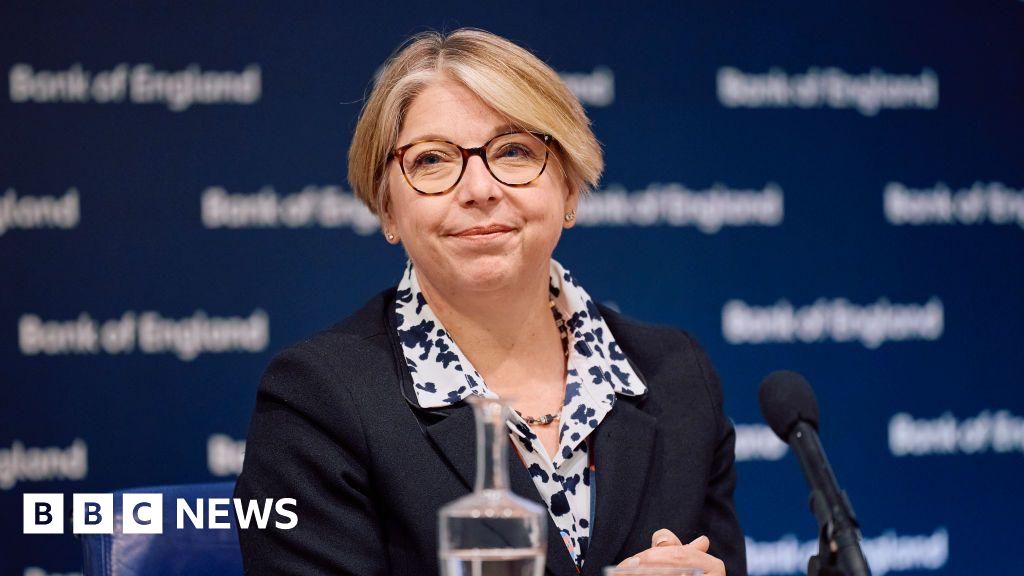
The Bank of England's deputy governor has gazed upon the global stock markets and concluded, with the confidence of someone who doesn't have to worry about their own 401(k) in the same way, that they are too high and likely to fall.
Sarah Breeden, who also carries the weighty title of head of financial stability, told the BBC: "There's a lot of risk out there and yet asset prices are at all-time highs. We expect there will be an adjustment at some point." It is, we are told, unusual for a senior Bank figure to be so forthright about market movements - presumably because usually they prefer to communicate via cryptic eyebrow wiggles over tea.
Breeden declined to specify when this adjustment might happen or by how much, but she did list a few things markets seem to be ignoring: a major macroeconomic shock, a crisis of confidence in private credit, and a readjustment of AI and other "risky valuations." "The thing that really keeps me awake at night," she said, "is the likelihood of a number of risks crystallising at the same time."
The US stock market, home to the world's biggest companies, has been hitting all-time highs despite the International Energy Agency warning that the world economy faces its biggest energy shock in history. Technology firms have poured hundreds of billions into AI infrastructure, prompting Microsoft founder Bill Gates to call it "a frenzy" reminiscent of the dotcom bubble of the late 1990s - when investors threw money at unproven start-ups that quickly went bust or had billions wiped off their value. Nvidia boss Jensen Huang, the biggest supplier of chips to AI companies, is among those who have dismissed these concerns, presumably while counting his money.
Meanwhile, the "shadow banking" system - funds that mimic banks and lend privately to businesses - has sustained losses and restricted withdrawals, sparking concerns. Breeden noted that private credit has grown from nothing to $2.5 trillion in the last 15-20 years and "hasn't been tested at this scale with the degree of complexity and interconnections." She added, "It's a private credit crunch, rather than a banking-driven credit crunch, that we're worried about."
The UK stock market, which lacks the kind of AI giants driving US records, still has the FTSE 100 within 5% of its own all-time high. Breeden said her job is not to predict when or how much markets fall but to ensure the system is ready if they do. "I'm not saying it will happen today, tomorrow, in 12 months' time," she said. "It's ensuring that if it happens the system is resilient." So, basically, the Bank of England is preparing for a potential financial shambles by making sure the safety nets are in place. Comforting, that.
The Good Times
News in your inbox.
One sardonic roundup, delivered on your schedule. Free. Unsubscribe whenever your tolerance for wit runs out.
Already subscribed but we never reach your inbox? Check your spam folder and hit 'Not spam' (or 'Remove from spam') to bust us out of junk-mail purgatory. You'll be helping everyone else too.
Don't open any of our emails for a month and you'll be automatically removed from the mailing list.
Rewrite Article
Select parts to regenerate with a fresh AI pass. Translations will be updated automatically.
Generate AI Image
Creates a sardonic version of the article image using OpenAI.