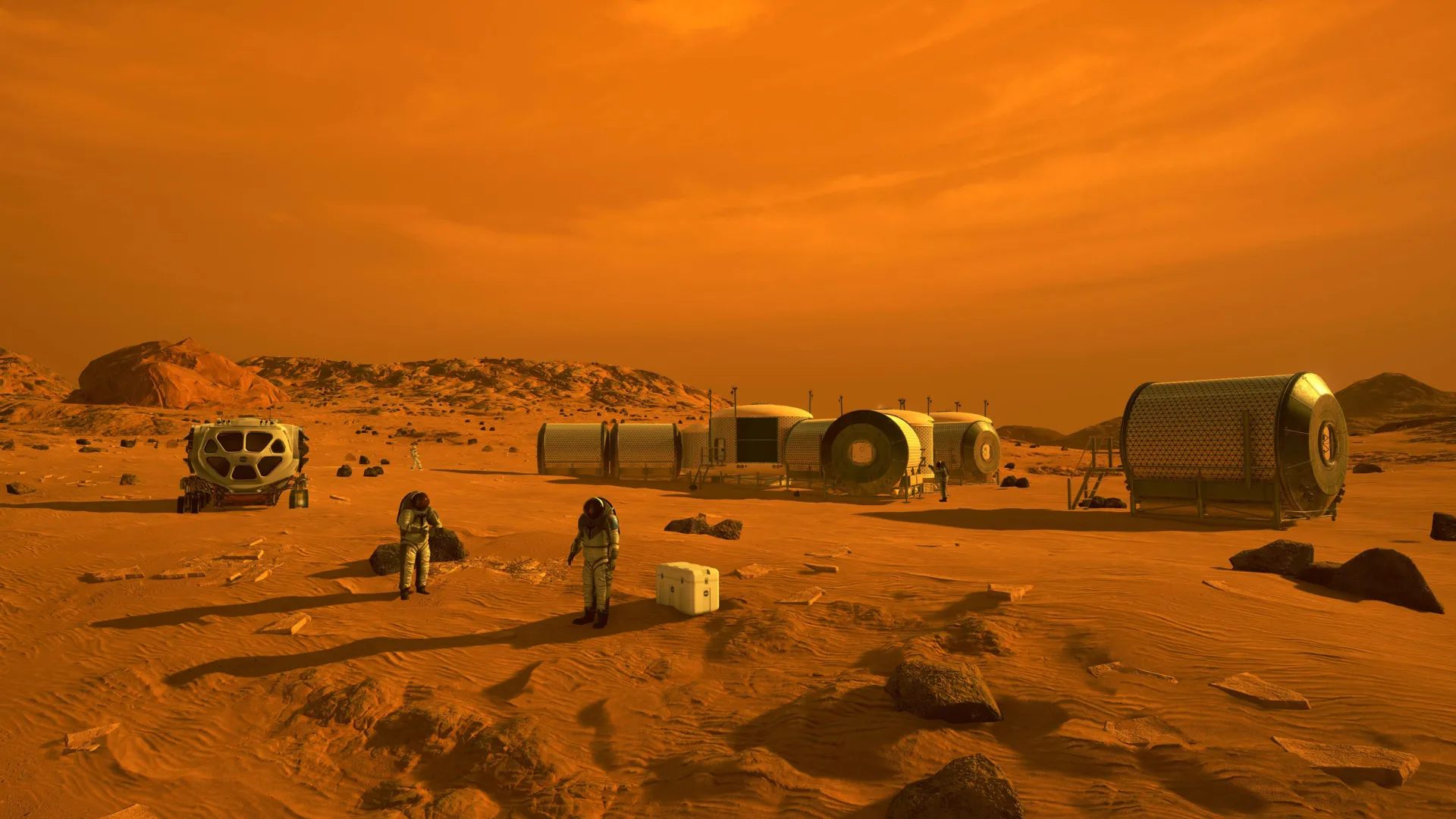
In a move that will surely disappoint Bruce Willis fans, scientists have determined that the most useful thing we could do with an asteroid is not blow it up, but rather turn it into a cosmic hardware store for Mars. A new study from researchers at EPFL in Switzerland suggests that asteroid mining could supply the metals needed to build a Martian colony, potentially solving one of the biggest logistical nightmares of space colonization.
Let's face it: shipping everything from Earth is a non-starter. Launching a single tonne of cargo costs tens of millions of pounds, and a trip to Mars takes six to nine months depending on planetary alignment. That's like ordering a new wrench and waiting for it to arrive via slow boat from a galaxy far, far away. Not exactly efficient.
But here's the twist: millions of asteroids are just floating around out there, and some of them - the so-called M type asteroids - are packed with iron, nickel, and other useful metals. They're essentially giant space boulders with a hidden treasure trove. The question is whether we can get to them, extract the goodies, and haul them back to Mars without burning through more fuel than the metals are worth.
The EPFL team ran thousands of computer simulations to test various supply chains, factoring in travel energy, metal yield, and fuel consumption. The results are cautiously optimistic: some asteroids could be reached with existing spacecraft technology, and the energy costs might just be low enough to make the whole endeavor worthwhile.
The clever part involves using carbonaceous asteroids - those containing carbon and water ice - to produce rocket propellant in space. This means spacecraft wouldn't have to lug their return fuel from Earth, significantly reducing the weight and cost. It's like filling up your car at a gas station on the highway instead of carrying a barrel of gasoline in the trunk.
But don't start packing your bags for the asteroid belt just yet. The study doesn't mean mining is imminent; we're still a long way from operating our first space mine. However, it does show that the logistics problem isn't insurmountable. With the right asteroid selection and a bit of ingenuity, we could create a supply network that keeps a Mars colony stocked with building materials, all thanks to some well-placed space rocks.
So, while we may not be saying goodbye to Earth just yet, the dream of becoming a multiplanetary species just got a little more plausible. And who knows? Maybe one day, the phrase 'shipping and handling' will apply to interplanetary deliveries.
The Good Times
News in your inbox.
One sardonic roundup, delivered on your schedule. Free. Unsubscribe whenever your tolerance for wit runs out.
Already subscribed but we never reach your inbox? Check your spam folder and hit 'Not spam' (or 'Remove from spam') to bust us out of junk-mail purgatory. You'll be helping everyone else too.
Don't open any of our emails for a month and you'll be automatically removed from the mailing list.
Rewrite Article
Select parts to regenerate with a fresh AI pass. Translations will be updated automatically.
Generate AI Image
Creates a sardonic version of the article image using OpenAI.