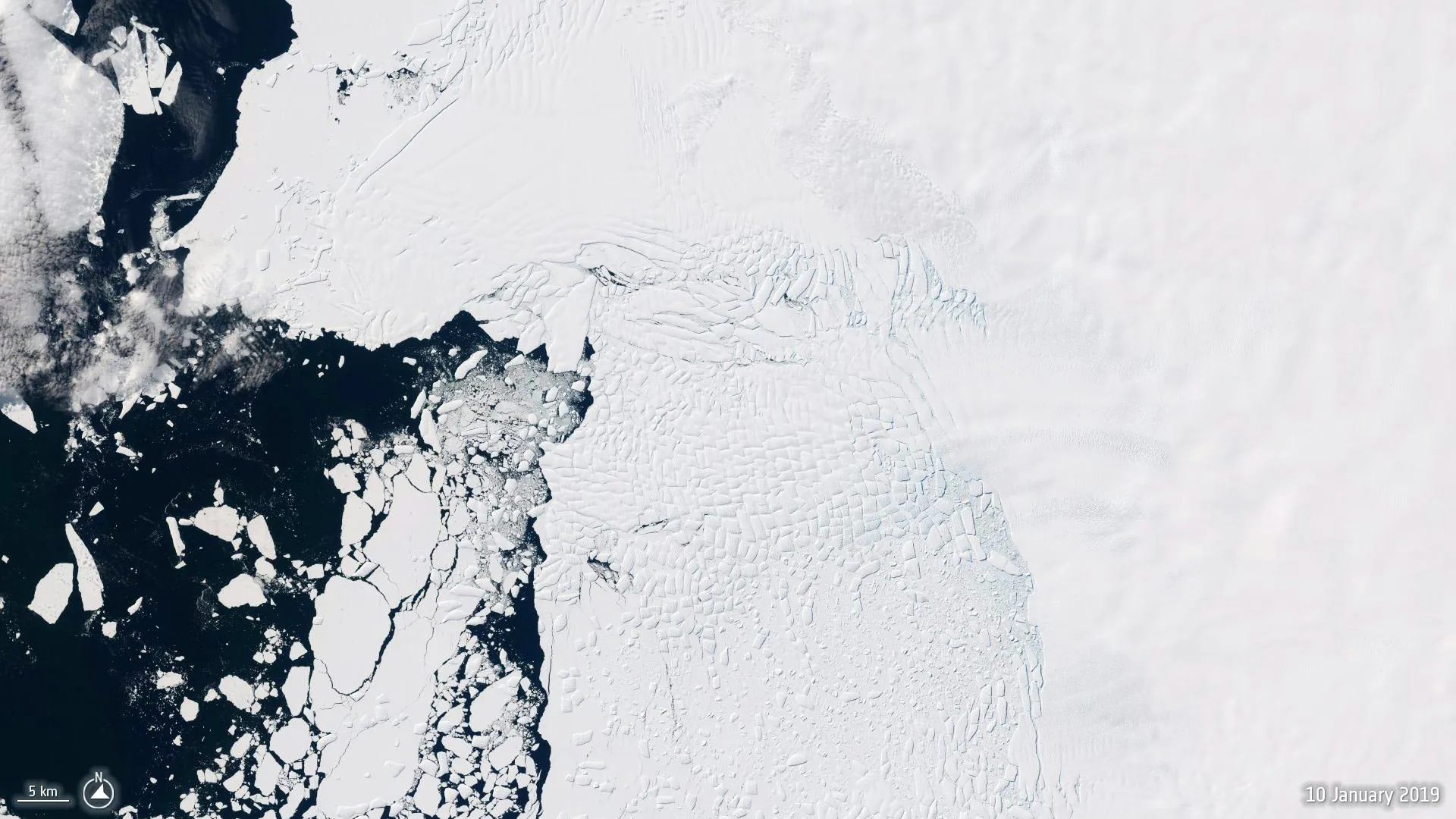
Glacial earthquakes - those delightful little tremors caused when massive chunks of ice decide to take a plunge into the ocean - have been known to science for over two decades. First spotted in the Northern Hemisphere, they’ve been the quiet, low-frequency cousins of regular earthquakes, content to rumble without the high-frequency waves that make their volcanic and nuclear relatives so easy to track.
Now, a new study in Geophysical Research Letters has found hundreds of these icy shudders in Antarctica, mostly at the ocean end of the Thwaites Glacier - the aptly nicknamed Doomsday Glacier, which, if it collapses, could raise global sea levels by 3 metres, because why not.
Thanh-Son Pham, an ARC DECRA Fellow in Geophysics at the Australian National University, used seismic stations actually in Antarctica - a novel approach, since previous attempts relied on a global network that might have missed the smaller, subtler Antarctic quakes. His search turned up more than 360 glacier seismic events between 2010 and 2023, most of which aren’t in any earthquake catalogue yet.
About two-thirds of these events (245 out of 362) were near Thwaites, and most are likely caused by capsizing icebergs. The most prolific period, from 2018 to 2020, coincided with an accelerated flow of the glacier’s ice tongue towards the sea, as confirmed by satellite observations. This speed-up might be linked to ocean conditions, though the exact mechanics remain as clear as Antarctic ice is thick.
Meanwhile, the second largest cluster - near Pine Island Glacier - was consistently located 60 - 80 kilometres from the waterfront, so probably not iceberg capsizing. Those events are just… puzzling. Because nothing in Antarctica can be simple.
These findings could help answer big questions about Thwaites’ potential instability, especially regarding the interaction of ocean, ice, and solid ground at the glacier’s grounding line. Better understanding might resolve the uncertainty in sea-level rise projections over the next couple of centuries - assuming we don’t just let the glacier do its thing and see what happens.
Materials provided by The Conversation, with original writing by Thanh-Son Pham. Content may be edited for style and length, which is probably for the best.
The Good Times
News in your inbox.
One sardonic roundup, delivered on your schedule. Free. Unsubscribe whenever your tolerance for wit runs out.
Already subscribed but we never reach your inbox? Check your spam folder and hit 'Not spam' (or 'Remove from spam') to bust us out of junk-mail purgatory. You'll be helping everyone else too.
Don't open any of our emails for a month and you'll be automatically removed from the mailing list.
Rewrite Article
Select parts to regenerate with a fresh AI pass. Translations will be updated automatically.
Generate AI Image
Creates a sardonic version of the article image using OpenAI.